Nuclear Shelter Checklist for Shelter-in-Place Emergencies
Nuclear shelter checklist for the first 24 hours: room choice, supplies, timing, and fallout safety steps every household can apply now.
Staff Reporting and Analysis. Produces source-backed reporting, explainers, and reference pages on nuclear risk, proliferation, and escalation dynamics.
Key Sources
Start with the strongest supporting documents and reporting behind this page.
Primary Documents
Start with the strongest official or documentary records behind this explainer.
Where This Matters Now
Recent articles where this concept is actively shaping the current crisis.
In Current Coverage
Hiroshima and Nagasaki: What Happened When the Bombs Fell
On August 6 and 9, 1945, U.S. atomic bombs devastated Hiroshima and Nagasaki. Here is what happened, who died, and what radiation did after.
2026-03-03
In Current Coverage
What Would Happen If Nuclear War Started? A Step-by-Step Guide
What happens if nuclear war starts? From first launch to nuclear winter: blast zones, fallout, infrastructure collapse, and long-term survival risks.
2026-03-03
In Current Coverage
New START Treaty Expiration 2026: What Changes Now
New START treaty expiration 2026 ended verified U.S.-Russia limits. See what changes for warheads, inspections, and escalation risk now.
2026-03-18
Related Comparisons
Comparison pages that show how this concept plays out across rivalries, arsenals, and crisis analogies.
Related Concepts
Companion explainers that deepen the strategic logic around this topic.
Concept
What to Do During Nuclear Alert: Fast Checklist
What to do during nuclear alert: shelter fast, cut fallout dose, and follow a practical 24-hour protocol for safer decisions at home, work, or school.
2026-03-15
Concept
Dirty Bomb vs Nuclear Bomb: Key Differences
Dirty bomb vs nuclear bomb explained: hazard size, radiation risk, survival steps, and when to shelter or evacuate based on official guidance.
2026-03-11
Concept
Potassium Iodide Nuclear Emergency Guide
Potassium iodide nuclear emergency guide: when KI helps, correct doses, and the first shelter actions to protect your thyroid safely.
2026-03-08
Nuclear shelter checklist planning starts with one priority: get inside quickly, put dense material between you and fallout, and stay put long enough for radiation levels to drop. If you build your plan around Ready.gov's "Get inside, stay inside, stay tuned" sequence and pair it with practical household logistics, you avoid the most common failure in real emergencies: confusion in the first 30 minutes.

What is the best room in a house for nuclear fallout?
The best room is the one with the most shielding mass and the fewest outside-facing surfaces. In many U.S. homes that means a basement corner, below grade if possible, away from windows and exterior doors. If no basement exists, choose a central interior room on the lowest floor, ideally with dense walls and no skylights.
A simple decision rule works under stress:
- Go down if you can.
- Go to the center if you cannot.
- Add mass between you and outside walls.
Practical shielding materials include filled bookcases, water containers, boxes of dense household goods, and furniture positioned to increase distance from exterior walls. You are not trying to build a military bunker in 10 minutes; you are trying to reduce dose during the period when fallout is most intense.
Quick room scoring method
Use this scoring table before any emergency and write your winner on paper.
| Room factor | Good (2) | Acceptable (1) | Poor (0) |
|---|---|---|---|
| Below grade | Basement corner | Lowest floor interior | Upper floor |
| Windows | None | Small / one side | Multiple large windows |
| Exterior wall contact | One wall max | Two walls | Three or more walls |
| Vent control | Can close vents/door | Partial control | Open airflow pathways |
| Space for 24h supplies | Full household fit | Tight but usable | Insufficient |
Total scores of 8-10 are strong household shelter options. Scores 5-7 are workable with added mass and better contamination control. Scores below 5 should trigger a relocation plan to a better room in the same building if available.
For broader physics on fallout decay and why the first day matters most, review What Is Nuclear Fallout? Radiation Effects and Survival Basics.
How long should you stay inside after a nuclear blast?
For most households, the baseline rule is at least 24 hours unless officials provide different local instructions. This aligns with federal public guidance because fallout intensity drops quickly over time, especially in the first day. Exiting too early for non-essential reasons is one of the highest-risk mistakes people make.
You can think in checkpoints rather than a single countdown:
| Time window | Main objective | Typical household actions |
|---|---|---|
| 0-30 minutes | Reach shielding fast | Move to shelter room, account for everyone, close entry points |
| 30 minutes-2 hours | Stabilize environment | Remove contaminated outer layers, basic wash, set communication rhythm |
| 2-8 hours | Preserve decision quality | Ration calmly, monitor official alerts, avoid rumor-driven movement |
| 8-24 hours | Maintain shelter discipline | Track updates, health checks, prep for instructed movement only |
| 24+ hours | Follow official route guidance | Relocate or remain based on measured local conditions |
The CDC nuclear blast FAQ and Ready.gov guidance both emphasize that short-term sheltering immediately after fallout arrival is protective. The key is to let measured information, not social media momentum, determine when to move.
Do not self-evacuate during peak fallout without direction
When roads are congested and fallout is fresh, travel can raise dose instead of lowering it. Shelter first, then move when routes and timing are informed by official monitoring.
What supplies do you need in a fallout shelter?
A useful nuclear emergency kit checklist is boring by design. The right list prioritizes continuity of breathing air, water, information, light, sanitation, and medication for at least 24-72 hours.
Core shelter kit by function
| Function | Minimum items | Why this matters |
|---|---|---|
| Water and food | 1 gallon water per person per day, ready-to-eat food, manual can opener | Prevents risky trips out for basic needs |
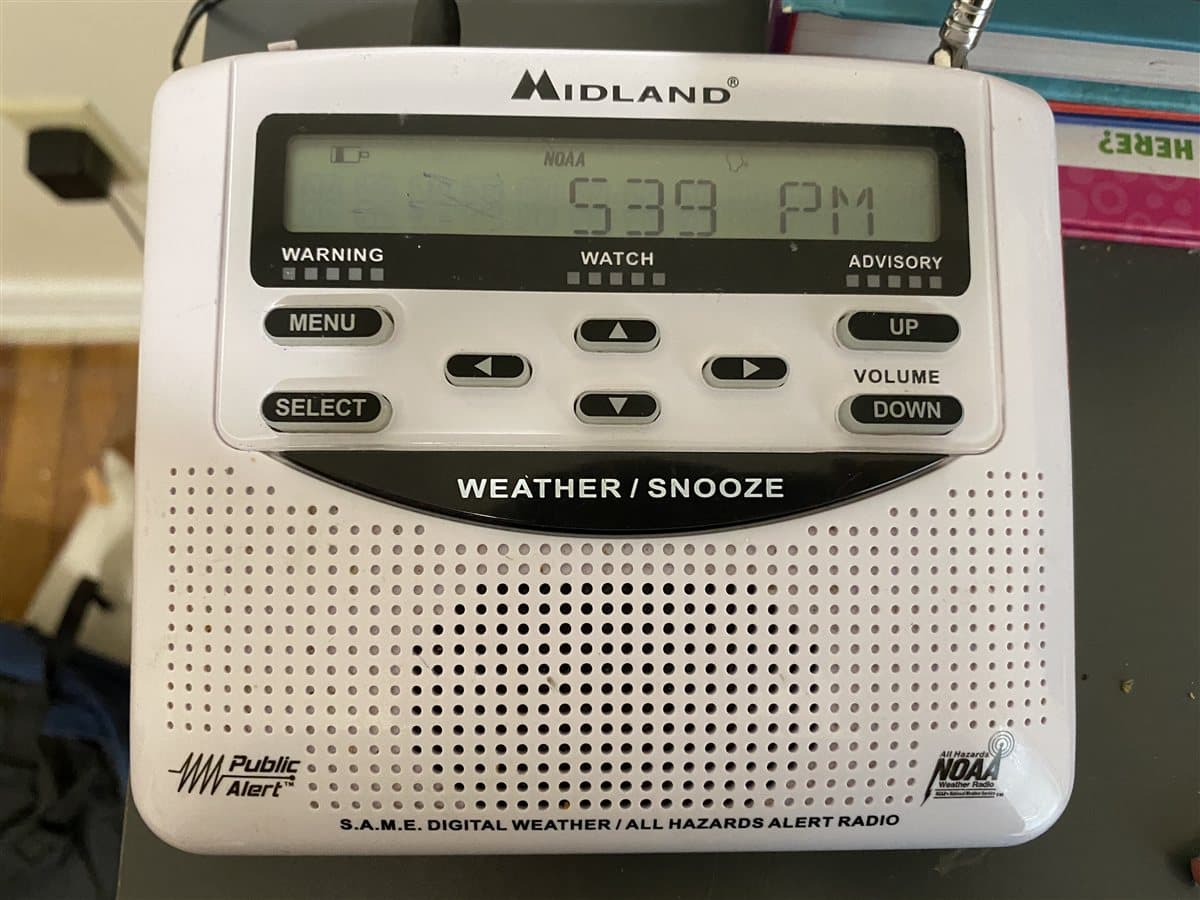
| Information | Battery radio, spare batteries, charged power bank, written key frequencies | Keeps decisions tied to official updates |
| Air and contamination control | N95/P100 masks, trash bags, gloves, damp wipes, soap | Reduces inhalation and spread of particles |
| Light and power | LED lanterns, flashlights, battery rotation labels | Maintains operations without grid power |
| Health and medication | 7-day prescriptions, first aid kit, chronic condition notes | Avoids avoidable medical deterioration |
| Family logistics | Printed contacts, reunification plan, kids' comfort items, pet supplies | Reduces panic and execution errors |

The 15-minute staging drill
Most kits fail because gear is scattered. Run a timed drill once each quarter:
- Start a 15-minute timer.
- Move all shelter items to the selected room.
- Confirm water count, batteries, medications, and radio operation.
- Record missing items on a one-page restock sheet.
If your household cannot stage within 15 minutes, simplify. Remove optional gear and prioritize the six core functions above.
How do you seal a room for fallout dust without making unsafe air conditions?
Many people over-seal and create heat stress or poor ventilation. The target is dust reduction, not permanent airtight isolation. Close windows and exterior doors, shut fireplace dampers, and reduce outside air intake where you can. Use tape and plastic on obvious drafts around windows or vents only after immediate sheltering actions are complete.
A practical sequence:
- Enter shelter room and close door.
- Turn off fans drawing outside air if controllable.
- Cover high-leak openings with plastic/tape.
- Keep one managed airflow option if room heat rises dangerously.
In apartment buildings, central systems may not be fully controllable. In that case, focus on unit interior positioning and contamination discipline rather than trying to re-engineer the building.
For deeper context on blast-plus-fallout timelines, see What Would Happen If a Nuke Hit New York City?.
Should you shower after fallout exposure?
Yes, if safe water is available, decontaminate promptly after entering shelter from outside exposure. Remove outer clothing first because that single step can remove a large share of contamination. Bag the clothing, move it away from main living space, and wash exposed skin and hair with soap and lukewarm water. Avoid conditioner because it can bind particles to hair.
Rapid decontamination checklist
| Step | Do | Avoid |
|---|---|---|
| Clothing | Remove outer layer and bag it | Shaking contaminated clothing indoors |
| Skin | Wash exposed areas gently with soap/water | Harsh scrubbing that damages skin |
| Hair | Shampoo thoroughly | Using conditioner immediately |
| Personal items | Wipe phones, glasses, keys | Bringing dusty items into sleeping area |
If water is limited, start with wipes on exposed skin, hands, face, and hairline, then do a fuller wash later. Decontamination should happen once people are sheltered, not while moving through unsafe outdoor conditions.
Can apartment buildings protect against fallout?
Yes, often better than people assume. Multi-story buildings can provide substantial shielding in core interior spaces, especially in concrete structures. The best locations are lower central areas away from windows, stairwell-adjacent interior corridors, and utility-adjacent rooms with more structural mass.
Apartment-specific modifications
- Pre-identify two interior fallback spots in case one is blocked.
- Coordinate with neighbors on shared water and radio access.
- Keep duct tape, plastic, and masks in each unit, not one central stash.
- Set a floor-level check-in protocol to reduce unnecessary hallway movement.
If your building has management communications, ask now how emergency alerts will be distributed during power or internet interruptions.
24-hour execution timeline for families
A good checklist is temporal. People remember "what now" better than abstract guidance.
First 10 minutes
- Move everyone indoors immediately.
- Choose pre-scored shelter room.
- Close windows/doors and shut obvious air leaks.
- Account for all household members and pets.
10 to 60 minutes
- Remove outer clothing for anyone who was outside.
- Conduct basic wash/decontamination.
- Start battery radio and confirm official channels.
- Begin written log: time, actions taken, symptoms, official messages.
1 to 6 hours
- Shift to calm rotation: hydration, sanitation, child support, check-ins.
- Re-check sealing points and temperature.
- Verify medication schedule and medical needs.
- Avoid non-essential device use to preserve power.
6 to 24 hours
- Reassess according to official guidance intervals.
- Maintain dose-reducing behavior: stay central, avoid window checks.
- Plan controlled movement only if directed by local authorities.
- Prepare go-bags in case evacuation guidance changes.
Common nuclear shelter mistakes that increase risk
Mistake 1: Waiting for perfect confirmation before sheltering
If you wait for certainty, you lose the highest-protection window. Early sheltering is reversible; early exposure is not.
Mistake 2: Treating KI as the main plan
Potassium iodide can help in specific iodine exposure scenarios, but it does not replace sheltering. Keep KI in the protocol as a conditional add-on, as covered in Potassium Iodide Nuclear Emergency Guide.
Mistake 3: Leaving shelter repeatedly for updates
Every unnecessary trip outside compounds exposure risk. Bring information to the shelter room instead of bringing people out of it.
Mistake 4: Building a gear-heavy, process-light plan
A closet full of equipment does not beat a simple, practiced checklist. Prioritize clear roles, written steps, and quarterly drills.
Mistake 5: Ignoring household edge cases
Children, elders, chronic illness, language barriers, and pets all change execution. Your checklist is only as good as its weakest household-specific assumption.
How to adapt this checklist for schools, small offices, and community groups
Institutions need role clarity more than consumer gear. The same principles apply, but assignments must be explicit.
| Role | Core responsibility | Backup |
|---|---|---|
| Incident lead | Trigger shelter decision and maintain action log | Deputy lead |
| Comms lead | Receive and relay official alerts | Alternate with second radio |
| Health lead | Decontamination support and symptom tracking | First-aid trained backup |
| Logistics lead | Water, sanitation, and supplies rotation | Facilities support |
| Family reunification lead | Contact and release workflow | Admin backup |
Organizations should pre-stage paper copies of checklists because network-dependent SOPs fail during outages. If your team already runs fire drills, add one annual shelter-in-place drill using this same role map.
Data-backed priorities: what moves the survival needle most?
Not every action has equal impact. Based on current U.S. emergency guidance and fallout behavior, these priorities are consistently high-value:
- Immediate movement to better shielding.
- Staying sheltered during the highest fallout period.
- Contamination control at entry.
- Reliable official information flow.
- Disciplined timing for relocation.
Low-value distractions include speculative shopping lists, unverified social media maps, and trying to self-model plume movement without instrument data. You do not need perfect forecasting to execute the first-day checklist effectively.
Build your one-page household nuclear shelter checklist
Create a single printed page and tape it inside your shelter supply container. Keep it in plain language and test it every quarter.
One-page template
| Section | Include |
|---|---|
| Trigger | "If local alert says nuclear/radiological emergency, shelter immediately." |
| Shelter room | Primary room + backup room |
| First actions | Enter, close openings, account for people, start radio |
| Decon steps | Remove outer clothing, bag, wash exposed skin/hair |
| Supply checks | Water, food, meds, batteries, masks |
| Comms cadence | Which channels, check every X minutes |
| Exit criteria | Leave only on official route/timing guidance |
If you want the strategic context behind why civilian readiness still matters, pair this checklist with How Nuclear Deterrence Works and What Would Happen If Nuclear War Started?. Deterrence lowers overall odds, but household preparedness reduces consequences when low-probability events happen anyway.