How Are Nuclear Tests Detected in 2026?
How are nuclear tests detected? Learn the sensors, data flow, and proof standards used to identify underground, underwater, and atmospheric blasts.
Staff Reporting and Analysis. Produces source-backed reporting, explainers, and reference pages on nuclear risk, proliferation, and escalation dynamics.
Key Sources
Start with the strongest supporting documents and reporting behind this page.
Primary Documents
Start with the strongest official or documentary records behind this explainer.
Where This Matters Now
Recent articles where this concept is actively shaping the current crisis.
In Current Coverage
Iran Crisis 2026 vs 2019 Tensions: What's Different This Time
How the 2026 Iran crisis differs from 2019: leadership decapitation, larger retaliation, Hormuz closure risk, and a sharper nuclear escalation path.
2026-03-03
In Current Coverage
Nuclear Threat Assessment: Where the Iran Crisis Goes From Here
A scenario-based nuclear threat assessment of the Iran crisis, including leadership instability, damaged facilities, and pathways to escalation or containment.
2026-03-03
In Current Coverage
US-Israeli Strikes Hit Fordow, Isfahan, and Natanz
US and Israeli strikes targeted Iran's key nuclear facilities at Fordow, Isfahan, and Natanz during Operation Epic Fury, with damage extent still uncertain.
2026-03-03
Related Comparisons
Comparison pages that show how this concept plays out across rivalries, arsenals, and crisis analogies.
Related Concepts
Companion explainers that deepen the strategic logic around this topic.
Concept
Nuclear Command and Control Explained: NC2 and NC3
Nuclear command and control explained: how NC2 authority and NC3 systems verify, transmit, and execute nuclear decisions in a fast-moving crisis.
2026-04-27
Concept
What Is Launch-on-Warning?
Launch-on-warning is a posture that allows missiles to launch before incoming warheads land. This explainer covers incentives, risks, and safeguards.
2026-03-04
Concept
What Is the IAEA and What Do They Do?
What is the IAEA? Learn how inspectors verify nuclear programs, what safeguards can and cannot confirm, and why access disruptions raise global risk.
2026-03-03
How are nuclear tests detected in practice? States and scientists use a layered monitoring architecture that combines seismic signatures, underwater acoustics, atmospheric infrasound, and radionuclide sampling to build confidence from multiple independent signals. The question matters for deterrence, diplomacy, and crisis stability because verification quality shapes whether leaders trust treaties, escalation claims, and retaliation narratives. If you already follow what the IAEA does, nuclear breakout timing, or launch postures like launch-on-warning, test detection is the missing operational piece that converts theory into enforceable behavior.
What is the CTBTO monitoring system and why does it matter?
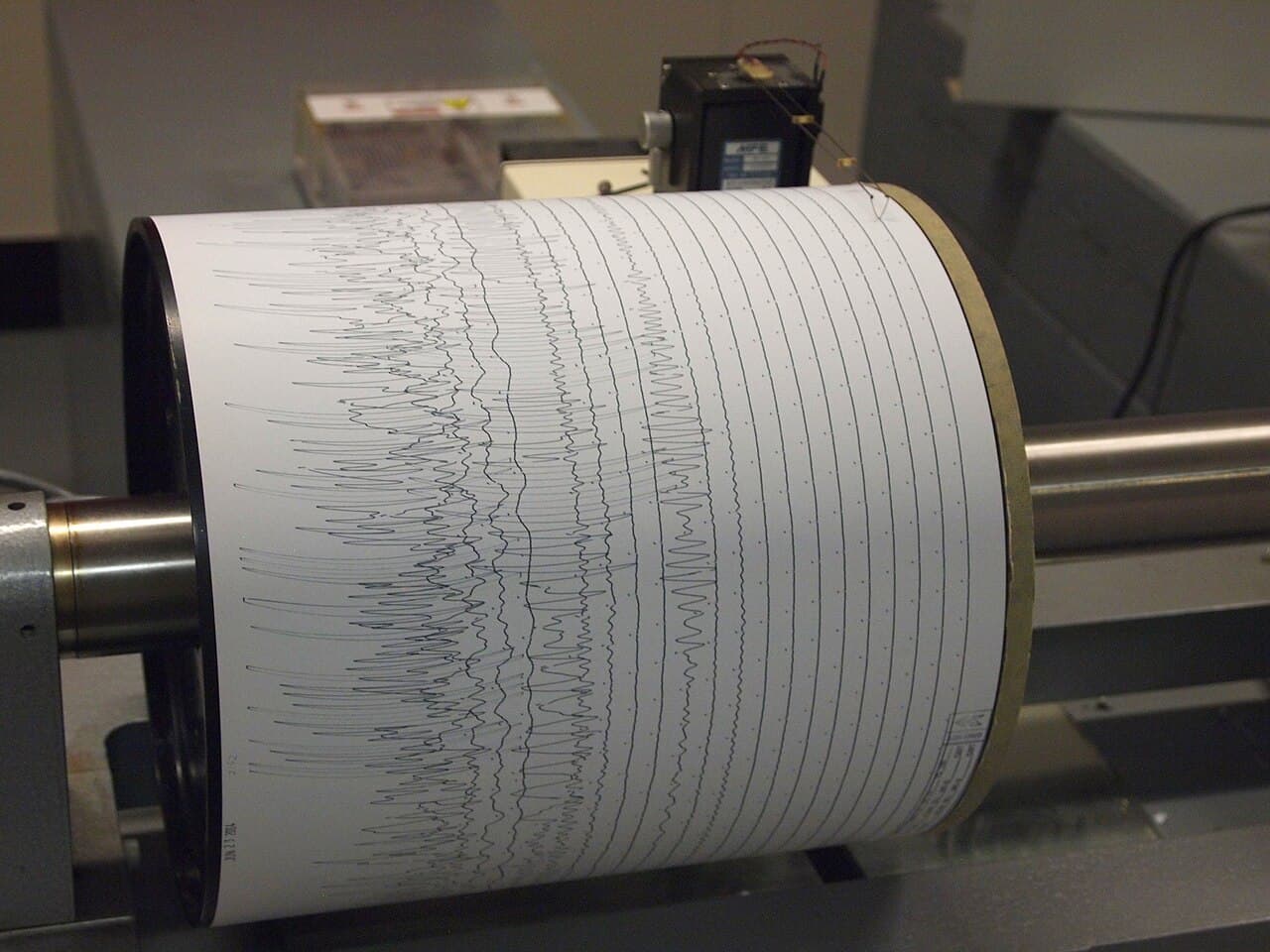
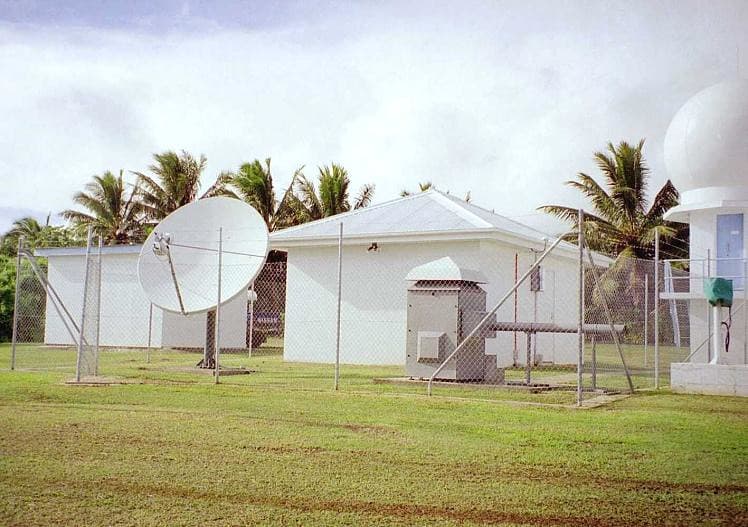
The backbone of modern test detection is the Comprehensive Nuclear-Test-Ban Treaty verification architecture, managed by the CTBTO Preparatory Commission in Vienna. Its International Monitoring System (IMS) is designed as a global network of stations and labs that capture different physical signatures of an explosion.
What the network is built to do
The mission is straightforward: detect suspicious explosive events anywhere, classify them quickly, and provide technically defensible data to states. The strategic value is that shared technical evidence reduces reliance on rumor, propaganda, or unilateral claims during crises.
| Verification layer | What it listens for | Why it is hard to spoof alone |
|---|---|---|
| Seismic | Ground waves from underground blasts | Waveform ratios differ from most tectonic earthquakes |
| Hydroacoustic | Sound propagation through oceans | Water transmits low-frequency energy efficiently over long distances |
| Infrasound | Ultra-low-frequency atmospheric waves | Captures atmospheric/near-surface events across large ranges |
| Radionuclide | Radioactive particles and noble gases | Isotopic fingerprints can directly indicate nuclear fission products |
When completed, the IMS architecture is configured as a 321-station network plus 16 radionuclide laboratories hosted across dozens of countries, with certified facilities delivering authenticated data streams to the International Data Centre (IDC), as outlined by the CTBTO International Monitoring System overview.
Why this matters in 2026
Verification is not an academic exercise. In a period of renewed testing rhetoric, states need a technical way to separate actual treaty violations from natural seismic noise. Better detection reduces the chance that ambiguous events spiral into military signaling cycles.
How are underground nuclear tests detected first?
Underground tests are usually detected first by seismometers, because a buried explosion couples energy into rock and produces measurable P-wave and S-wave behavior. The USGS seismogram discrimination FAQ explains that explosions and earthquakes can both register clearly, but they differ in source geometry, depth profile, and waveform character.
The first-pass seismic workflow
- Stations register a fast impulse and estimate origin time.
- Analysts locate epicentral coordinates and depth envelope.
- Waveform ratios, spectral shape, and regional context are compared with known earthquake patterns.
- If anomalous, the event is flagged for multi-sensor correlation.
Earthquake versus explosion discrimination
| Signal clue | Typical earthquake tendency | Typical explosion tendency |
|---|---|---|
| Source geometry | Slip along a fault plane | More compact near-point source |
| Depth profile | Often deeper tectonic depth | Typically very shallow relative to tectonic events |
| Wave balance | Strong shear in many settings | Relatively stronger compressional onset in many cases |
| Aftershock behavior | Can have richer natural sequences | If present, often smaller/shorter and context-specific |
No single metric is perfect. Analysts build probability by combining source physics, station geometry, local geology, and comparison to historical event catalogs. That is why test detection is better understood as evidentiary accumulation, not one magic formula.
How can scientists tell an earthquake from a nuclear explosion?
The short answer is pattern recognition plus physics constraints. The longer answer is that analysts combine waveform interpretation, regional geology, and independent sensors to reduce false positives.
Why depth and source extent are critical
USGS notes that most nuclear tests are shallow and release energy from a compact volume, while earthquakes release energy across a fault surface that may span many kilometers. That source-extent difference changes how waves are generated and how they decay over distance.
Common misreadings the public makes
- "If it triggered an earthquake magnitude, it must be a natural earthquake."
Magnitude only quantifies signal size, not mechanism. Large chemical or nuclear blasts can register as earthquake-like magnitudes.
- "If a state denies testing, the signal is inconclusive."
Diplomatic claims do not override instrument evidence. Analysts evaluate source physics first, then political context.
- "One station can prove a violation."
Single-station detection can flag suspicion, but reliable attribution usually requires network correlation and, ideally, radionuclide reinforcement.
Detection confidence rises with independent evidence
Seismic discrimination can be strong, but radionuclide detections and cross-domain agreement are often what move an assessment from likely to highly confident.
What do hydroacoustic stations add to nuclear test detection?
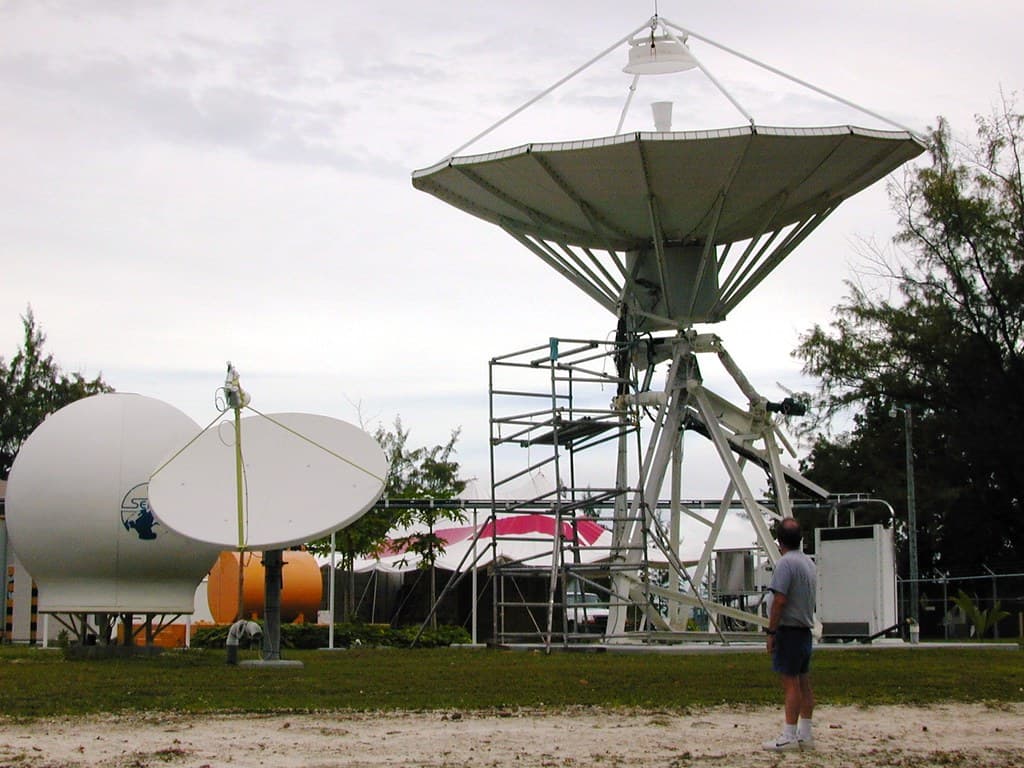
Hydroacoustic monitoring covers underwater and coastal-coupled events that seismic-only pipelines might characterize less precisely. Because sound attenuates slowly in deep water channels, hydrophones can detect signals over very long distances.
Why ocean acoustics are powerful
Underwater explosions create pressure waves that propagate efficiently through marine environments. Even when source localization is complex, the wave arrival timing and frequency structure can constrain event class and probable region.
Where hydroacoustic data is most useful
| Scenario | Hydroacoustic value |
|---|---|
| Suspected underwater blast | Primary detection channel |
| Coastal or island event with mixed pathways | Cross-check for regional seismic interpretation |
| Ambiguous seismic location near ocean basins | Adds timing constraints and pathway clues |
Hydroacoustic data also improves confidence in no-test findings by ruling out marine-origin blast signatures during periods of elevated geopolitical tension.
How does infrasound monitoring detect atmospheric events?
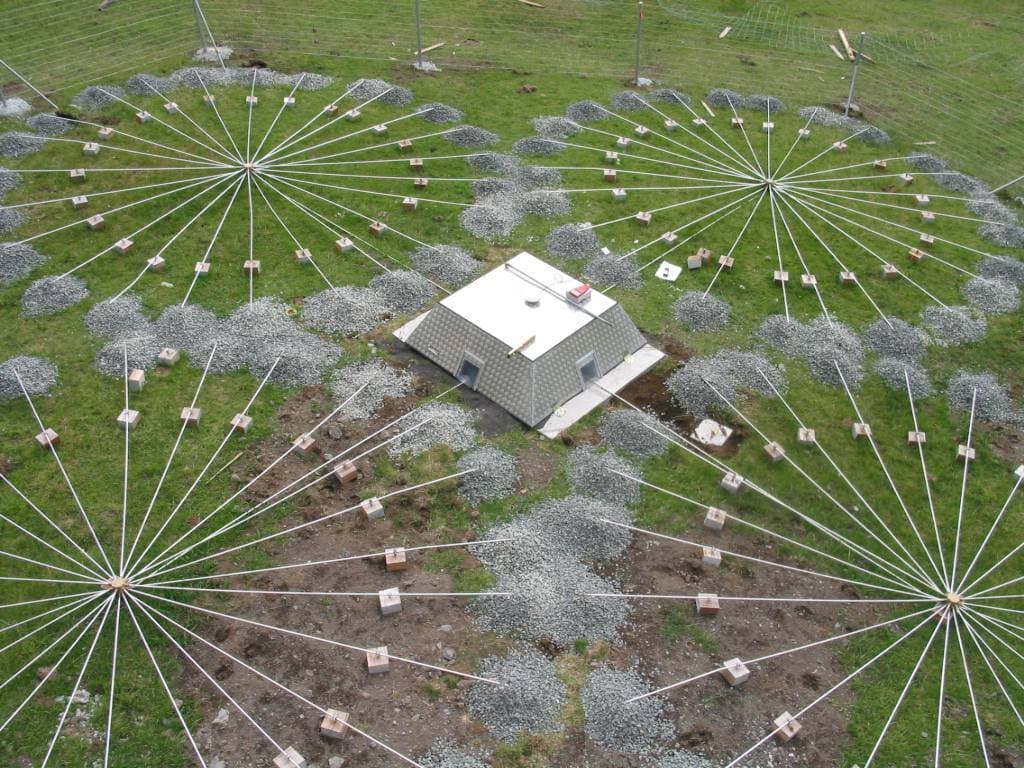
Infrasound stations listen for ultra-low-frequency pressure waves in the atmosphere, below human hearing. Atmospheric nuclear events, large chemical blasts, meteors, and volcanic phenomena can all produce infrasound, so discrimination logic remains essential.
Operational strengths and limits
Strengths:
- Large-area coverage from distributed arrays
- Good sensitivity to atmospheric propagation
- Useful corroboration when seismic signals are weak or distant
Limits:
- Atmospheric winds can alter propagation paths
- Non-nuclear sources can produce similar low-frequency features
- Best results come from combining infrasound with other modalities
Why infrasound still matters even with strong seismic networks
Not every relevant signal couples well into the ground. Infrasound preserves a separate physical channel, which helps avoid overfitting a judgment to one class of data. In practice, this lowers both missed detections and mistaken attributions.
Why is radionuclide xenon evidence so important?
If seismic and acoustic systems indicate "something happened," radionuclide evidence can indicate "what happened." Detection of specific isotopes, especially noble gases like radioxenon, can provide direct evidence of nuclear fission products entering the atmosphere.
Why noble gases are operationally valuable
Noble gases are chemically inert, so they travel without reacting much with other materials. That stability makes isotopic analysis more reliable across distance and time windows than many particulate signatures alone.
| Radionuclide question | Why it matters for attribution |
|---|---|
| Which isotopes are present? | Helps distinguish possible source classes |
| What are the isotope ratios? | Supports chronology and process interpretation |
| Where did air masses travel from? | Connects detections to plausible source regions |
| Could medical/industrial emissions explain it? | Prevents false alarms from non-weapons sources |
PNNL and partner labs have published extensively on xenon monitoring, including methods for separating possible weapons-relevant signatures from civilian isotope production noise in the PNNL nuclear explosion monitoring program.
Can countries hide a nuclear test from the global network?
Hiding is harder than many headlines imply, but not physically impossible in every case. Analysts discuss evasion techniques such as decoupling, difficult geology, or masking with other signals, yet each tactic introduces tradeoffs and residual indicators.
Practical constraints on concealment
- You must evade multiple sensor classes, not just one.
- Signal suppression in one channel can create anomalies in another.
- Persistent surveillance and retrospective reprocessing improve detection over time.
- Any leak of radionuclide evidence can collapse a concealment narrative quickly.
Why uncertainty does not mean failure
Verification systems do not require 100% certainty on day one to be useful. They generate graded confidence assessments that guide diplomacy, intelligence tasking, and treaty consultations. Over hours to days, additional station data and atmospheric modeling usually tighten the confidence interval.
How does data move from sensors to international decisions?
A critical but overlooked point: detection is a pipeline, not a single alert. Signals must be authenticated, analyzed, fused, and interpreted within procedural frameworks.
Simplified end-to-end pipeline
| Stage | Core task | Typical output |
|---|---|---|
| Station acquisition | Capture raw waveform or sample data | Time-stamped sensor record |
| Secure transmission | Send authenticated data to central systems | Verified data packet |
| Event processing | Detect and locate anomalies | Event bulletin candidate |
| Expert analysis | Discriminate source type and confidence | Technical assessment |
| State consultation | Compare with national and allied information | Policy response options |
This pipeline is why phrases like "detected" can mean different things in media reporting. A sensor trigger is not the same as an attribution judgment, and attribution is not the same as a political decision.
What role do national agencies play beyond the treaty network?
International systems are central, but national labs, military technical means, and civilian scientific institutions add parallel analysis. That redundancy increases resilience and can reduce spoofing risk.
Multi-layer verification ecosystem
- International organizations: treaty-centered data sharing and neutral technical products.
- National technical means: classified and open-source fusion with regional context.
- Academic and civil scientific communities: independent replication and method improvements.
A practical consequence is that contested events rarely remain opaque forever. Even if first reports are ambiguous, independent technical communities tend to converge on stronger interpretations as data accumulates.
How should readers interpret headlines about possible nuclear tests?
When a headline says "possible test," use a verification checklist before drawing conclusions.
Reader checklist for evaluating claims
- Did the report cite a specific sensor domain (seismic, infrasound, radionuclide)?
- Is there mention of event depth, location uncertainty, or comparative waveform evidence?
- Are multiple institutions cited, or just one political source?
- Is the report distinguishing detection, discrimination, and attribution?
- Has there been follow-up after atmospheric transport windows for radionuclide sampling?
This framework also helps when reading broader escalation coverage, including Iran crisis scenarios, doctrine explainers like no-first-use, and treaty expiration analysis such as the New START 2026 guide.
How reliable is the system overall?
Reliability is high for moderate and large tests, especially with mature station coverage and improved analysis methods. The harder cases are very low-yield events, unusual geology, or events timed to exploit natural seismic clutter. Even then, uncertainty windows are usually narrower than public debates suggest.
Reliability by event context
| Event context | Detection confidence trend |
|---|---|
| Moderate to large underground event in monitored region | High |
| Underwater event with hydroacoustic pathway access | High |
| Atmospheric event with broad infrasound/radionuclide support | High |
| Very low-yield event in complex geology | Moderate and context-dependent |
| Event coincident with major natural seismic activity | Moderate until multi-sensor review completes |
As with any scientific system, reliability improves through station maintenance, calibration, archival reprocessing, and analyst training. The trend line has generally moved toward better sensitivity and faster discrimination.
What changed after North Korean tests and recent global tensions?
The North Korean test series forced major operational learning across seismic discrimination, station geometry optimization, and cross-domain fusion. More recently, renewed testing rhetoric by major powers has raised public attention, which makes transparent technical communication even more important.
Key operational lessons
- Dense regional arrays improve localization precision.
- Infrasound and radionuclide integration helps settle ambiguous seismic-only cases.
- Public technical literacy lowers disinformation impact during crises.
- Verification systems produce dual-use public benefits (for example, some tsunami-warning support applications).
The strategic outcome is that the cost of clandestine testing rises when monitoring is persistent, international, and technically transparent.
FAQ: How are nuclear tests detected?
Bottom line
The most accurate answer to how are nuclear tests detected is that verification is a layered forensic process, not a single sensor alarm. Seismic detection usually starts the case, hydroacoustic and infrasound channels refine context, and radionuclide evidence can provide decisive attribution, all within an international pipeline designed to reduce ambiguity before it becomes geopolitical panic.