Nuclear Triad Explained for 2026: The Three Legs, Their Jobs, and the Risks
Nuclear triad explained: how land, sea, and air nuclear forces work, why states keep all three legs, and what this means for deterrence risk in 2026.
Staff Reporting and Analysis. Produces source-backed reporting, explainers, and reference pages on nuclear risk, proliferation, and escalation dynamics.
Key Sources
Start with the strongest supporting documents and reporting behind this page.
Where This Matters Now
Recent articles where this concept is actively shaping the current crisis.
In Current Coverage
India vs Pakistan Nuclear Weapons: A Complete 2026 Comparison
India vs Pakistan nuclear comparison: warheads, delivery systems, doctrines, defense spending, and how Kashmir escalation could strain deterrence.
2026-03-03
In Current Coverage
Able Archer 83: The 1983 Nuclear War Scare Explained
Able Archer 83 was a NATO drill in November 1983 that Moscow misread as a first strike, pushing Cold War tensions to their most dangerous point.
2026-03-03
In Current Coverage
Russia vs US Nuclear Forces: 2026 Strategic Comparison
Russia and US nuclear forces compared by warheads, delivery systems, modernization, spending, and doctrine across the world's two largest arsenals.
2026-03-03
Related Comparisons
Comparison pages that show how this concept plays out across rivalries, arsenals, and crisis analogies.
Comparison
India vs Pakistan Nuclear Weapons: A Complete 2026 Comparison
India vs Pakistan nuclear comparison: warheads, delivery systems, doctrines, defense spending, and how Kashmir escalation could strain deterrence.
2026-03-03
Comparison
Russia vs US Nuclear Forces: 2026 Strategic Comparison
Russia and US nuclear forces compared by warheads, delivery systems, modernization, spending, and doctrine across the world's two largest arsenals.
2026-03-03
Related Concepts
Companion explainers that deepen the strategic logic around this topic.
Concept
No First Use Nuclear Policy: Meaning, Limits, and Risk
No first use nuclear policy lowers first-strike pressure when doctrine and posture align. Compare NFU states, loopholes, and real crisis effects.
2026-03-20
Concept
Tactical vs Strategic Nuclear Weapons: Key Differences
Tactical vs strategic nuclear weapons explained with doctrine, ranges, yields, targets, and escalation risk so you can read nuclear headlines without confusion.
2026-04-27
Concept
What Is Mutually Assured Destruction (MAD)?
What is mutually assured destruction (MAD)? We explain the doctrine, Cold War logic, modern criticisms, and why MAD still shapes nuclear strategy.
2026-03-03
Nuclear triad explained in plain language means a country keeps three separate ways to deliver nuclear weapons: land-based missiles, submarine-launched missiles, and long-range bombers. The point is not redundancy for its own sake; the point is to ensure that if one leg is damaged in a surprise strike, at least one other leg survives and can still retaliate. That survivability logic is central to modern deterrence theory, and it connects directly to U.S. Defense Department triad doctrine framing, SIPRI's annual strategic balance analysis, How Nuclear Deterrence Works, What Is Second-Strike Capability?, and current force-posture debates in Russia vs US Nuclear Forces: 2026 Strategic Comparison.
What are the three legs of the nuclear triad?
The canonical triad has three delivery categories, each with distinct strengths and weaknesses:
| Leg | Typical systems | Main strength | Main vulnerability |
|---|---|---|---|
| Land | ICBMs in silos or mobile launchers | Fast response and hard-to-neutralize target set across many sites | Fixed silos can be mapped and targeted |
| Sea | SLBMs on ballistic missile submarines (SSBNs) | Highest survivability and strongest second-strike assurance | Expensive to maintain; dependent on secure communications |
| Air | Strategic bombers with gravity bombs or cruise missiles | Flexible, visible, and recallable for signaling | Slower than missiles and exposed to air defenses |
These legs are not interchangeable. Their operational value comes from complementarity. If leaders rely on one leg only, adversaries can concentrate planning against that leg's failure modes. With three legs, the attacker must solve three different military problems at once.
Land leg: the prompt and persistent component
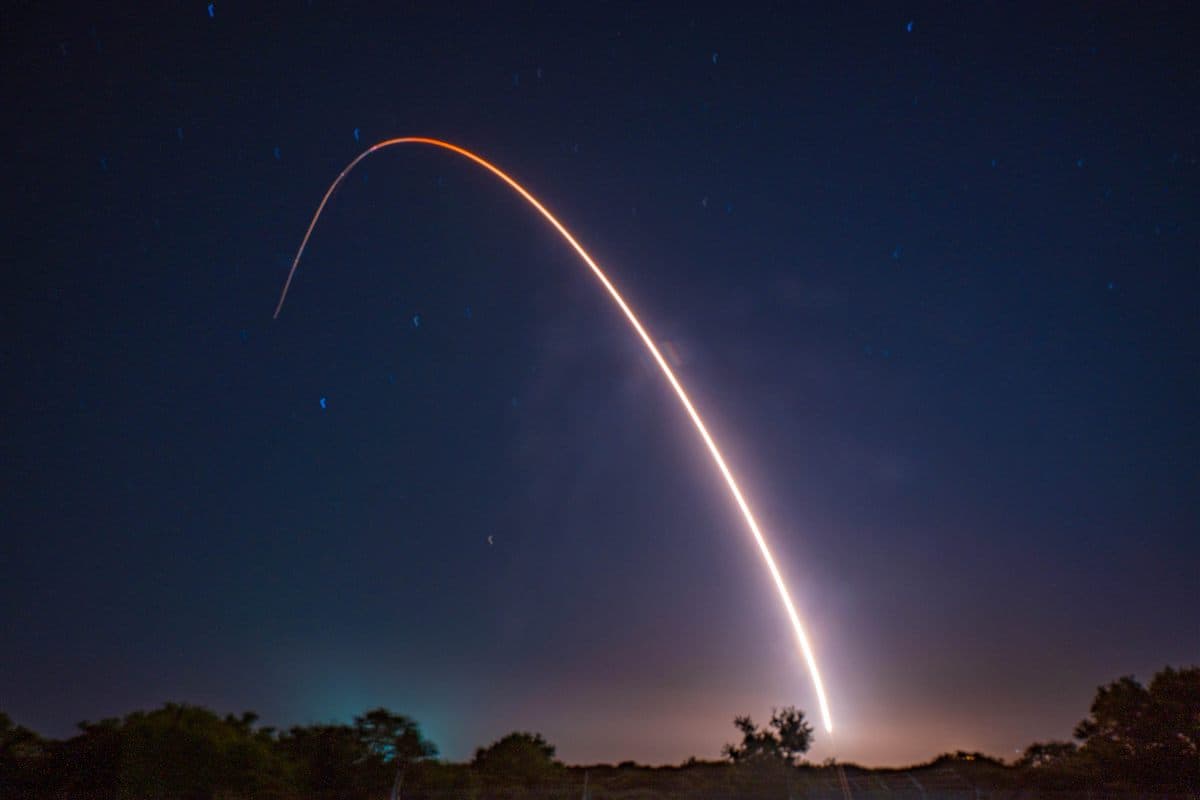
Land-based ICBMs are often criticized because silo fields are known locations. But their strategic value is not only launch speed. Large silo dispersal can impose a major targeting burden on an adversary. In theory, this complicates disarming first-strike calculations and can strengthen deterrence by denial.
That same logic creates controversy. Critics argue that fixed silos can increase crisis pressure if leaders fear those silos are at risk. Supporters counter that alert-ready ICBM forces deter by making any first strike prohibitively difficult.
Sea leg: the survivability anchor
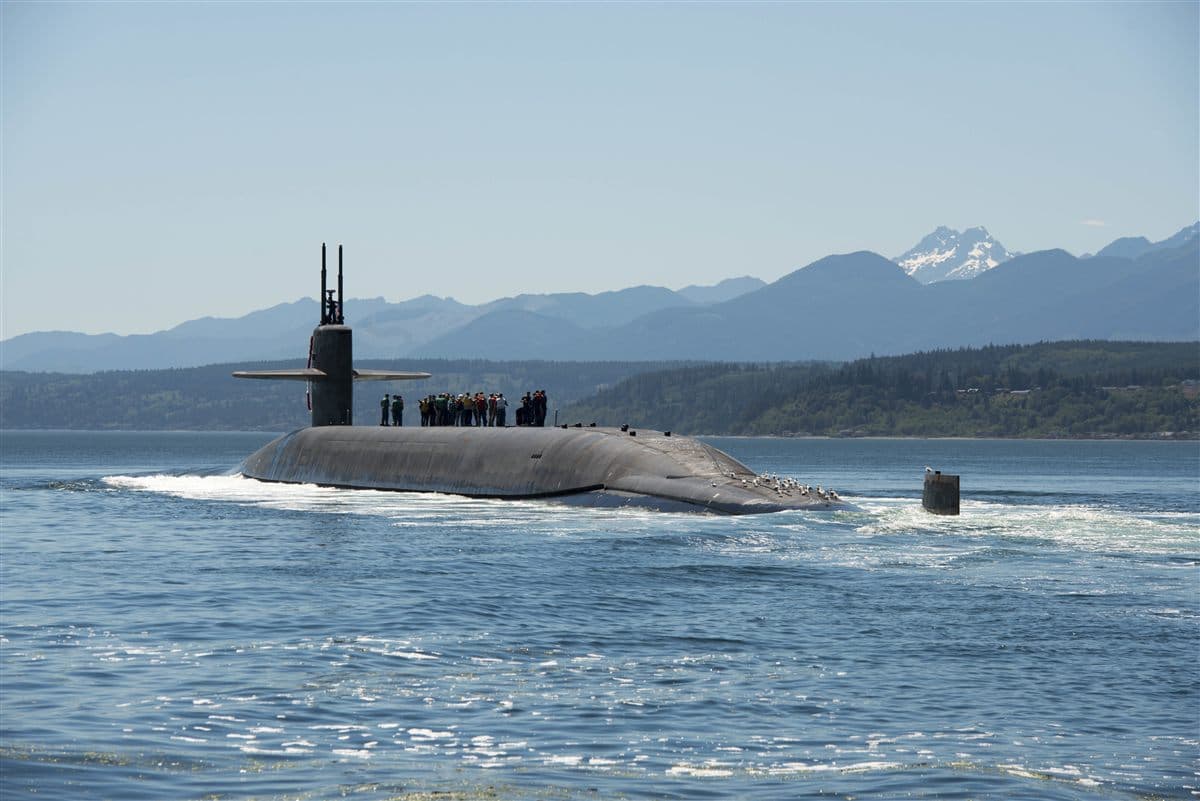
Ballistic missile submarines are designed for stealth and persistent patrol. Because their locations are uncertain, they are widely treated as the most survivable triad element. In practical deterrence terms, this means the sea leg underwrites retaliation credibility even in severe surprise-attack scenarios.
When analysts say "second-strike capability," they are often talking primarily about SSBN survivability. This is why submarine modernization programs receive sustained political protection even in budget-constrained periods.
Air leg: the signaling and control component
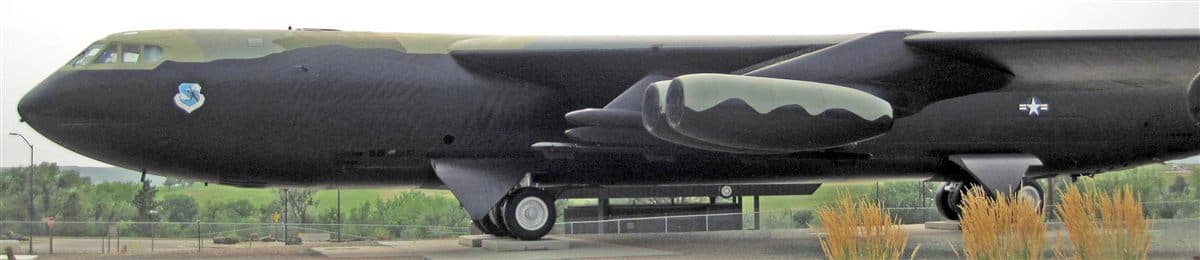
Bombers are slower than ballistic missiles, but they offer options missiles cannot. They can be generated, dispersed, and visibly deployed as signals during political crises. They can also be recalled after launch order, which gives leaders a reversible tool when they need to communicate resolve without immediate irreversible escalation.
Because bombers can carry conventional and nuclear payloads, they also introduce ambiguity risks. Adversaries may misread intent under stress, especially if communications channels are degraded.
Why is the nuclear triad important for deterrence?
The triad's core value is strategic resilience. In deterrence theory, resilience means preserving retaliatory capacity after absorbing attack. In crisis management, it also means buying decision time and preserving options for national command authority.
Deterrence by survivability, not just by numbers
Public debates often focus on warhead totals, but force structure can matter more than raw counts. A smaller but survivable force can deter more effectively than a larger but fragile force if adversaries believe retaliation is unavoidable.
This is one reason modern doctrine discussions center on basing, command-and-control continuity, and readiness posture instead of only aggregate stockpile size.
Hedging against technical surprise
A triad also hedges against technology shocks. If advances in anti-submarine warfare, missile defense, cyber operations, or counter-space targeting undermine one leg, the other legs can still preserve deterrence while doctrine and procurement adapt.
| Potential disruption | Triad hedge effect |
|---|---|
| Better anti-submarine tracking | Land and air legs preserve deterrent diversity |
| Improved missile defense | Sea and air penetration options remain |
| Command network disruption | Multiple force channels reduce single-point failure |
| Precision counterforce advances | Diverse basing complicates disarming strategy |
The triad does not eliminate vulnerability, but it reduces catastrophic single-point dependency.
Decision-maker benefits under uncertainty
In real crises, leaders do not get perfect information. Triad diversity helps prevent binary choices such as "launch immediately or lose everything." By maintaining multiple survivable pathways, leaders can preserve deliberation time, escalate more gradually, and coordinate with allies.
This connects directly to command-process explainers such as What Is the Nuclear Football? Process and Limits and What Is Launch-on-Warning?.
Which countries have a full nuclear triad?
In current open-source assessments, the United States and Russia are the two long-standing mature triad powers, while China and India are increasingly described as possessing or approaching full triad functionality. Classification details vary by source because readiness, range, and deployment maturity differ by country.
United States
The U.S. triad consists of Minuteman III ICBMs, Ohio-class SSBNs carrying Trident II missiles, and strategic bombers (B-52 and B-2, with B-21 transition underway). U.S. policy framing emphasizes flexibility, survivability, and allied assurance.
Russia
Russia fields a broad mix of silo/mobile ICBMs, SSBN-based SLBMs, and long-range aviation. Like the U.S., it has decades of triad operational experience and significant command-and-control depth.
China
China's force modernization has expanded all three legs, with notable growth in missile forces, SSBN development, and long-range bomber nuclear roles. Analysts increasingly discuss China as a full triad actor, though operational details and readiness assumptions remain debated in open sources.
India
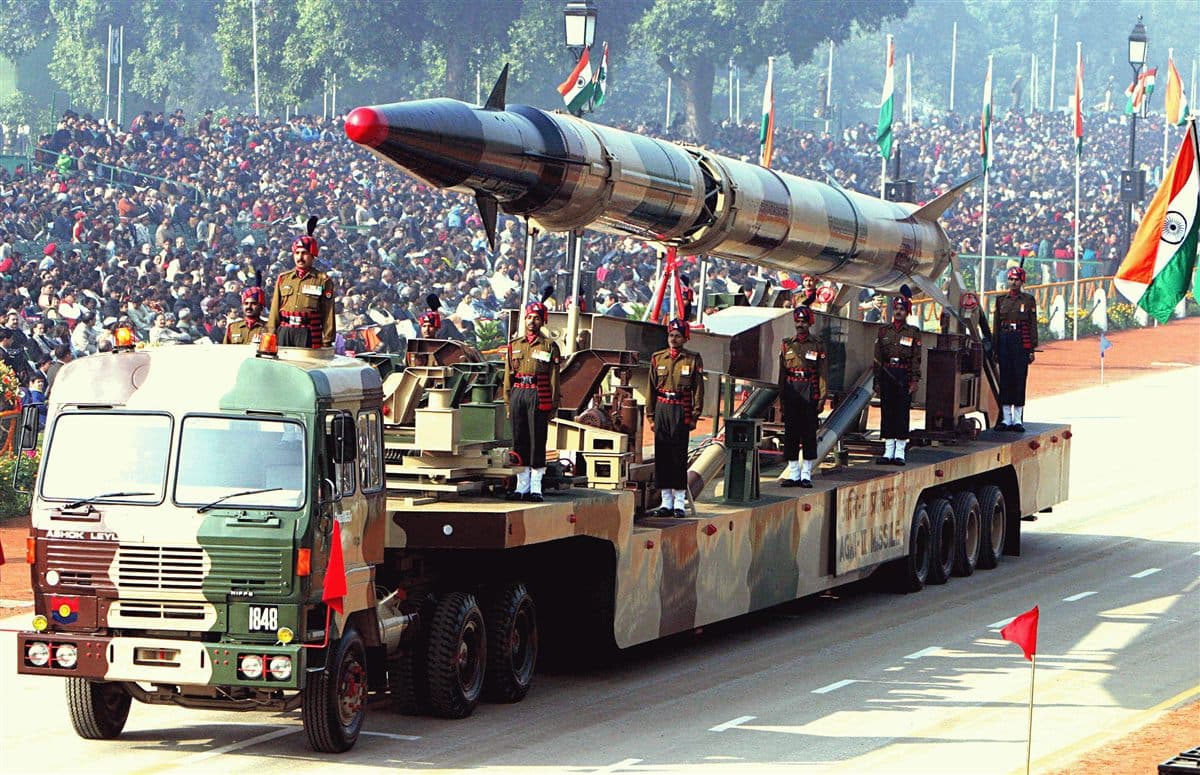
India's force posture is commonly described as triad-capable, with land-based missiles, sea-based systems, and aircraft-delivered nuclear options. Compared with U.S./Russia maturity levels, capability depth and readiness architecture remain more limited.
Triad labels can hide large capability differences
Saying two countries "have a triad" does not mean they have equal survivability, readiness, alert posture, patrol tempo, or command resilience. Capability depth matters more than check-box categorization.
How much does nuclear triad modernization cost?
Triads are not just doctrine; they are long-horizon budget commitments. Modernization is expensive because each leg needs platforms, warheads, command-and-control systems, maintenance infrastructure, training pipelines, and industrial-base continuity. Open-source assessments such as the Bulletin's 2025 U.S. Nuclear Notebook and CBO budget projections show why triad recapitalization debates are multi-decade policy commitments rather than one-cycle procurement decisions.
According to the Congressional Budget Office, projected U.S. nuclear forces costs over a 10-year window run into hundreds of billions of dollars when delivery systems, warheads, and supporting systems are included. Cost profiles change by fiscal cycle, but the structural point is stable: triad sustainability is a generational expenditure decision.
Why cost pressure keeps returning
- All three legs age on different timelines and cannot be recapitalized with one program.
- Nuclear command, control, and communications (NC3) modernization runs in parallel and is itself expensive.
- Industrial-base constraints create schedule risk, which can raise costs further.
- Political consensus can fracture between "replace like-for-like" and "narrow mission" approaches.
| Cost driver | Why it persists |
|---|---|
| Platform replacement cycles | Bombers, submarines, and missiles age at different rates |
| Warhead sustainment | Safety and reliability work is continuous |
| NC3 upgrades | Communications resilience demands constant investment |
| Workforce pipeline | Nuclear enterprise requires specialized talent retention |
Triad budget debates are therefore strategic debates in fiscal form: what mix of survivability, flexibility, and assurance a government is willing to fund over decades.
Is the nuclear triad obsolete in 2026?
This is one of the most searched triad questions, and the short answer is no, but with caveats. The triad is not obsolete if the strategic problem is surviving first strike and deterring peer competitors. It can become inefficient, however, if one leg no longer contributes unique deterrence value relative to its cost and escalation risk.
Arguments that triads remain necessary
- Peer nuclear competition now involves multiple major actors, not one bilateral rivalry.
- Command-and-control resilience requirements are higher in cyber-contested environments.
- Allies under extended deterrence still value visible and diversified assurance signals.
- Technical uncertainty (space, cyber, anti-submarine advances) increases hedging value.
Arguments for narrowing triad structure
- Sea-based deterrent alone may already provide strong second-strike assurance.
- Some analysts argue fixed ICBMs create launch pressure under warning ambiguity.
- Dual-capable bomber signaling can be escalatory and misinterpreted.
- Modernization costs can crowd out conventional readiness or domestic priorities.
A practical framing is not "obsolete vs perfect." It is "which leg combinations produce acceptable deterrence under acceptable risk and cost." That is a policy optimization problem, not a slogan contest.
How the triad affects crisis stability and escalation risk
Triads can stabilize deterrence at the strategic level while simultaneously increasing complexity during fast crises. Both statements can be true.
Stabilizing effects
- Multiple survivable legs reduce fear of disarmament.
- Reduced disarmament fear can reduce incentives for preventive war.
- Visible bomber signaling can create controlled space for coercive diplomacy short of immediate launch.
Destabilizing effects
- More systems and dual-capable platforms increase interpretation ambiguity.
- Adversaries may target NC3 nodes early, compressing decision timelines.
- Misread bomber movements or missile tests can produce inadvertent escalation.
| Crisis variable | Stabilizing direction | Destabilizing direction |
|---|---|---|
| Communications quality | Enables signaling clarity | Outages amplify worst-case assumptions |
| Force dispersal | Improves survivability | Can look like preparation for use |
| Alert posture | Can reassure if moderated | Can create "use-it-or-lose-it" pressure |
| Intelligence confidence | Supports measured decisions | False alarms trigger overreaction risk |
This is why triad policy cannot be separated from command-process discipline, hotlines, and verification culture. Architecture without communication can still fail under stress.
How to read triad headlines without getting misled
Because triad issues are technical, media coverage often compresses nuance into dramatic framing. A simple checklist helps.
Five questions to ask immediately
- Is the story about doctrine, platform procurement, or operational readiness?
- Is the claim about one leg, or about the full deterrence architecture?
- Are sources primary (government documents, budget offices) or opinion-only?
- Does coverage distinguish signaling activity from warfighting preparation?
- Are timelines explicit, or is old data being presented as new change?
These questions reduce panic-driven interpretation and improve situational literacy when escalation news is moving quickly.
Practical implications for readers following current risk
For non-specialists, the value of triad literacy is not technical fascination. It is better judgment under stress. If you understand why triads exist, you can better interpret official statements, alliance messaging, and force-movement headlines.
What matters most in real time
- Whether command and communication channels remain intact.
- Whether policymakers signal de-escalation pathways alongside force posture changes.
- Whether movements are reversible (for example, bomber signaling) or irreversible.
- Whether allied consultations are active, which often lowers miscalculation risk.
For broader context on immediate consequence pathways, What Would Happen If Nuclear War Started? A Step-by-Step Guide and Nuclear Fallout Explained are the best companion reads.
Common misconceptions about the nuclear triad
The same misconceptions appear repeatedly in public discussion, and each one can distort risk perception.
Misconception 1: "More legs means leaders are more likely to use nuclear weapons"
The triad's design intent is the opposite: to reduce incentives for preemptive use by making disarmament improbable. A force that can survive attack usually lowers the fear-driven pressure to act first. That does not remove all escalation risk, but it changes the strategic baseline from panic to endurance.
Misconception 2: "The sea leg alone always solves deterrence"
Sea-based deterrent forces are highly survivable, but no single leg provides every policy function. Submarines are not ideal for visible signaling, and they still depend on resilient command networks. Triad supporters argue that air and land legs supply political signaling and targeting diversity that submarine-only models cannot fully replicate.
Misconception 3: "Triad debates are only military questions"
They are also alliance, budget, and governance questions. Doctrine affects allies, procurement affects fiscal policy, and command authority affects constitutional oversight debates. If you treat triad policy as only a hardware discussion, you miss the decision-making environment that determines real crisis behavior.
FAQ: Nuclear triad explained
Bottom line
The most useful way to think about nuclear triad explained is as a design choice for deterrence resilience under uncertainty. Three legs do not make nuclear competition safe, but they can make surprise disarmament less plausible and decision space less brittle.
In 2026, the hard question is not whether triads sound strong in rhetoric. The hard question is whether current triad posture improves crisis stability more than it increases cost and escalation risk. That is where the real strategic tradeoff lives.