What to Do During Nuclear Alert: A 24-Hour Action Protocol
What to do during nuclear alert: shelter fast, cut fallout dose, and follow a practical 24-hour protocol for safer decisions at home, work, or school.
Staff Reporting and Analysis. Produces source-backed reporting, explainers, and reference pages on nuclear risk, proliferation, and escalation dynamics.
Key Sources
Start with the strongest supporting documents and reporting behind this page.
Primary Documents
Start with the strongest official or documentary records behind this explainer.
Where This Matters Now
Recent articles where this concept is actively shaping the current crisis.
In Current Coverage
New START Treaty Expiration 2026: What Changes Now
New START treaty expiration 2026 ended verified U.S.-Russia limits. See what changes for warheads, inspections, and escalation risk now.
2026-03-18
In Current Coverage
Able Archer 83: The 1983 Nuclear War Scare Explained
Able Archer 83 was a NATO drill in November 1983 that Moscow misread as a first strike, pushing Cold War tensions to their most dangerous point.
2026-03-03
In Current Coverage
Hiroshima and Nagasaki: What Happened When the Bombs Fell
On August 6 and 9, 1945, U.S. atomic bombs devastated Hiroshima and Nagasaki. Here is what happened, who died, and what radiation did after.
2026-03-03
Related Concepts
Companion explainers that deepen the strategic logic around this topic.
Concept
Dirty Bomb vs Nuclear Bomb: Key Differences
Dirty bomb vs nuclear bomb explained: hazard size, radiation risk, survival steps, and when to shelter or evacuate based on official guidance.
2026-03-11
Concept
Nuclear Shelter Checklist: 24-Hour Plan
Nuclear shelter checklist for the first 24 hours: room choice, supplies, timing, and fallout safety steps every household can apply now.
2026-03-09
Concept
What Is the Nuclear Football? Process and Limits
What is the nuclear football? Learn what is inside, who carries it, how launch orders move, and what legal and operational limits apply.
2026-03-13
What to do during nuclear alert starts with speed, not perfect information: get inside the nearest substantial building, move to the most shielded interior space, and stay tuned for official instructions before deciding to travel. The core guidance from Ready.gov and the CDC is consistent because early fallout dose can rise quickly while roads, phone lines, and rumors all fail at the same time. A practical response plan should reduce exposure first, then restore information quality, then make movement decisions in controlled checkpoints.
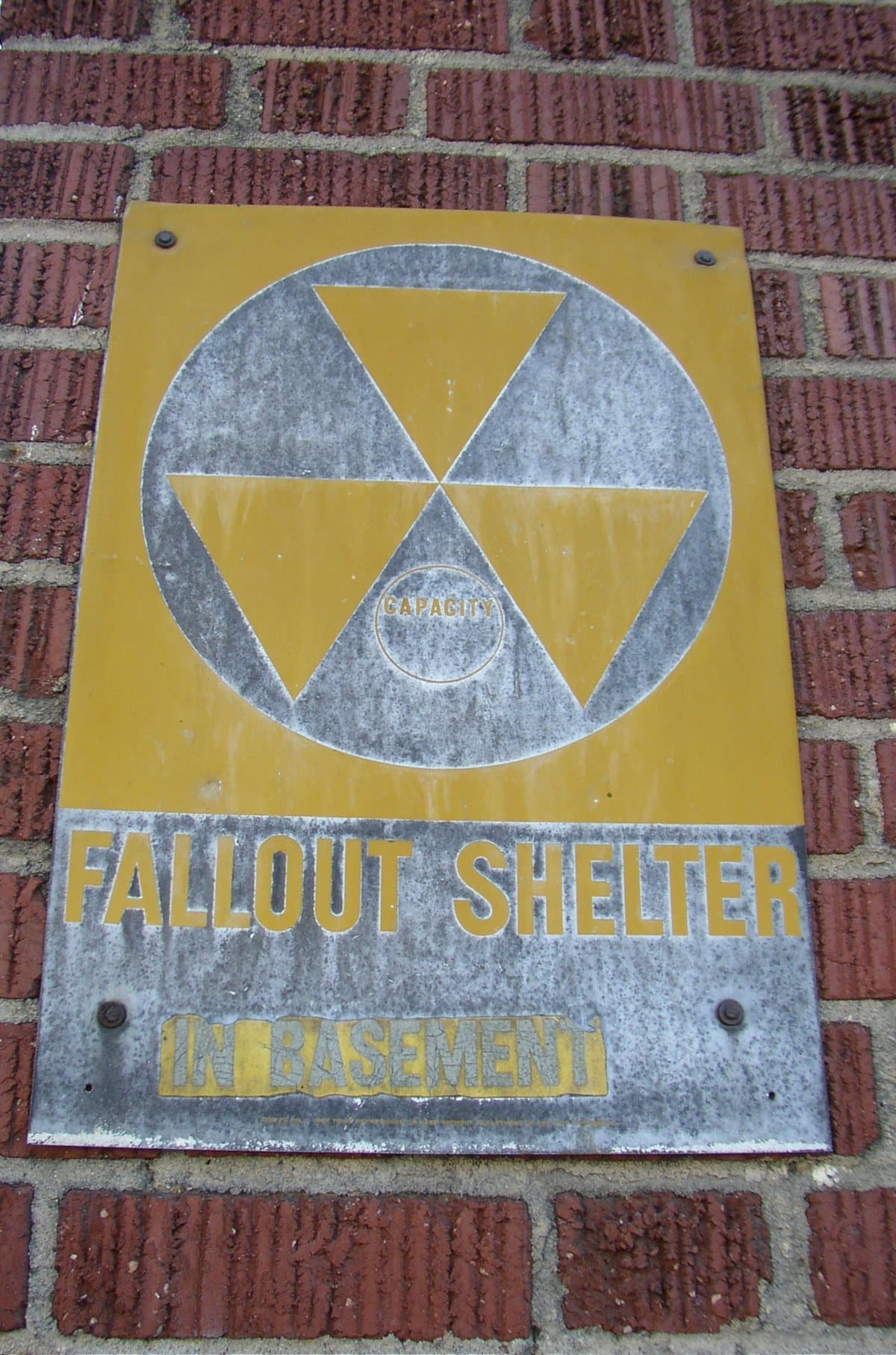
What should you do in the first 10 minutes of a nuclear alert?
The first 10 minutes are about reducing external dose and avoiding preventable contamination. You are not trying to solve the full crisis in this window. You are buying survival margin so later decisions can be made with better data.
Minute-by-minute nuclear alert checklist
| Time window | Primary objective | Action standard |
|---|---|---|
| 0-1 minute | Break line-of-sight and wind exposure | Enter the closest solid building immediately |
| 1-3 minutes | Increase shielding | Move to basement or interior room away from windows |
| 3-5 minutes | Limit contamination spread | Remove outer layer if dusty, bag it, wash exposed skin/hair |
| 5-7 minutes | Stabilize communications | Enable emergency alerts, tune battery radio, assign one information lead |
| 7-10 minutes | Freeze unnecessary movement | Stay sheltered until officials issue route-specific guidance |
That sequence matters because people often reverse it. They call family, check social media, or try to drive first. In a real event, those choices can increase dose precisely when fallout intensity is highest. A better pattern is action first, messaging second, mobility last.
If you are in a vehicle when the alert hits, do not chase distant shelter unless you are already near a clearly superior option. Park safely and enter the closest substantial structure. Vehicles are poor fallout shelters compared with dense buildings, and road congestion can trap people in high-dose environments.
For a broader context on why fallout timing dominates early survival, review Nuclear Fallout Explained. This guide assumes you need an execution protocol, not a theory lecture.
What is the safest room during a nuclear alert?
The safest room is the one with the most mass between you and fallout particles. Distance from exterior walls and roofline usually matters more than comfort, furniture, or convenience.
Shelter quality by building type
| Location option | Typical protection value | Use case |
|---|---|---|
| Basement in concrete/brick building | Highest for most households | Default best option for fallout period |
| Interior core room, no windows | Strong if basement unavailable | Apartments, offices, schools |
| Mid-level interior in high-rise | Moderate to strong | Better than street-level near glass |
| Detached light-frame room near windows | Limited | Temporary fallback only |
| Car, bus stop, open area | Very poor | Transition only, not shelter |
The phrase "best room" is often misunderstood as a comfort question. It is an exposure question. Put the heaviest construction materials possible between your body and the outside. That usually means below grade, or at minimum the central core of a larger building.
In schools and workplaces, pre-identifying shelter zones is the difference between a controlled move and corridor chaos. Managers should designate primary and backup shelter rooms now, with printed maps and role assignments. If your household includes children in school, integrate your family plan with district reunification protocols instead of improvising pickup attempts during active alerts.
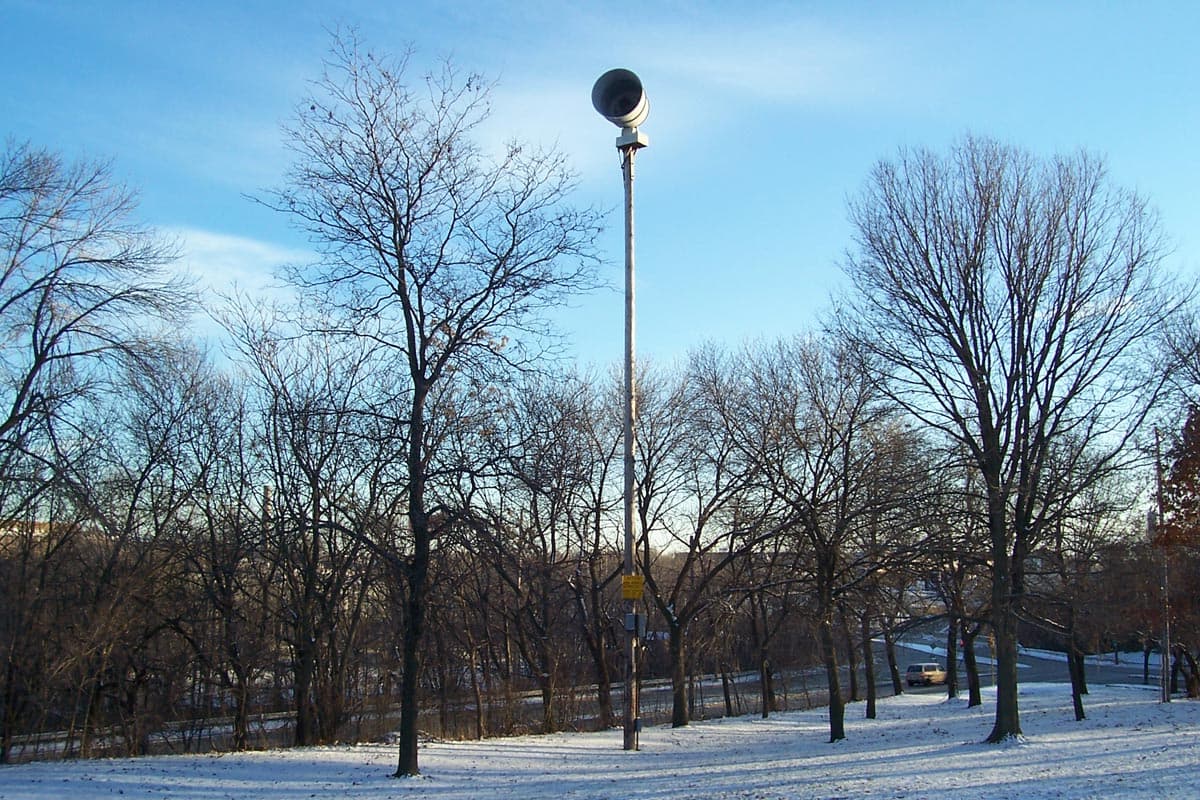
Should you evacuate after a nuclear alert or stay inside?
Most people ask this too early. In many scenarios, immediate evacuation is riskier than short-term shelter because traffic and exposure conditions are unknown. "Get inside, stay inside, stay tuned" exists to prevent bad movement decisions during the highest-risk interval.
Shelter-vs-evacuate decision matrix
| Condition | Default action | Why |
|---|---|---|
| No official route guidance yet | Stay sheltered | Reduces dose while data is incomplete |
| You are in weak shelter and have nearby stronger shelter reachable safely | Relocate locally, then shelter | Improves protection without long transit |
| Official evacuation order with specific route/time | Follow order promptly | Authorities are balancing plume and infrastructure data |
| Medical emergency that cannot be managed onsite | Coordinate with emergency services | Clinical risk may outweigh exposure tradeoff |
The key is sequence discipline. Shelter first, then verify, then move only when movement has a clear net benefit. That structure is consistent with Ready.gov, which emphasizes immediate shelter and official updates rather than spontaneous departure.
This is also where misinformation spikes. Viral maps, old blast simulations, and anonymous posts can create false urgency. Assign one person as your information gatekeeper and accept updates only from official public health, emergency management, or verified local government channels.
If you want a deeper household setup checklist for this phase, use Nuclear Shelter Checklist. This page is the real-time operations layer built on top of that preparation.
How long should you stay inside after a nuclear blast?
There is no universal single number, but the practical baseline is to stay sheltered through the highest fallout interval and await official clearance windows. Radiation intensity typically declines sharply over time; your objective is to avoid unnecessary exposure during the steep early decay curve.
Practical timing checkpoints for the first 24 hours
| Time since detonation | Operational posture | Decision trigger |
|---|---|---|
| 0-1 hour | Maximum shelter discipline | No nonessential movement |
| 1-6 hours | Maintain shielding + contamination control | Reassess only with official local updates |
| 6-24 hours | Structured reassessment windows | Act on route-specific evacuation or continued shelter orders |
| 24+ hours | Controlled transition planning | Follow monitoring data, water/food advisories, and healthcare guidance |
A useful mental model is "fast decay, slow decisions." Fallout intensity can drop meaningfully with time, but people still need verified environmental measurements before normal mobility resumes. Your household plan should include prewritten reassessment intervals so panic does not drive ad hoc choices.
For comparison modeling of early event timelines and infrastructure effects, see What Would Happen If Nuclear War Started?. That page gives the macro scenario; this guide is the tactical response playbook.
How do you reduce contamination if you were outside?
If you were outdoors during fallout arrival, contamination control is urgent but straightforward. Do not overcomplicate it.
Exposure reduction sequence
- Move indoors to a better-shielded space before starting cleanup.
- Remove outer clothing and shoes; bag and isolate them away from occupied areas.
- Wash exposed skin and hair with lukewarm water and soap; avoid harsh scrubbing.
- Change into clean clothing and maintain shelter position.
- Record time of likely exposure and any symptoms for medical follow-up.
Common mistakes that increase dose
| Mistake | Why it is harmful | Correct approach |
|---|---|---|
| Shaking dusty clothing indoors | Re-aerosolizes particles | Bag clothing immediately |
| Using conditioner after washing hair | Can bind particles to hair | Use soap/shampoo only |
| Waiting outdoors to receive calls | Extends exposure window | Shelter first, call from inside |
| Traveling to "better" shelter across town | Adds transit exposure uncertainty | Improve local shelter unless officials direct evacuation |
The CDC guidance is explicit that simple decontamination steps can materially reduce dose when performed early. This is one of the highest-value interventions for people caught outside.
What should be in your nuclear alert communication plan?
Most households fail at communications before they fail at supplies. During a major alert, voice networks overload, social feeds flood, and conflicting claims spread faster than corrections.
Minimum communication stack
| Layer | Tool | Purpose |
|---|---|---|
| Primary alerting | Wireless Emergency Alerts + local emergency app | Fast official triggers |
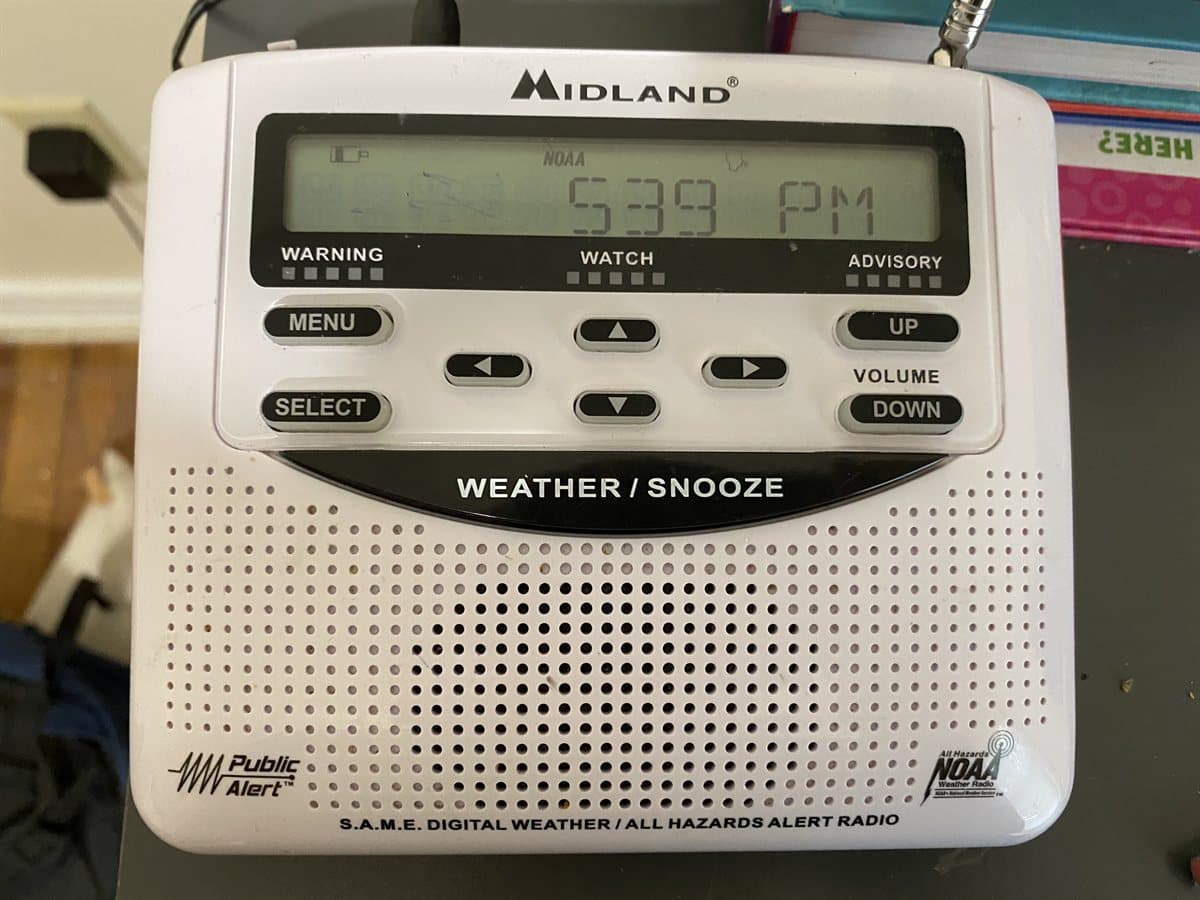
| Resilient backup | NOAA weather radio with spare batteries | Works when mobile data degrades |
| Family coordination | One out-of-area check-in contact | Prevents repeated local call failures |
| Information hygiene | Single household verifier | Stops rumor-driven decisions |
A robust plan uses short, prewritten messages: "Sheltered at [location], everyone accounted for, next update at [time]." This reduces cognitive load and prevents emotional over-communication that clogs channels.
Households should also predefine who decides on mobility, who tracks official advisories, and who manages children or elders. Role clarity matters when stress peaks.
Does potassium iodide belong in a nuclear alert plan?
Yes, but as a narrow tool. Potassium iodide (KI) protects the thyroid only when radioactive iodine exposure is a confirmed risk and public health officials advise dosing. It is not a general anti-radiation pill.
KI decision boundaries
| Statement | True or false | Practical implication |
|---|---|---|
| KI protects against all radiation | False | Shelter and contamination control remain primary |
| KI can be useful in specific iodine-release scenarios | True | Keep dose chart and follow official instructions |
| More KI is better | False | Incorrect dosing adds side-effect risk |
For detailed dosing and contraindications, use Potassium Iodide Nuclear Emergency Guide. Integrate KI into your plan only after core shelter procedures are reliable.
What should workplaces and schools do differently?
Institutional settings need procedural rigor because movement volume is high and accountability is complex. The most resilient facilities do four things in advance:
- Map shelter zones with backup locations.
- Pre-stage contamination supplies (bags, gloves, wash stations, signage).
- Train staff on first 10-minute actions and communication roles.
- Publish reunification and release policies before an incident.
Institutional readiness benchmark table
| Capability | Minimum standard | Failure mode if missing |
|---|---|---|
| Shelter map | Every room has nearest protected zone | Corridor confusion, delayed sheltering |
| Accountability protocol | Rapid roll call by team/grade | Missing-person uncertainty |
| Parent/family messaging template | Prewritten timed updates | Panic arrivals, perimeter congestion |
| Medical escalation path | Contact tree + symptom triage trigger | Delayed care for high-risk individuals |
A disciplined process also improves psychological stability. People handle uncertainty better when they see a visible routine and predictable checkpoints.
What to do during nuclear alert if you are traveling
Travel scenarios are where plans usually fail, so keep the rule-set simple and portable.
Portable protocol for commuters and travelers
- Identify likely shelter options along regular routes (transit hubs, office towers, underground structures).
- Keep a compact kit: N95 mask, water pouch, power bank, paper contacts, and radio access plan.
- If an alert triggers, enter the nearest substantial building first; do not try to "beat the plume" by driving long distances.
- Notify one contact with status and shelter location; then conserve battery.
If you live in an apartment-heavy city, prioritize building selection over apartment unit upgrades. Dense concrete structures with interior cores can provide meaningful shielding even without dedicated shelter infrastructure.
The 24-hour nuclear alert action protocol at a glance
To simplify execution under stress, use this four-phase model:
| Phase | Time window | Core objective | Non-negotiable action |
|---|---|---|---|
| Stabilize | 0-10 minutes | Cut immediate exposure | Get inside and move to best shelter zone |
| Protect | 10-60 minutes | Prevent contamination spread | Remove outer layer, wash exposed skin, seal routines |
| Verify | 1-6 hours | Improve decision quality | Monitor official channels at fixed intervals |
| Transition | 6-24 hours | Move only when net safer | Follow route-specific evacuation or continued shelter guidance |
This protocol is intentionally conservative because uncertainty is highest early. Your goal is not perfect prediction. Your goal is reducing avoidable harm while authorities refine hazard data.
For geopolitical context on why civilian preparedness remains relevant even with national deterrence systems, see How Nuclear Deterrence Works and What Is Launch-on-Warning?. Strategic stability does not eliminate local response requirements.