Tactical vs Strategic Nuclear Weapons Explained for 2026
Tactical vs strategic nuclear weapons explained with doctrine, ranges, yields, targets, and escalation risk so you can read nuclear headlines without confusion.
Staff Reporting and Analysis. Produces source-backed reporting, explainers, and reference pages on nuclear risk, proliferation, and escalation dynamics.
Key Sources
Start with the strongest supporting documents and reporting behind this page.
Where This Matters Now
Recent articles where this concept is actively shaping the current crisis.
In Current Coverage
Able Archer 83: The 1983 Nuclear War Scare Explained
Able Archer 83 was a NATO drill in November 1983 that Moscow misread as a first strike, pushing Cold War tensions to their most dangerous point.
2026-03-03
In Current Coverage
Russia vs US Nuclear Forces: 2026 Strategic Comparison
Russia and US nuclear forces compared by warheads, delivery systems, modernization, spending, and doctrine across the world's two largest arsenals.
2026-03-03
In Current Coverage
Is This Like the Cuban Missile Crisis? Comparing 1962 and 2026
A 1962 vs 2026 comparison of decision windows, nuclear proximity, escalation control, and why the Iran crisis is framed as a modern Cuban Missile moment.
2026-03-03
Related Comparisons
Comparison pages that show how this concept plays out across rivalries, arsenals, and crisis analogies.
Comparison
Russia vs US Nuclear Forces: 2026 Strategic Comparison
Russia and US nuclear forces compared by warheads, delivery systems, modernization, spending, and doctrine across the world's two largest arsenals.
2026-03-03
Comparison
Is This Like the Cuban Missile Crisis? Comparing 1962 and 2026
A 1962 vs 2026 comparison of decision windows, nuclear proximity, escalation control, and why the Iran crisis is framed as a modern Cuban Missile moment.
2026-03-03
Comparison
India vs Pakistan Nuclear Weapons: A Complete 2026 Comparison
India vs Pakistan nuclear comparison: warheads, delivery systems, doctrines, defense spending, and how Kashmir escalation could strain deterrence.
2026-03-03
Related Concepts
Companion explainers that deepen the strategic logic around this topic.
Concept
What Is Mutually Assured Destruction (MAD)?
What is mutually assured destruction (MAD)? We explain the doctrine, Cold War logic, modern criticisms, and why MAD still shapes nuclear strategy.
2026-03-03
Concept
Nuclear Triad Explained: Structure, Purpose, and Tradeoffs
Nuclear triad explained: how land, sea, and air nuclear forces work, why states keep all three legs, and what this means for deterrence risk in 2026.
2026-04-01
Concept
No First Use Nuclear Policy: Meaning, Limits, and Risk
No first use nuclear policy lowers first-strike pressure when doctrine and posture align. Compare NFU states, loopholes, and real crisis effects.
2026-03-20
Tactical vs strategic nuclear weapons is fundamentally a mission question: tactical systems are built for theater or battlefield coercion, while strategic systems are built to threaten the survival of a state and preserve deterrence at the highest level. The confusion comes from labels that sound technical but are actually political and doctrinal. If you already follow How Nuclear Deterrence Works, What Is Launch-on-Warning, and What Is Second-Strike Capability, this guide gives you the practical comparison framework that ties those concepts together.
What is the difference between tactical and strategic nuclear weapons?
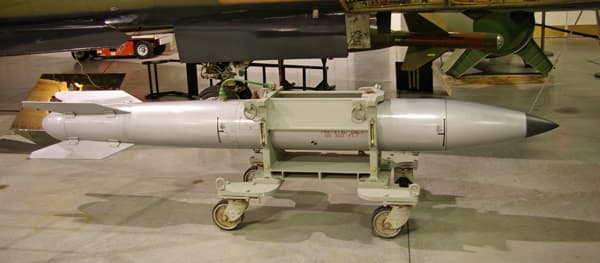
The shortest answer is purpose. Strategic systems are meant to hold at risk an opponent's national-level assets, including command authority, strategic forces, and in some doctrines major economic centers. Tactical, or nonstrategic, systems are intended to influence a regional battle or theater campaign, often over shorter distances and under tighter operational timelines.
The practical comparison
| Dimension | Tactical (nonstrategic) nuclear weapons | Strategic nuclear weapons |
|---|---|---|
| Core mission | Theater coercion, battlefield signaling, warfighting leverage | National-level deterrence and assured retaliation |
| Typical delivery context | Shorter-range missiles, dual-capable aircraft, naval theater systems | ICBMs, SLBMs, heavy bombers and long-range cruise systems |
| Decision framing | Regional escalation management | State survival and major-power deterrence |
| Political signal | "Limited" nuclear use threat | Existential escalation threat |
| Expected consequence of use | Rapid escalation risk, alliance shock, uncertain control | Immediate strategic crisis with global spillover |
That table is why headlines can mislead. A weapon labeled tactical can still produce catastrophic humanitarian and political effects, and a weapon labeled strategic may also have options for tailored employment. The dividing line is not simply blast size.
Why this distinction still matters in 2026
The distinction matters because force posture, command authority, and warning timelines differ by mission set. It also matters for treaty policy, because many arms-control frameworks historically focused on strategic delivery systems while leaving some nonstrategic categories less constrained. This gap is one reason strategic analysts track both categories together when assessing risk trends.
Is there a yield cutoff between tactical and strategic nuclear weapons?
No universal cutoff exists. Some tactical warheads can be lower yield than strategic warheads, but yield alone does not classify mission type. Range, basing mode, command concept, and targeting doctrine are usually more important.
Why "small" does not mean "safe"
People often interpret "tactical" as "small enough to stay local." That assumption is unreliable for four reasons:
- Even lower-yield detonations can cause mass casualties in or near populated areas.
- Radiation, panic movement, and infrastructure disruption extend effects beyond the immediate blast zone.
- Opponents may misread intent and assume a broader first strike is underway.
- Political pressure for retaliation can compress decision timelines dramatically.
A "limited" detonation can therefore trigger strategic-level consequences even if the initial blast is smaller than city-busting Cold War scenarios.
Better classification signals than yield
| Better signal | Why it classifies mission better than yield |
|---|---|
| Delivery range and basing | Indicates theater vs homeland deterrence role |
| Target set in doctrine | Shows whether warfighting or strategic punishment logic dominates |
| Command authorization chain | Reveals if employment is tied to theater commander options or top-level strategic release |
| Alert posture and survivability | Distinguishes immediate battlefield use from assured second-strike forces |
This is why terms like "nonstrategic" are often preferred in technical literature: they avoid implying that a tactical weapon is somehow minor in real-world impact.
How do targeting doctrines map to tactical vs strategic weapons?
Targeting doctrine is where this topic connects to What Is Mutually Assured Destruction, What Is Escalation Dominance, and the modern debate about No First Use Nuclear Policy. Tactical systems are often discussed in relation to theater targets, while strategic systems are central to second-strike deterrence.
Counterforce and countervalue in plain language
- Counterforce: targeting military assets such as missile silos, bomber bases, command nodes, or naval facilities.
- Countervalue: targeting what a state values most in societal terms, often major cities and industrial infrastructure.
In practice, real war plans can blend these categories. A strike marketed as counterforce can still produce countervalue-scale humanitarian damage if military targets are near population centers.
Why doctrine can blur categories
| Doctrine pressure point | Tactical impact | Strategic impact |
|---|---|---|
| Need to signal resolve without full war | Encourages "limited" options in theater | Increases risk of misinterpretation by nuclear peers |
| Fear of disarming first strike | Pushes rapid theater alerts | Tightens strategic launch-on-warning incentives |
| Alliance reassurance demands | Maintains forward-deployed dual-capable systems | Reinforces strategic umbrella commitments |
So tactical vs strategic is useful only when paired with doctrine and command context. Without that context, the labels hide more than they explain.
Who controls tactical weapons versus strategic forces in a crisis?
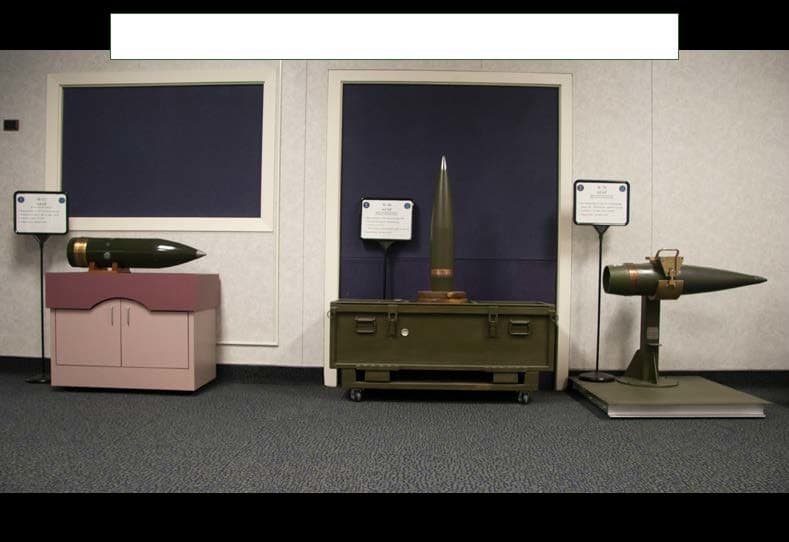
At a high level, nuclear use authorization remains centralized in nuclear states, but force presentation and readiness activities can involve multiple military echelons. The practical difference is that theater systems may be integrated into ongoing regional operations, while strategic forces sit in a dedicated deterrent posture built for assured retaliation.
Command and control differences that matter
| Command factor | Tactical posture tendency | Strategic posture tendency |
|---|---|---|
| Operational integration | Closer to conventional theater planning | Separate strategic command architecture |
| Signaling cadence | Frequent visible exercises and movement | Continuous background deterrence presence |
| Delegation concerns | Higher public concern about compressed theater timelines | Strong emphasis on centralized national authority |
| Escalation interpretation | Opponent may read as preparation for first use | Opponent reads as existential deterrence signaling |
These differences are exactly why command-and-control resilience matters. If communications degrade in a crisis, both sides may infer worst-case intent. That dynamic links tactical signaling to strategic panic.
The decision-time problem
The biggest risk is not simply weapon type. It is shrinking decision time under uncertainty. Theater events can unfold quickly, and strategic warning systems may not wait for diplomatic clarification. When leaders face minutes instead of hours, miscalculation risk rises.
Can a tactical nuclear strike stay limited?
In theory, some doctrines claim limited nuclear use can coerce de-escalation. In practice, no one can guarantee escalation control once the nuclear threshold is crossed. This is why many analysts treat "limited nuclear war" as a planning assumption, not a reliable prediction.
Why escalation control is so hard
- Opponents cannot instantly verify your restraint intent.
- Damaged command networks increase accidental or unauthorized response risks.
- Alliance obligations can expand a bilateral exchange into a multi-state crisis.
- Domestic political pressure can force retaliation beyond original war aims.
A tactical detonation might be framed as a battlefield signal, but adversaries may interpret it as the first step in a broader campaign. That interpretation gap is the core escalatory danger.
Escalation pathways after first nuclear use
| Stage | What actors may believe | Likely pressure |
|---|---|---|
| Initial detonation | "Signal strike" vs "opening salvo" ambiguity | Immediate retaliation planning |
| Follow-on warning data | Fear of additional launches | Force dispersal and alert increases |
| Alliance consultations | Credibility and deterrence commitments on the line | Expanded military involvement |
| Domestic response cycle | Demand for decisive action | Reduced room for de-escalatory compromise |
This is one reason emergency guidance and deterrence scholarship increasingly emphasize preventing first use rather than betting on post-use control.
How does NATO and Russia framing affect this debate?
Public debate often centers on Europe because NATO members, Russia's doctrine discussions, and historical nonstrategic deployments intersect there. But the same logic applies in other regions where dual-capable missiles, aircraft, and regional rivalries create ambiguous signaling.
Why NATO's language matters
NATO frames nuclear capability as deterrence and alliance defense, not warfighting preference. Still, the existence of dual-capable systems means adversaries must interpret movements in real time. During high tension, routine exercises can be misread as preparation for use.
NATO's own doctrine pages underline that nuclear deterrence remains part of alliance strategy, while parallel diplomatic channels seek risk reduction (NATO nuclear policy overview).
Why Russian and U.S. force structure debates remain central
U.S. and Russian arsenals still dominate global totals, so their force postures shape global escalation expectations. SIPRI and Nuclear Notebook tracking consistently show that modernization and signaling behavior in these two states affect the broader deterrence environment (SIPRI Yearbook).
Even when a crisis starts regionally, strategic peers watch for signals that might affect their own deterrence calculations. That is how a tactical narrative can become a strategic one quickly.
What should readers look for in tactical nuclear headlines?
A useful reading habit is to separate terminology from operational meaning. Many alarming headlines can be evaluated faster with a structured checklist.
Five-question headline filter
- What mission is being signaled: theater coercion, deterrence reassurance, or strategic warning?
- Is the report about capability, movement, exercise, or explicit use threat?
- Which command level is referenced: theater unit, national leadership, or alliance command?
- Does the source distinguish range, basing, and target set, or only mention yield?
- Is there corroboration from official documents, not only anonymous commentary?
Signals that deserve extra caution
- Language suggesting pre-delegation or "automatic" retaliation without context.
- Claims that a tactical strike would be "contained" with high confidence.
- Stories that conflate any short-range missile with a confirmed nuclear payload.
- Reporting that ignores alliance consultation timelines and crisis communications.
This framework also improves interpretation of related pages such as Can the US Shoot Down a Nuclear Missile? and How Many Nukes to Destroy the World, where technical capability and strategic perception interact.

Tactical vs strategic in one decision model
To make this practical, treat tactical vs strategic as three stacked questions:
- Mission: What political-military objective is being pursued?
- Mechanism: What delivery systems and command processes are involved?
- Consequence: How likely is strategic spillover after first use or high-alert signaling?
If a report cannot answer at least two of these three, treat it as incomplete. This model avoids both panic and false reassurance.
Compact reference matrix
| If you see this term | Ask this clarifying question | Why it changes risk interpretation |
|---|---|---|
| "Tactical nuke" | Which delivery system and command chain? | Distinguishes battlefield rhetoric from actual readiness posture |
| "Strategic forces alerted" | Is this routine posture change or crisis surge? | Avoids overreading standard deterrent operations |
| "Limited strike option" | What escalation control assumptions are stated? | Tests whether limits are asserted or demonstrated |
| "Deterrence signal" | Who is the intended audience: adversary, ally, or domestic public? | Signals can stabilize one audience while destabilizing another |
That is the most defensible way to read current nuclear signaling: label first, mechanism second, escalation math third.
Frequently asked questions
Bottom line
The clearest way to understand tactical vs strategic nuclear weapons is to stop asking only "how big is the warhead" and start asking "what mission, command chain, and escalation pathway does this system represent." Tactical labels describe intended theater function, but strategic consequences can follow quickly once nuclear use begins. For readers tracking daily risk signals, the highest-value habit is to evaluate doctrine, command context, and likely escalation dynamics together rather than relying on one-word labels.