
How Bunker Buster Bombs Work in Real Strike Planning
How bunker buster bombs work depends on casing strength, fuze timing, and delivery profile. Learn penetration limits, tradeoffs, and key constraints.
Staff Reporting and Analysis. Produces source-backed reporting, explainers, and reference pages on nuclear risk, proliferation, and escalation dynamics.
Key Sources
Start with the strongest supporting documents and reporting behind this page.
Where This Matters Now
Recent articles where this concept is actively shaping the current crisis.
In Current Coverage
Who Started the Iran-Israel War? Timeline and Evidence
A source-based timeline of who initiated the Iran-Israel war sequence, from initial strikes to retaliation cycles and later US-Iran escalation.
2026-03-03
In Current Coverage
Russia vs US Nuclear Forces: 2026 Strategic Comparison
Russia and US nuclear forces compared by warheads, delivery systems, modernization, spending, and doctrine across the world's two largest arsenals.
2026-03-03
In Current Coverage
Ali Hosseini Khamenei: Biography, Power, and Nuclear Legacy
Biography of Iran's supreme leader, his power network, financial empire, nuclear strategy, and the succession crisis after his death in 2026.
2026-03-04
Related Comparisons
Comparison pages that show how this concept plays out across rivalries, arsenals, and crisis analogies.
Related Concepts
Companion explainers that deepen the strategic logic around this topic.
Concept
What Is Escalation Dominance?
Escalation dominance is the ability to control each rung of conflict and impose higher costs on an adversary. This explains why it drives crisis strategy.
2026-03-04
Concept
Tactical vs Strategic Nuclear Weapons: Key Differences
Tactical vs strategic nuclear weapons explained with doctrine, ranges, yields, targets, and escalation risk so you can read nuclear headlines without confusion.
2026-04-27
Concept
Nuclear Command and Control Explained: NC2 and NC3
Nuclear command and control explained: how NC2 authority and NC3 systems verify, transmit, and execute nuclear decisions in a fast-moving crisis.
2026-04-27
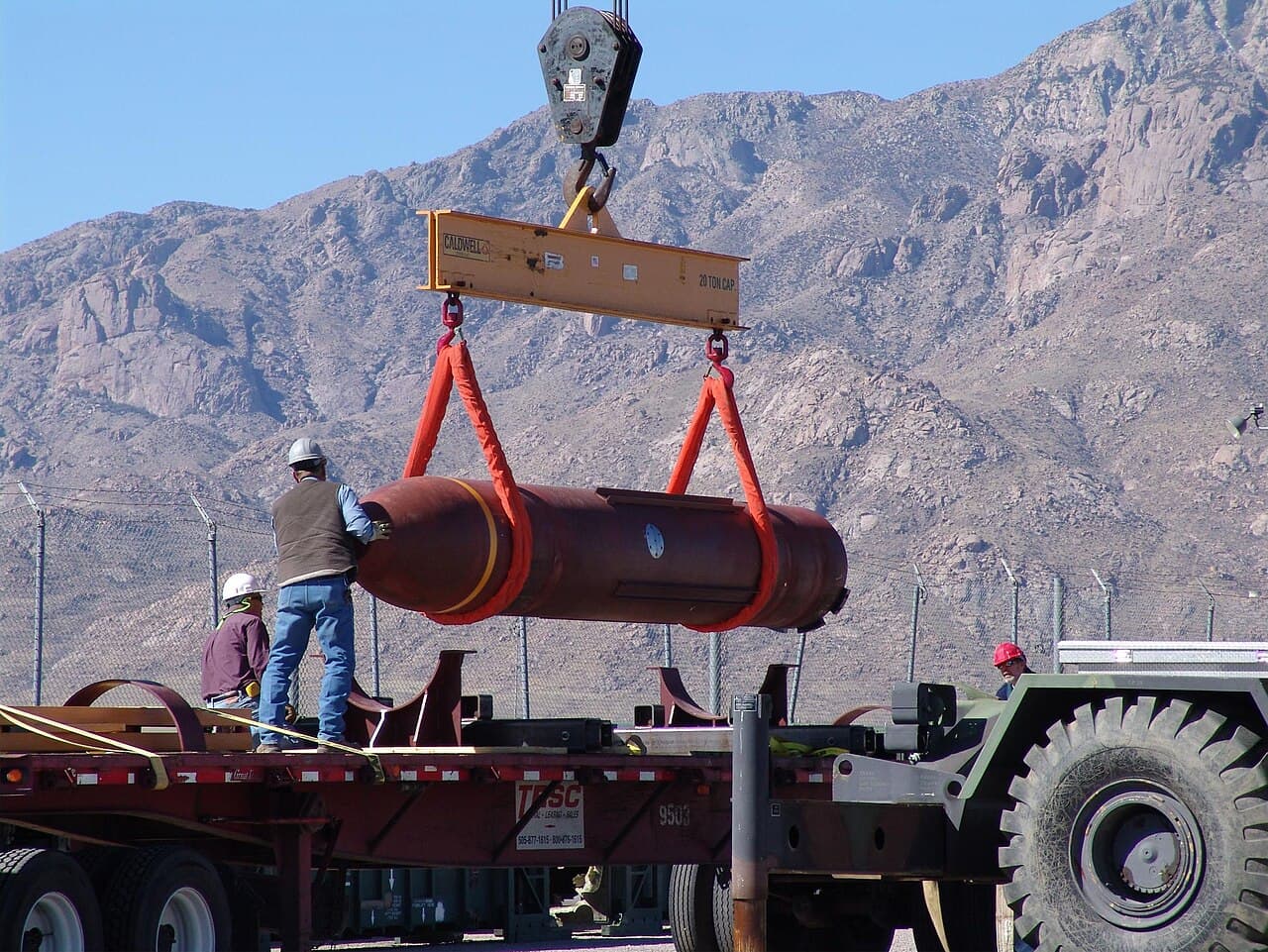
How bunker buster bombs work is not mostly about "big explosion"; it is about keeping a bomb intact through extreme impact, delaying detonation by milliseconds, and placing that detonation at the right depth relative to the target geometry. If you are following current escalation coverage, this question connects directly to US-Israeli Strikes Hit Fordow, Isfahan, and Natanz, Iran War Timeline 2026, and Nuclear Threat Assessment: Where the Iran Crisis Goes From Here.
What is a bunker buster bomb, exactly?
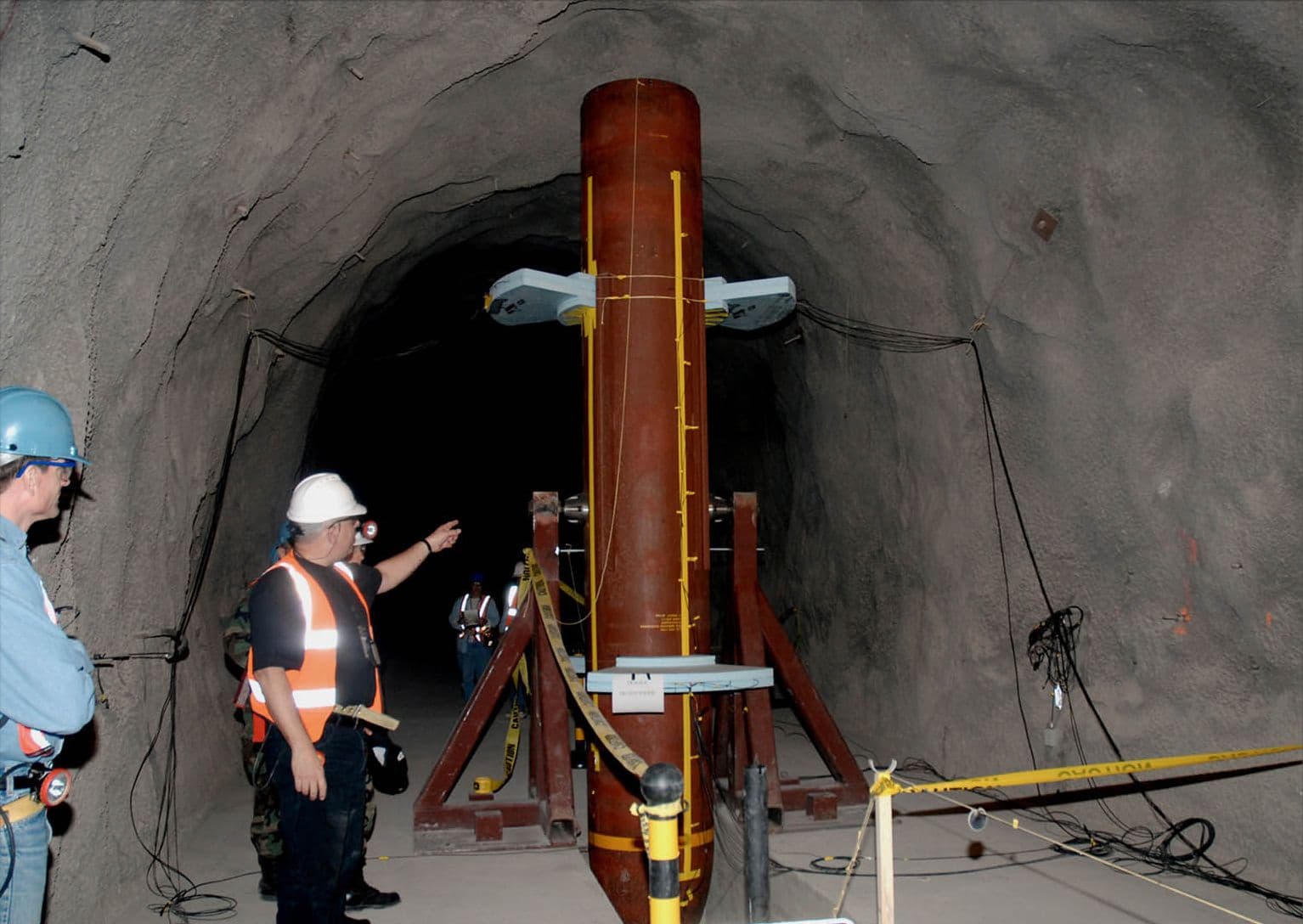
A bunker buster is a precision-guided munition designed to penetrate earth, reinforced concrete, or rock before detonation. The defining feature is not merely explosive power; it is structural survivability under impact loads that would destroy conventional bombs. In practical terms, a bunker buster has a hardened steel casing, specific mass-to-diameter characteristics, and a delayed fuze profile tuned for below-surface detonation.
Why this differs from standard blast weapons
Standard general-purpose bombs are optimized for near-surface blast and fragmentation. They can damage buildings, air defenses, and exposed infrastructure efficiently, but they lose effectiveness against deeply buried facilities with layered overburden. Deep targets absorb and disperse surface blast energy through soil, concrete, and void geometry.
Bunker busters are built for the opposite problem set:
| Design goal | Standard bomb bias | Bunker buster bias |
|---|---|---|
| Detonation timing | Fast surface-area effect | Delayed underground effect |
| Casing architecture | Fragmentation efficiency | Impact survivability |
| Target class | Surface and shallow structures | Hardened/deeply buried nodes |
| Battle assessment | Visible immediate effects | Ambiguous without deep forensics |
This is why analysts treat them as specialized tools for hard and deeply buried targets rather than all-purpose strike solutions.
Why the term "bunker buster" can mislead
Public discourse often treats bunker busters as binary: either they "work" or they "do not." Operationally, outcomes are probabilistic. Mission planners estimate likely functional degradation at different aim points and depths, then update those estimates after strike evidence arrives. That evidence cycle is one reason U.S. strike reporting emphasizes assessment phases, as seen in the DoD strike briefing and background release.
How do bunker buster bombs penetrate concrete and rock?
Penetration is governed by momentum transfer, material strength, and structural failure mechanics. The bomb must remain physically coherent while decelerating violently on impact, then continue to tunnel through layers until fuze timing triggers detonation.
The three-step penetration sequence
- Initial impact: the casing and nose section absorb shock and avoid catastrophic breakup.
- Progressive penetration: momentum and sectional density drive the weapon deeper as surrounding material fractures, compacts, or shears.
- Delayed detonation: the fuze fires after a set delay or shock-profile threshold so the main charge explodes below the protective layer.
In this framework, explosive fill does not matter if the casing fails too early. That is why hardened penetrators prioritize metallurgy and casing geometry at least as much as warhead mass.
Why geology can beat nominal penetration specs
Depth claims in public reporting are often simplified. A weapon can perform differently in compacted soil, layered concrete, fractured limestone, or deeply reinforced shafts. Water content, void spaces, and tunnel geometry all alter pressure-wave behavior after detonation.
Depth is not the same as mission kill
A strike can penetrate deeply yet still miss critical chambers, cable paths, or ventilation nodes by enough margin to leave partial functionality. Penetration depth and target neutralization are related, but they are not identical metrics.
This distinction is central when reading claims about deeply buried enrichment sites and command nodes.
How deep can a bunker buster bomb go in real conditions?
The most searched variant of this topic is effectively "how deep can it actually penetrate." The honest answer is a range, not one number. Public estimates depend on target material assumptions that are often uncertain or classified in detail.
Practical variables that change penetration outcomes
| Variable | Why it matters | Operational implication |
|---|---|---|
| Impact velocity | Higher velocity usually increases penetration | Delivery envelope and release profile matter |
| Impact angle | Off-angle impact can reduce depth and structural integrity | Precision guidance and approach geometry are critical |
| Overburden composition | Rock, concrete, and mixed layers resist differently | Pre-strike geologic intelligence changes expected effect |
| Reinforcement design | Rebar density and layering alter fracture behavior | Hardened facilities can be engineered against known threats |
| Fuze behavior | Mistimed fuze can detonate too shallow or too deep | Quality control and mission planning directly affect efficacy |
Because these variables interact, planners typically produce confidence bands instead of single-point certainty.
Why multiple strikes are often planned
Deep-target operations commonly use repeated attacks on related aim points to increase probability of functional defeat. One strike may weaken protective layers; another may exploit damaged pathways or altered structural integrity. This campaign logic explains why some operations include sequenced sorties and rapid reassessment.
In short, asking "how deep can it go" is useful, but asking "what level of functional degradation can be confirmed after iterative strikes" is the better strategic question.
Why are B-2 aircraft associated with heavy bunker busters?
Weapon capability is only one half of the problem. Delivery platform characteristics determine whether the weapon can be carried, flown to target at required range, and released inside a viable accuracy envelope.
Platform constraints that shape mission design
Heavy penetrators demand:
- Sufficient payload and bay integration
- Long range with tanker support compatibility
- Low-observable profile or protected ingress tactics
- High-quality navigation and precision release control
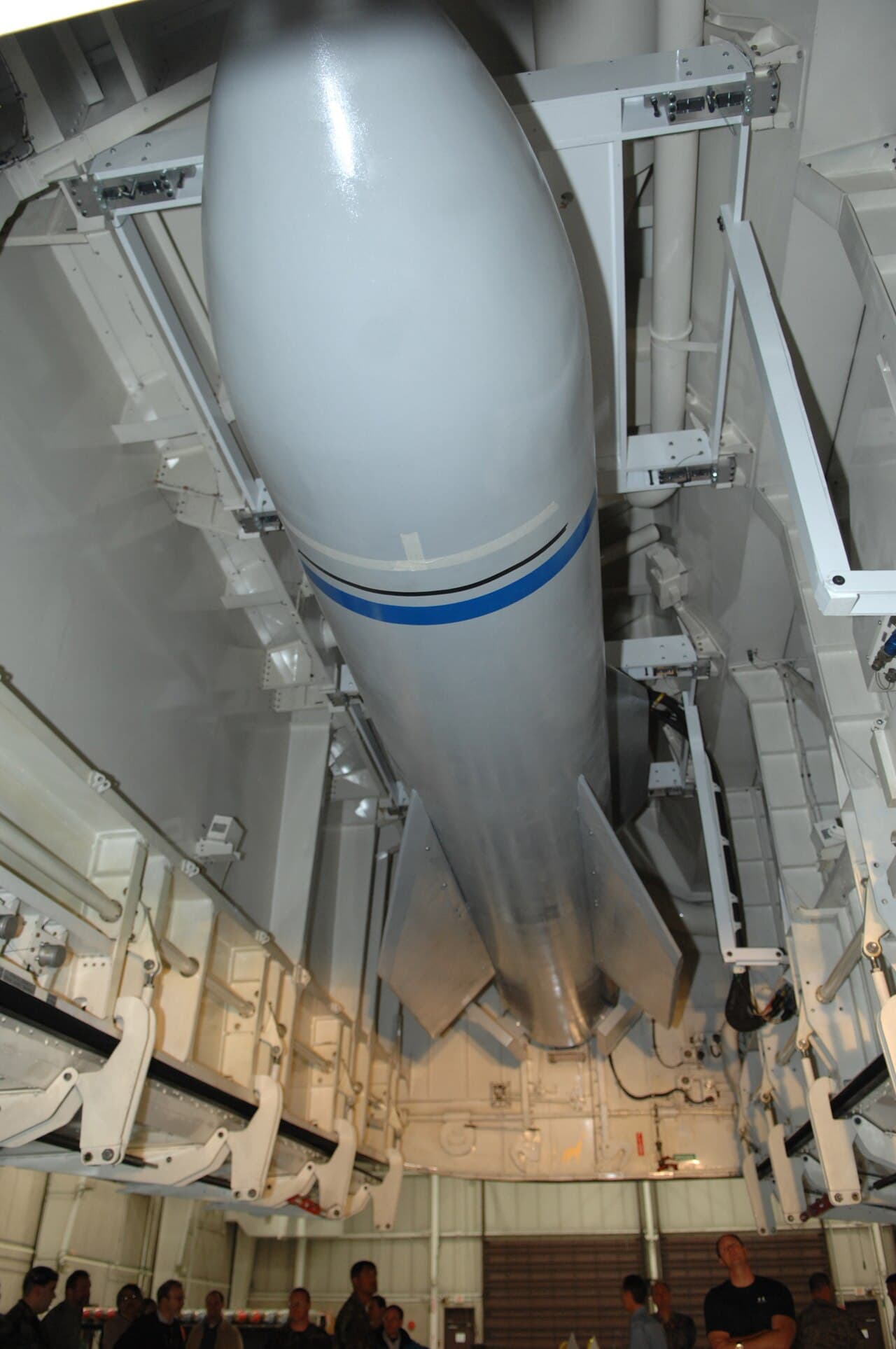
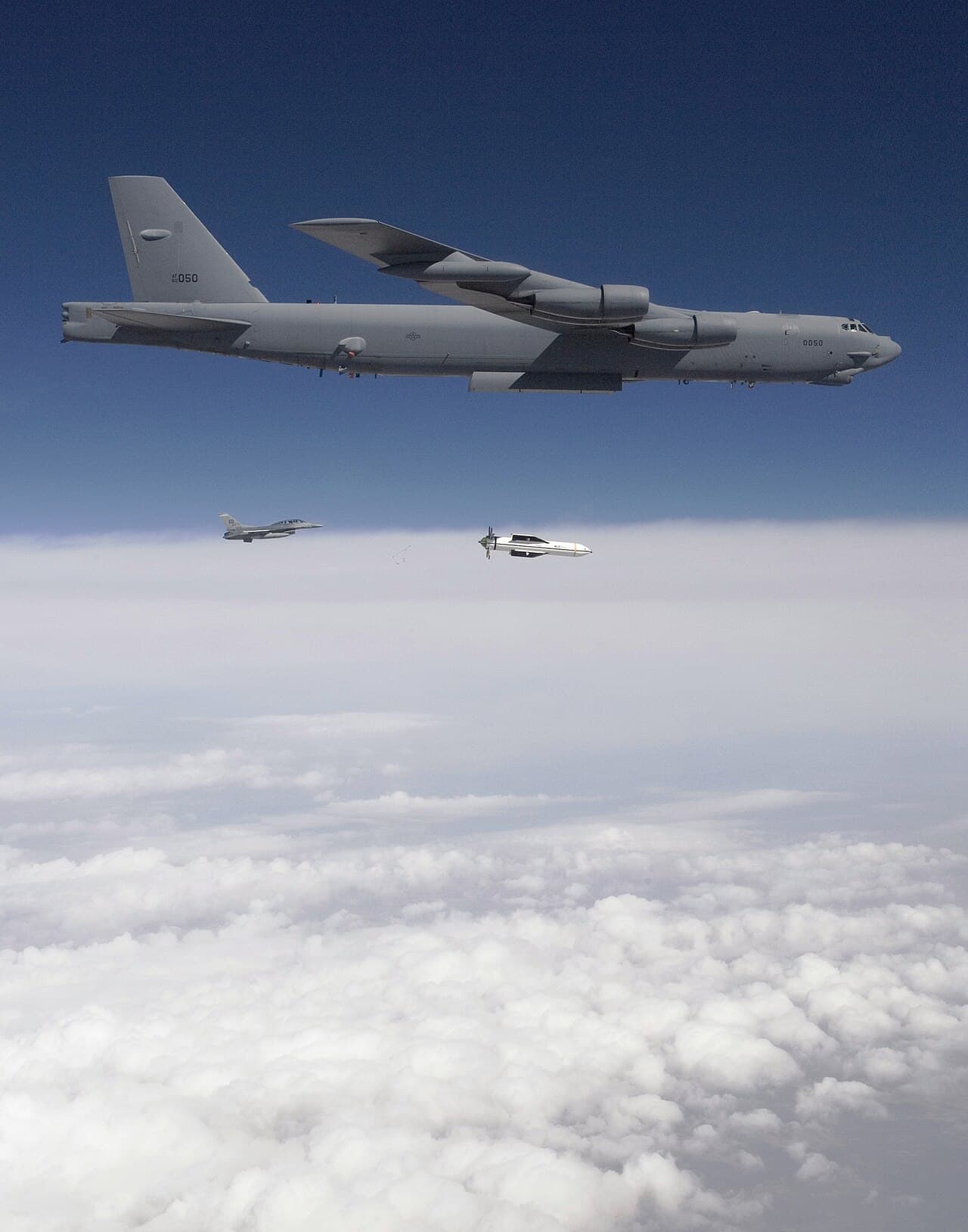
The B-2 has been central in public discussion because of payload integration and mission profile flexibility documented in official channels, including the U.S. Air Force B-2 fact sheet.
Delivery geometry is not a minor detail
Even with advanced guidance, release altitude, speed, and trajectory affect terminal impact behavior. If delivery conditions are suboptimal, penetration performance can underperform theoretical benchmarks. That is one reason strike planning integrates aircraft routing, suppression of defenses, electronic warfare conditions, and weather windows.
Can one bunker buster destroy a deep nuclear facility?
Usually, planners do not treat one weapon as a guaranteed "facility delete" button. Underground complexes are designed for resilience through depth, compartmentalization, redundancy, and uncertain layout visibility from outside.
Why "one-and-done" assumptions fail
Deep facilities can remain partially operational when:
- Noncritical chambers are hit while critical nodes survive
- Access tunnels collapse but core rooms remain structurally intact
- Power and ventilation are degraded but repairable
- Backup pathways restore limited function faster than expected
For this reason, post-strike assessment is often described in terms like "degraded," "severely damaged," or "unknown functionality" rather than immediate certainty.
What counts as success in deep-target campaigns
Mission success may be defined as:
- Immediate destruction of key mission equipment
- Prolonged operational delay beyond strategic decision windows
- Forcing costly reconstruction and relocation
- Signaling credible capability for deterrence effects
Each definition can support different policy narratives, so readers should identify which success criterion is being used before accepting headline claims.
What limits bunker buster effectiveness in practice?
The technical literature and open analysis converge on one point: uncertainty is the default condition in deep-target warfare. Even very capable weapons face intelligence and physics limits.
Intelligence uncertainty is often the bottleneck
You can have a high-performance penetrator and still miss mission objectives if facility maps, depth estimates, or redundancy assumptions are incomplete. Underground sites are often designed precisely to deny clean targeting confidence.
Structural adaptation by defenders
Once a specific penetrator profile is known publicly, defenders can adapt by increasing depth, changing chamber spacing, adding sacrificial layers, or relocating sensitive functions. This offense-defense cycle is ongoing and explains why capability discussions should be treated as snapshots, not permanent truths.
Political and escalation constraints
Not every technically possible strike is strategically desirable. Decision-makers must weigh regional escalation, legal framing, alliance signaling, and second-order retaliation risk. That is why this topic sits beside How the War Powers Resolution Works in 2026 and What Is Escalation Dominance? in strategic analysis.
Bunker buster vs cruise missile: when does each make sense?
The comparison is frequent in user queries, but these are different tools for different objectives.
Capability tradeoff overview
| Dimension | Heavy bunker buster | Cruise missile |
|---|---|---|
| Best use case | Deep hardened targets | Surface or lightly hardened targets |
| Warhead optimization | Penetration before detonation | Surface blast/fragmentation patterns |
| Delivery dependency | Requires compatible aircraft and mission geometry | Stand-off launch flexibility |
| BDA complexity | Often high due buried effects | Usually easier to observe immediately |
| Escalation signaling | High visibility strategic signal | Can be high, but often more scalable |
Cruise missiles can suppress air defenses, degrade power nodes, or isolate a complex, while bunker busters target the hardest protected nodes. In many campaigns, they are complementary rather than interchangeable.
Why mixed packages are common
Deep-target operations can combine multiple munition types to shape conditions before penetration attempts. Surface infrastructure attacks may reduce repair capacity, communication, or active defense before hardened-node strikes occur.
That integrated approach is consistent with broader escalation and sequencing dynamics covered in Iran Proxy Network Escalates Across the Middle East.
How should you evaluate public claims after a bunker strike?
Because definitive verification can lag, the quality of analysis depends on process discipline.
A practical credibility checklist
- Separate "strike executed" from "target neutralized."
- Check whether claims specify functional effects (delay, disablement, destruction).
- Look for evidence type: official briefings, imagery, independent analysis, or on-site access.
- Track updates over days and weeks, not only first headlines.
- Compare source framing across military, diplomatic, and technical communities.
Red flags in weak analysis
- Single-number depth claims with no material assumptions
- Immediate certainty language about underground destruction
- No distinction between physical damage and strategic mission impact
- Ignoring defender repair and adaptation timelines
How bunker buster strikes fit into deterrence and signaling
Beyond engineering, these weapons communicate intent and capability. A deep-target strike can serve coercive, punitive, or preventive objectives depending on timing and declared rationale.
Four signaling layers often present
- Tactical signal: "we can reach hardened assets"
- Operational signal: "we can sustain precision strike campaigns"
- Strategic signal: "protected facilities are not invulnerable"
- Political signal: "leadership is willing to absorb escalation risk"
Signals are interpreted by allies, adversaries, and domestic audiences differently, which is why messaging discipline matters almost as much as strike geometry.
Why post-strike ambiguity can be intentional
States sometimes leave operational details partially ambiguous to preserve uncertainty and reduce adversary adaptation. That can improve deterrence in one sense while making public analysis harder. As a reader, treat ambiguity as part of the strategy environment, not merely an information failure.
Case study lens: reading deep-target strike claims in the first 72 hours
Early reporting cycles are where analysis quality usually breaks down. In the first day, officials may confirm sorties and weapon classes while withholding exact battle-damage conclusions. By day two or three, satellite imagery and secondary-source assessments start to fill gaps, but those sources still may not reveal internal chamber status or critical equipment survivability.
A practical 72-hour interpretation model
Use a phased approach:
- Hours 0-12: confirm what was struck, with what class of weapon, and from which operational context.
- Hours 12-36: separate visible external damage from inferred internal effects.
- Hours 36-72: track whether claims shift from "damage" to "functional disablement" with new evidence.
This reduces overreaction to both optimistic and pessimistic narratives. It also aligns better with how deep-target assessment actually works in military practice.
What evidence quality looks like at each phase
| Evidence type | Fast availability | Reliability for deep-target kill assessment |
|---|---|---|
| Official strike confirmation | High | Good for sortie and munition facts, weak for internal damage certainty |
| Open-source imagery | Medium | Useful for crater patterns and access points, limited for underground function |
| Technical model estimates | Medium | Good for scenario bounds, sensitive to input assumptions |
| On-site inspection access | Low | Highest confidence, often delayed or denied in active conflict |
When inspection access is blocked, uncertainty persists even if officials are confident in strike execution. That gap is why prudent analysis uses probability language and updates claims as evidence improves.
Why this matters for policy decisions
Policy choices made inside ambiguous windows can lock in escalation paths. If leaders assume complete neutralization too early, they may underprepare for follow-on activity. If they assume zero effect despite evidence of significant degradation, they may escalate unnecessarily. The best practice is disciplined conditional planning tied to evidence thresholds, not headlines.
Frequently asked questions about bunker buster mechanics
Bottom line: what most people miss about bunker busters
The core misunderstanding is treating bunker busters as magic-depth weapons instead of precision engineering tools inside a broader campaign. How bunker buster bombs work is fundamentally about systems alignment: intelligence quality, platform integration, impact physics, fuze timing, and follow-on verification.
That is why serious analysis avoids absolute language. Some deep targets can be disabled quickly; others may require repeated operations, mixed munition packages, and long assessment cycles. If you read strike claims with that framework, you will make better sense of fast-moving crisis reporting and avoid both hype and false reassurance.