Iran Nuclear Program and Military Power Profile
Iran's threshold nuclear status, enrichment capacity, and military posture amid the 2026 war and intensified nonproliferation pressure.
Staff Reporting and Analysis. Produces source-backed reporting, explainers, and reference pages on nuclear risk, proliferation, and escalation dynamics.
Country Snapshot
Total warheads
None confirmed
Threshold or non-nuclear state
Deployed warheads
Not disclosed
First test
No test
No confirmed nuclear test date
NPT status
Member
Active military
610,000
GFP rank #17
Defense budget
$10B
Approximate annual military spending
Key Sources
Start with the strongest supporting documents and reporting behind this page.
Compare Key Metrics
Quick side-by-side comparison against other major nuclear profiles.
| Metric | 🇮🇷Iran Current Page | 🇷🇺Russia | 🇺🇸United States | 🇨🇳China |
|---|---|---|---|---|
| Total warheads | — | 5,580 | 5,044 | 600 |
| Deployed warheads | — | 1,710 | 1,770 | 24 |
| Active military | 610,000 | 1,320,000 | 1,328,000 | 2,035,000 |
| Defense budget | $10B | $109B | $916B | $292B |
| GFP rank | #17 | #2 | #1 | #3 |
| NPT status | Member | Member (Depository State) | Member (Depository State) | Member (Depository State) |
| First nuclear test | No confirmed test | 1949 | 1945 | 1964 |
Related Rivalries
These comparisons show how this state's force posture and doctrine stack up against key rivals.
Rivalry
Iran vs North Korea Nuclear Programs: A Complete 2026 Comparison
Iran and North Korea's nuclear trajectories compared: enrichment, warhead status, missile reach, sanctions resilience, and breakout implications.
Rivalry
Iran Crisis 2026 vs 2019 Tensions: What's Different This Time
How the 2026 Iran crisis differs from 2019: leadership decapitation, larger retaliation, Hormuz closure risk, and a sharper nuclear escalation path.
Rivalry
Iran War vs Iraq War: How the 2026 and 2003 Conflicts Compare
Iran 2026 vs Iraq 2003 compared across legal authority, coalition structure, force design, economic shock, and the central role of nuclear risk.
Related Doctrines
These explainers provide the strategic concepts that matter most for interpreting this country's nuclear profile.
Doctrine
What Is the IAEA and What Do They Do?
What is the IAEA? Learn how inspectors verify nuclear programs, what safeguards can and cannot confirm, and why access disruptions raise global risk.
Doctrine
What Happens If Iran Gets Nuclear Weapons?
If Iran obtained nuclear weapons, effects could include regional arms races, Israeli strike pressure, oil-market shocks, and broader nonproliferation fallout.
Doctrine
What Is Nuclear Breakout Time?
Nuclear breakout time is the estimated time needed to produce weapon-grade fissile material; this explainer shows how it is measured and why it matters.
Iran does not possess nuclear weapons but is considered a nuclear-threshold state — a country with the technical capability to produce nuclear weapons in a short timeframe. Iran has enriched uranium to 60% purity (weapons-grade is 90%) and possesses advanced centrifuge technology. Iran's nuclear program, combined with its ballistic missile arsenal and role in the current Middle East crisis, makes it one of the most critical factors in global nuclear risk assessment.
Nuclear Program Status
| Category | Status |
|---|---|
| Nuclear warheads | 0 |
| Uranium enrichment | Up to 60% (near weapons-grade) |
| Breakout time | Estimated 1–2 weeks for one weapon's worth of HEU |
| Enrichment facilities | Natanz, Fordow (underground) |
| Research reactors | Tehran, Isfahan, Arak (heavy water, modified) |
| NPT status | Member (IAEA safeguards) |
Iran's nuclear breakout time — the time needed to produce enough highly enriched uranium (HEU) for one weapon — has been estimated at as little as one to two weeks by US intelligence assessments. However, weaponization (designing and building a deliverable warhead) would require additional months.
Ballistic Missile Arsenal
While Iran has no nuclear warheads, it possesses the largest ballistic missile arsenal in the Middle East:
- Kheibar Shekan: Range ~2,000 km, solid-fueled, most advanced medium-range missile
- Emad: Range ~1,700 km, liquid-fueled, first guided reentry vehicle
- Sejjil: Range ~2,000 km, solid-fueled two-stage missile
- Shahab-3: Range ~1,300 km, liquid-fueled (based on North Korean Nodong)
- Fattah: Claimed hypersonic capability, range ~1,400 km
- Ghadr-110: Range ~1,950 km, improved Shahab-3 variant
Iran also operates hundreds of shorter-range missiles and has demonstrated the ability to launch precision strikes, as seen in attacks on US bases and Israeli targets during the current conflict.
Military Overview
| Metric | Value |
|---|---|
| GFP Rank | #17 of 145 |
| GFP Score | 0.4191 |
| Active military | 610,000 |
| IRGC personnel | ~190,000 |
| Military budget | ~$10 billion |
Iran's military is divided between the conventional Armed Forces (Artesh) and the Islamic Revolutionary Guard Corps (IRGC), which controls the missile program, nuclear-related activities, and proxy forces. Iran also operates an extensive network of allied militias across the region (Hezbollah, Houthis, Iraqi PMF, and others).
Role in Current Nuclear Risk
Iran is at the center of the current nuclear crisis and is the primary driver of NukeClock's escalation:
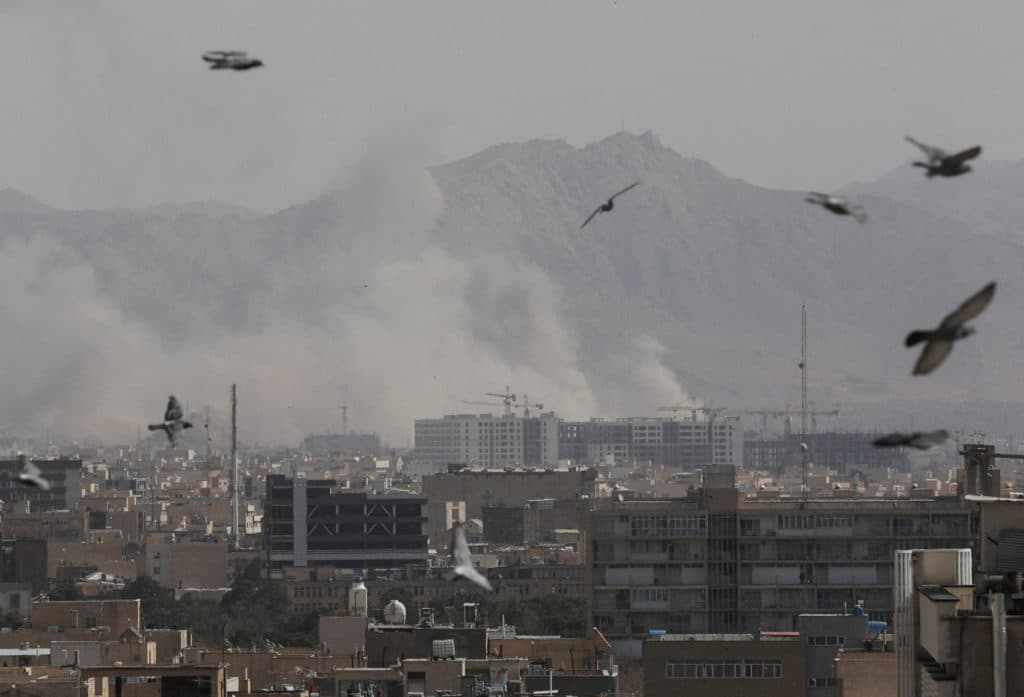
- Active conflict: Iran is engaged in direct military conflict with both Israel and the United States. Iranian retaliatory strikes against US bases in the Persian Gulf and continued exchanges with Israel represent the most dangerous Middle East escalation in decades.
- Nuclear threshold: The destruction of Iranian nuclear facilities by US and Israeli strikes, combined with the killing of Supreme Leader Khamenei, has created unprecedented uncertainty about Iran's nuclear decision-making.
- Breakout risk: Despite facility damage, Iran retains nuclear knowledge, dispersed enrichment capabilities, and sufficient technical expertise that the risk of a clandestine nuclear weapons program remains.
- Regional escalation: Iran's proxy network creates multiple escalation pathways. Attacks by Hezbollah, Houthis, and Iraq-based militias on US and Israeli targets widen the conflict geography.
- Diplomatic collapse: The JCPOA (Iran nuclear deal) collapsed in 2018 when the US withdrew. No diplomatic framework currently exists to constrain Iran's nuclear activities.
Related Articles
Iran vs North Korea Nuclear Programs: A Complete 2026 Comparison
Iran and North Korea's nuclear trajectories compared: enrichment, warhead status, missile reach, sanctions resilience, and breakout implications.
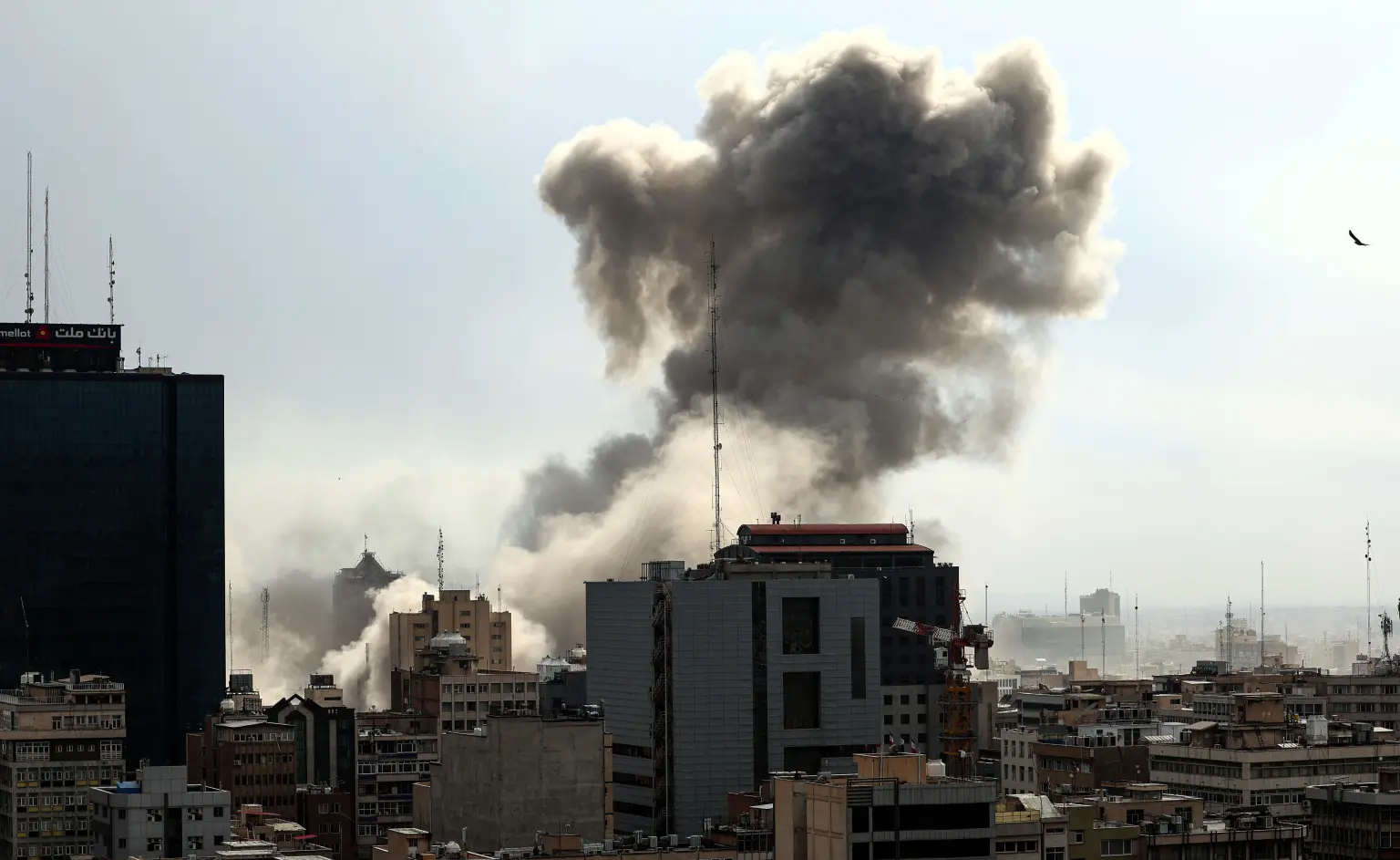
Iran War Timeline 2026: Escalation From Talks to Open Conflict
A step-by-step Iran war timeline from late-2025 diplomatic breakdown to Operation Epic Fury, retaliatory strikes, Hormuz disruption, and ongoing escalation.
IAEA Blocked From Iranian Nuclear Sites After Strikes
IAEA inspectors remain blocked from Fordow, Isfahan, and Natanz after Operation Epic Fury, leaving Iran's enriched uranium status unverifiable.
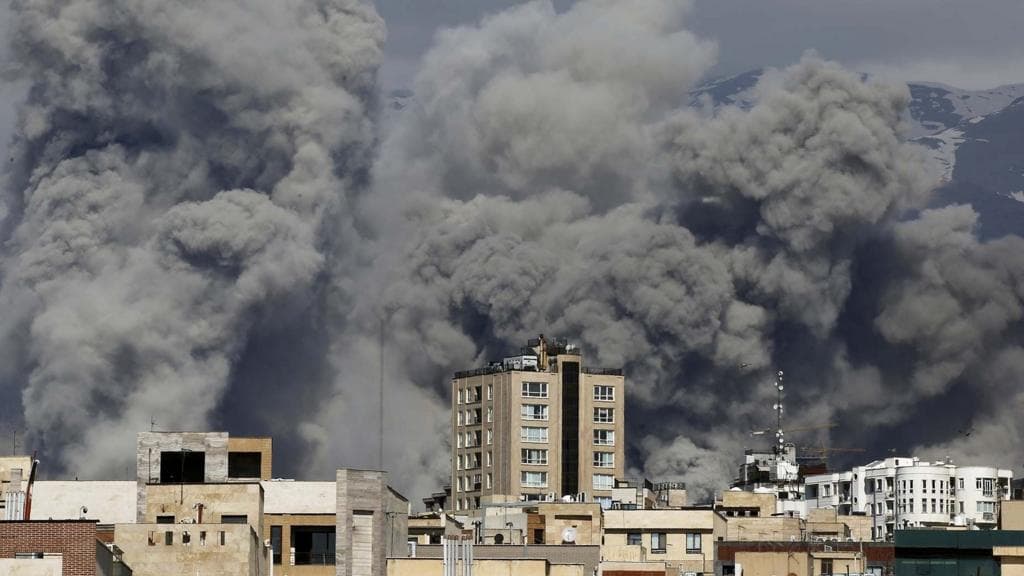
Iran Crisis 2026 vs 2019 Tensions: What's Different This Time
How the 2026 Iran crisis differs from 2019: leadership decapitation, larger retaliation, Hormuz closure risk, and a sharper nuclear escalation path.
Iran War vs Iraq War: How the 2026 and 2003 Conflicts Compare
Iran 2026 vs Iraq 2003 compared across legal authority, coalition structure, force design, economic shock, and the central role of nuclear risk.
Nuclear Threat Assessment: Where the Iran Crisis Goes From Here
A scenario-based nuclear threat assessment of the Iran crisis, including leadership instability, damaged facilities, and pathways to escalation or containment.