No First Use Nuclear Policy: Meaning, Limits, and Risk
No first use nuclear policy lowers first-strike pressure when doctrine and posture align. Compare NFU states, loopholes, and real crisis effects.
Staff Reporting and Analysis. Produces source-backed reporting, explainers, and reference pages on nuclear risk, proliferation, and escalation dynamics.
Key Sources
Start with the strongest supporting documents and reporting behind this page.
Primary Documents
Start with the strongest official or documentary records behind this explainer.
Where This Matters Now
Recent articles where this concept is actively shaping the current crisis.
In Current Coverage
India vs Pakistan Nuclear Weapons: A Complete 2026 Comparison
India vs Pakistan nuclear comparison: warheads, delivery systems, doctrines, defense spending, and how Kashmir escalation could strain deterrence.
2026-03-03
In Current Coverage
Able Archer 83: The 1983 Nuclear War Scare Explained
Able Archer 83 was a NATO drill in November 1983 that Moscow misread as a first strike, pushing Cold War tensions to their most dangerous point.
2026-03-03
In Current Coverage
Russia vs US Nuclear Forces: 2026 Strategic Comparison
Russia and US nuclear forces compared by warheads, delivery systems, modernization, spending, and doctrine across the world's two largest arsenals.
2026-03-03
Related Comparisons
Comparison pages that show how this concept plays out across rivalries, arsenals, and crisis analogies.
Comparison
India vs Pakistan Nuclear Weapons: A Complete 2026 Comparison
India vs Pakistan nuclear comparison: warheads, delivery systems, doctrines, defense spending, and how Kashmir escalation could strain deterrence.
2026-03-03
Comparison
Russia vs US Nuclear Forces: 2026 Strategic Comparison
Russia and US nuclear forces compared by warheads, delivery systems, modernization, spending, and doctrine across the world's two largest arsenals.
2026-03-03
Related Concepts
Companion explainers that deepen the strategic logic around this topic.
Concept
Nuclear Triad Explained: Structure, Purpose, and Tradeoffs
Nuclear triad explained: how land, sea, and air nuclear forces work, why states keep all three legs, and what this means for deterrence risk in 2026.
2026-04-01
Concept
What Is Mutually Assured Destruction (MAD)?
What is mutually assured destruction (MAD)? We explain the doctrine, Cold War logic, modern criticisms, and why MAD still shapes nuclear strategy.
2026-03-03
Concept
Tactical vs Strategic Nuclear Weapons: Key Differences
Tactical vs strategic nuclear weapons explained with doctrine, ranges, yields, targets, and escalation risk so you can read nuclear headlines without confusion.
2026-04-27
No first use nuclear policy means a state declares it will not use nuclear weapons first in a conflict and will only use them in retaliation after a nuclear attack. That sounds simple, but real credibility depends on force posture, command-and-control resilience, and political behavior under stress, not just one sentence in a doctrine document. If you want baseline strategy context first, read How Nuclear Deterrence Works and What Is Second-Strike Capability?, then return to this page for a policy-level assessment.
What is a no first use nuclear policy, exactly?
In strict form, NFU has two parts: a public declaration and an operational doctrine that supports that declaration. The declaration is political language. The doctrine is everything that determines whether leaders can actually wait, absorb, and still retaliate.
A practical definition should include four tests:
| Test | What it asks | Why it matters |
|---|---|---|
| Declaratory clarity | Is the pledge specific, public, and repeated? | Ambiguous language weakens deterrence signaling |
| Force survivability | Can forces survive a first strike? | NFU fails if retaliation is not credible |
| Command resilience | Can leadership transmit lawful orders after attack? | Broken command chains create "use now" pressure |
| Crisis discipline | Does behavior in crises match declared restraint? | Credibility is built in stress, not peacetime speeches |
Many debates confuse NFU with disarmament. NFU is not disarmament. It is a doctrine about sequence of use. A state can maintain a large arsenal and still claim NFU, or maintain a smaller arsenal and reject NFU.
No first use vs sole purpose vs deliberate ambiguity
Policy language often sounds similar across governments, but meaning differs.
- No first use: "We will not use nuclear weapons first under any circumstances."
- Sole purpose: "The sole purpose of nuclear weapons is to deter or respond to nuclear attack." This can resemble NFU but is often framed more flexibly.
- Deliberate ambiguity: A state intentionally leaves first-use options open to deter a wider range of threats.
For readers tracking escalation mechanics, this matters as much as warhead totals in Russia vs US Nuclear Forces: 2026 Strategic Comparison. Doctrine shifts can move decision thresholds faster than inventory changes.
Which countries currently claim no first use?
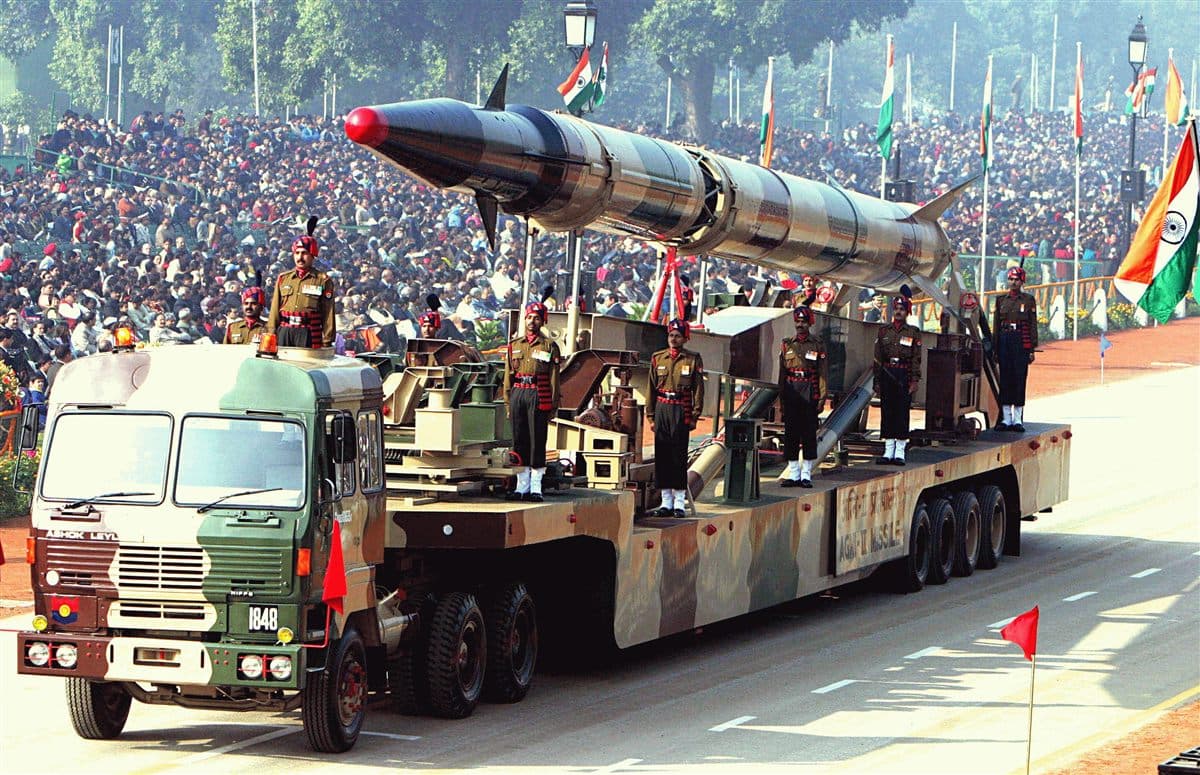
As of March 20, 2026, China and India are the two major nuclear-armed states that continue to publicly affirm NFU as central declaratory policy. The specific wording and caveats are not identical.
China
Chinese official statements continue to describe a pledge not to use nuclear weapons first "at any time and under any circumstances" and to keep nuclear capabilities at a minimum level for security needs. Recent foreign ministry messaging and nuclear diplomacy language repeat this formula.
That said, external analysts still evaluate credibility against force expansion trends, silo construction, and command modernization. A declaratory policy can remain unchanged while implementation conditions evolve.
India
India's doctrine publicly retains NFU and credible minimum deterrence framing, rooted in its 2003 operational doctrine statement. Its formulation includes a major caveat: the option of nuclear retaliation after large-scale chemical or biological attack against India or Indian forces.
That caveat is why some experts call India's position "qualified NFU" rather than absolute NFU.
States without formal NFU
The United States does not have formal NFU policy and preserves flexibility in declaratory posture. NATO also does not adopt NFU; alliance texts continue to emphasize that nuclear use scenarios are "extremely remote" while preserving uncertainty for deterrence.
NFU status can be politically stable but operationally fluid
A state can keep the same NFU sentence for years while changing alert patterns, basing strategy, and command architecture in ways that alter real crisis behavior.
Why supporters argue NFU improves strategic stability
NFU advocates are not claiming it makes nuclear war impossible. Their argument is narrower and more technical: a credible NFU posture can lower first-strike incentives and reduce accidental escalation pathways.
1. Lower preemption pressure in fast crises
If both sides believe the other will not strike first with nuclear weapons, there is less pressure to "use before losing." That can preserve minutes or hours for communication and verification.
This logic intersects directly with What Is Launch-on-Warning?. Launch-on-warning compresses decision time; NFU tries to stretch it.
2. Better signaling to non-nuclear states
NFU can support nonproliferation diplomacy by signaling that nuclear weapons are not intended for coercive first use against non-nuclear states. That messaging aligns with negative security assurances and treaty diplomacy, even when broader strategic rivalry remains intense.
3. Clearer civil-military expectations
When leaders and planners train under a retaliation-only framework, command procedures can be designed around continuity, restraint, and verification rather than speed alone. In theory, this reduces false-alarm vulnerability.
But this advantage exists only if systems, exercises, and force structure are consistent with the policy.
Why critics say NFU may fail when it matters most
Critics focus less on diplomatic language and more on battlefield realities under uncertainty.
1. Verification problems under wartime fog
In a major conflict, leaders may not trust that incoming attacks are purely conventional. Cyber disruption, degraded satellites, and ambiguous missile signatures can produce worst-case assumptions.
If leadership believes an adversary is preparing disarming strikes, NFU commitments can be politically brittle.
2. Conventional inferiority fears
A state facing severe conventional losses may fear regime collapse before any nuclear attack occurs. In that setting, leaders might reinterpret doctrine under "extraordinary circumstances," especially if doctrine language already contains exceptions.
3. Dual-capable system ambiguity
Many missile systems can carry conventional or nuclear payloads. If one side cannot quickly distinguish payload type, even conventional launches can trigger nuclear alerting behaviors.
| Instability driver | NFU-friendly interpretation | NFU-stress interpretation |
|---|---|---|
| Dual-capable missiles | Keep higher launch thresholds | Assume worst-case payload in crisis |
| Cyber attacks on warning systems | Pause and verify | Fear blinded retaliatory capacity |
| Leadership decapitation risk | Harden continuity systems | Delegate launch authority earlier |
| Conventional defeat risk | Preserve retaliation-only stance | Expand first-use justification |
The central point: NFU is most valuable precisely where systems are most fragile. That is also where it is hardest to maintain.
What makes no first use credible in practice?
Analysts usually test NFU credibility through posture, not rhetoric.
Survivable second-strike architecture
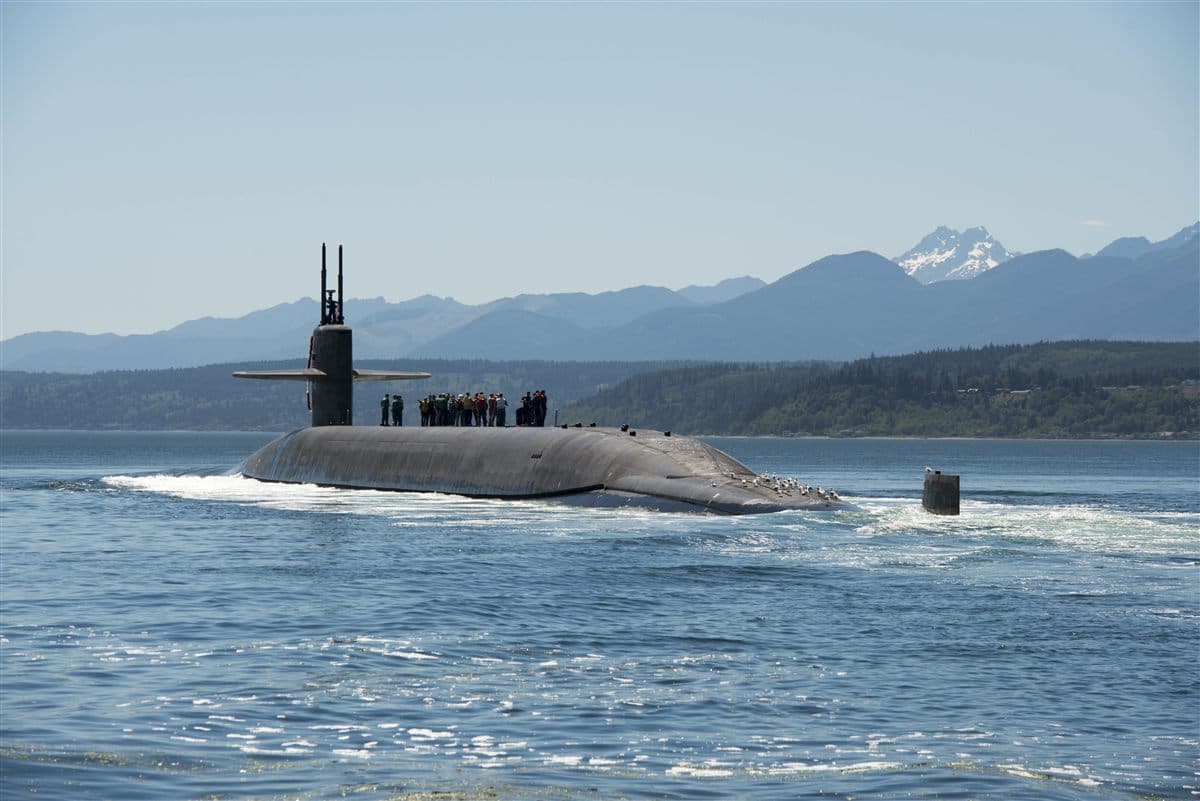
A retaliation-only doctrine requires forces likely to survive an enemy first strike. That usually means protected command nodes, mobile or concealed delivery systems, and robust submarine-based deterrent patrols.
Command-and-control continuity
If national command authority can be blinded, disconnected, or decapitated, leaders may fear waiting is existentially dangerous. Credible NFU therefore depends on hardened communications, authentication procedures, and leadership succession clarity.
Alert posture discipline
A doctrine that says "no first use" but maintains hair-trigger launch practices creates mixed signals. Lower alert patterns and visible de-escalation mechanisms can reinforce NFU credibility.
Training and war-gaming consistency
If major exercises repeatedly assume early nuclear employment, external observers will discount NFU claims. Doctrine must be reflected in planning culture, not only strategic documents.
Why U.S. and NATO policy still rejects formal NFU
The U.S. and NATO argument is deterrence flexibility: ambiguity deters not only nuclear attack but also extreme conventional, chemical, biological, or strategic non-nuclear threats.
Supporters of this approach argue that removing first-use options could weaken assurance for allies under extended deterrence umbrellas, especially in regions with active conventional and missile threats.
Critics counter that ambiguity raises escalation risk by keeping adversaries uncertain about thresholds. This is one reason NFU debates reappear whenever security environments worsen, including after treaty erosion covered in New START Treaty Expiration 2026: What Changes Now.
Extended deterrence tradeoff
NFU discussions in alliance settings are rarely just about national doctrine. They are about reassurance architecture. A state can prefer lower nuclear salience in principle while still supporting ambiguity to assure allies facing higher local risk.
That political tradeoff explains why doctrinal change is slower than academic consensus in many capitals.
Case logic: when NFU helps and when it does not
NFU's effect is scenario-dependent. The same policy can stabilize one crisis and fail in another.
Scenario A: Controlled confrontation with reliable communication
- Reliable hotlines
- Clear red lines
- No major cyber outage
- No leadership decapitation fears
In this case, NFU can lower preemption logic and support deliberate crisis bargaining.
Scenario B: Multi-domain crisis with degraded warning systems
- Simultaneous cyber and kinetic attacks
- Uncertain payload identification
- Leadership communication outages
- Conventional front collapsing quickly
In this case, NFU commitments face maximum stress because leaders may doubt they can absorb first use and still retaliate effectively.
The gap between these scenarios is why serious NFU analysis must include infrastructure resilience, not just declaratory text.
How to evaluate new NFU statements in headlines
When a government reaffirms or proposes NFU, use a practical checklist instead of reacting to slogan value alone.
- Check whether language is absolute or includes conditional exceptions.
- Track whether force posture changes support retaliation-only logic.
- Watch command-and-control modernization, especially continuity systems.
- Compare exercise behavior to declared doctrine.
- Confirm whether allied commitments constrain doctrinal change.
This method helps avoid two common errors: treating all NFU statements as empty propaganda, or treating all NFU statements as equivalent to verified risk reduction.

Regional dynamics: why NFU debates differ by theater
No global NFU debate exists in the abstract. Regional threat structures shape incentives.
Indo-Pacific context
In Asia, NFU discussion intersects with missile-defense growth, expanding arsenals, and maritime vulnerability concerns. China's formal NFU and India's qualified NFU exist inside a competitive environment where conventional precision strike and cyber capabilities are also rising.
Euro-Atlantic context
In Europe, alliance-based deterrence and war-in-Ukraine lessons reinforce emphasis on flexibility and readiness. NATO framing still keeps nuclear-use circumstances "extremely remote" while avoiding NFU.
Middle East spillover context
For readers following current escalatory risk in this project's coverage, regional conflicts can import strategic signaling from larger nuclear powers. Doctrinal ambiguity and proxy conflict interaction are already visible in Iran Crisis 2026 vs 2019 Tensions: What's Different This Time.
Policy options between pure NFU and full ambiguity
Decision-makers do not face only two choices. Several intermediate options can reduce risk without full doctrinal overhaul.
| Option | Benefit | Limitation |
|---|---|---|
| Reaffirm negative security assurances | Supports non-nuclear states and NPT credibility | Does not settle first-use policy among nuclear rivals |
| Narrow first-use contingencies | Reduces interpretive ambiguity | Requires politically difficult doctrinal edits |
| De-alert selected systems | Lowers accidental launch pressure | Can raise survivability concerns if done asymmetrically |
| Joint crisis communication upgrades | Improves decision time under stress | Works only if channels remain politically viable |
| Bilateral NFU accords | Highest doctrinal clarity between parties | Verification and trust remain difficult |
This middle-ground menu is often more realistic than immediate universal NFU adoption.
Bottom line: can no first use reduce nuclear war risk?
Yes, but conditionally. NFU can improve strategic stability when doctrine is matched by survivable retaliation capacity, resilient command systems, and crisis behavior consistent with restraint. Without those supports, NFU can become rhetorical cover rather than real risk reduction.
For policy readers, the right question is not "Is NFU good or bad?" It is "Under what force and command conditions does NFU change adversary expectations enough to reduce miscalculation?" That is a measurable question, and the answer can differ across regions and time periods.
Practical watchlist for 2026
- Whether NFU-claiming states continue aligning posture with retaliation-only logic.
- Whether non-NFU alliances narrow or expand first-use contingencies in updated doctrine.
- Whether crisis communication infrastructure is hardened against cyber disruption.
- Whether arms-control diplomacy restores confidence-building channels that reduce worst-case planning.