Able Archer 83: The 1983 Nuclear War Scare Explained
Able Archer 83 was a NATO drill in November 1983 that Moscow misread as a first strike, pushing Cold War tensions to their most dangerous point.
Staff Reporting and Analysis. Produces source-backed reporting, explainers, and reference pages on nuclear risk, proliferation, and escalation dynamics.
Key Sources
Start with the strongest supporting documents and reporting behind this page.
Country Profiles Mentioned
Open the profile pages for the countries referenced directly in this article.
Related Rivalries
These comparison pages help place this article inside the broader balance of power and rivalry structure.
Rivalry
Is This Like the Cuban Missile Crisis? Comparing 1962 and 2026
A 1962 vs 2026 comparison of decision windows, nuclear proximity, escalation control, and why the Iran crisis is framed as a modern Cuban Missile moment.
2026-03-03
Rivalry
India vs Pakistan Nuclear Weapons: A Complete 2026 Comparison
India vs Pakistan nuclear comparison: warheads, delivery systems, doctrines, defense spending, and how Kashmir escalation could strain deterrence.
2026-03-03
Rivalry
Iran vs Israel Military Power: A Complete 2026 Comparison
Iran vs Israel military comparison across manpower, airpower, missile inventories, defense spending, and the nuclear deterrence balance in 2026.
2026-03-03
Related Doctrines
These explainers provide the strategic concepts behind the escalation, deterrence, and risk logic discussed here.
Doctrine
What Is Mutually Assured Destruction (MAD)?
What is mutually assured destruction (MAD)? We explain the doctrine, Cold War logic, modern criticisms, and why MAD still shapes nuclear strategy.
2026-03-03
Doctrine
What Is the Doomsday Clock?
What is the Doomsday Clock? History, methodology, and what its seconds-to-midnight signal means for modern global risk debates.
2026-03-03
Doctrine
Tactical vs Strategic Nuclear Weapons: Key Differences
Tactical vs strategic nuclear weapons explained with doctrine, ranges, yields, targets, and escalation risk so you can read nuclear headlines without confusion.
2026-04-27
In September 1983, a Soviet satellite reported five US nuclear missiles inbound. The duty officer who chose not to report it up the chain of command probably saved civilization. Two months later, a NATO military exercise triggered the same response in Soviet leadership — and this time, there was no single officer standing between the world and nuclear war.
For readers connecting Cold War near-misses to current doctrine, this case pairs directly with What Is Launch-on-Warning?, What Is Second-Strike Capability?, and the broader Nuclear History topic hub.
Why 1983 Was the Most Dangerous Year of the Cold War
The Cuban Missile Crisis of 1962 is rightly remembered as the moment nuclear war came closest. But the thirteen days of that standoff were visible — leaders on both sides knew they were in a crisis, knew the stakes, and worked deliberately to prevent escalation.
1983 was different. The United States didn't know it was in a crisis at all.
The year produced two distinct moments when nuclear war nearly began: a computer malfunction that triggered a Soviet early warning alert in September, and a NATO military exercise in November that Soviet leaders interpreted as the real thing. Both nearly crossed the threshold for launch. Neither was publicly known for years.
To understand why, you need to understand what Soviet leadership believed about Ronald Reagan in 1983.
The Soviet Terror: Operation RYAN
When Yuri Andropov became General Secretary of the Communist Party in November 1982, he was already dying of kidney failure — and he was convinced that the United States was planning a nuclear first strike.
This was not paranoia without basis. Reagan had taken office in 1981 running explicitly on a platform of confronting Soviet power. He had:
- Authorized a 40% increase in defense spending
- Deployed B-52s on patrol closer to Soviet airspace
- Launched a series of provocative naval exercises that deliberately probed Soviet air defenses
- Announced the Strategic Defense Initiative (SDI) in March 1983 — which Soviet analysts interpreted not as a defensive system but as a shield designed to neutralize Soviet retaliation after a US first strike
- Called the Soviet Union an "evil empire" in a nationally televised speech
On March 23, 1983 — the same day Reagan announced SDI — Soviet intelligence chief Yuri Andropov ordered the activation of Operation RYAN (a Russian acronym for "Nuclear Missile Attack"). It was the largest peacetime intelligence operation in KGB history: a standing order to every KGB station in NATO countries to report in real time on any indicators of preparations for nuclear war.
KGB officers in London, Paris, Bonn, and Washington were instructed to watch for specific indicators: unusual activity at military bases after hours, purchases of blood from hospitals (suggesting preparation for mass casualties), sudden illumination of government buildings at night, unusual movements of political and military leadership.
The logic was chilling: if the US was going to launch a first strike, it would do so under the cover of a military exercise. Soviet leaders intended to recognize the warning signs and launch before US missiles hit their silos.
The first-strike fear
Soviet military doctrine in 1983 held that a US first strike was not only possible but potentially imminent. The Reagan defense buildup, SDI announcement, and aggressive naval exercises had convinced Andropov and the Politburo that the window for preemptive action was closing. This made the situation extraordinarily dangerous: a superpower convinced its enemy was about to attack is primed to launch on ambiguous warning.
September 26, 1983: The Night Stanislav Petrov Saved the World
Lieutenant Colonel Stanislav Petrov was the duty officer at Serpukhov-15, the Soviet nuclear early warning bunker outside Moscow, on the night of September 25–26, 1983. His job was to monitor the satellite network that tracked US missile launches and, if an attack was detected, report it up the chain of command so that a retaliatory strike could be authorized before Soviet ICBMs were destroyed in their silos.
At 12:14 AM on September 26, the warning system lit up.
LAUNCH. One US intercontinental ballistic missile inbound.
Then, within seconds: LAUNCH. LAUNCH. LAUNCH. LAUNCH.
Five Minuteman missiles, the system indicated, had been launched from bases in the United States.
Petrov had approximately two minutes to decide whether to report the alert as a genuine attack. If he reported it as real, the chain of command would escalate immediately. Given the strategic posture of Soviet leadership — and the standing Operation RYAN directive — a confirmed alert of five inbound ICBMs would almost certainly trigger a retaliatory launch.
He did not report it.
His reasoning, as he later described it, was partly logical and partly gut instinct. The satellite system was new and had not been fully validated. More importantly, five missiles made no strategic sense: a US first strike designed to destroy Soviet retaliatory capability would involve hundreds of warheads, not five. A genuine attack would not look like this.
He logged the alert as a system malfunction — which it was. A Soviet satellite had been positioned in an orbit where it mistook the angle of sunlight reflecting off clouds over Montana for the exhaust plumes of Minuteman ICBM launches.
Petrov was reprimanded for improper record-keeping during the incident and never publicly recognized for what he had done. He spent years working as an engineer before his role was declassified. He died in May 2017.
I had a funny feeling in my gut. I didn't want to be the one to start World War Three.
— Stanislav Petrov, recalling his decision on September 26, 1983

October 1983: The World Gets Darker
Before Able Archer began in November, the world grew even more dangerous.
On September 1, 1983 — just weeks before the Petrov incident — a Soviet Su-15 fighter shot down Korean Air Lines Flight 007 after it strayed into Soviet airspace, killing all 269 passengers and crew. Reagan called it a "massacre" and suspended arms control talks.
On October 23, a truck bomb killed 241 American servicemembers at the US Marine barracks in Beirut. Reagan ordered retaliatory airstrikes against Iranian-backed positions in Lebanon.
On October 25, the US invaded Grenada.
Soviet intelligence was watching all of this through the lens of Operation RYAN — interpreting each military action as a data point in a pattern of preparation for a larger confrontation.
November 1983: Able Archer 83
NATO's Autumn Forge exercises took place every year. Able Archer 83, which ran from November 2–11, was the nuclear release exercise component — a simulation of the complete sequence from conventional war escalation through NATO nuclear authorization.
What made Able Archer 83 different from previous exercises:
Scale: It simulated an escalation from conventional to chemical to nuclear warfare over the full 10 days, practicing procedures at the highest levels of command.
Participation: For the first time, the exercise included actual heads of government — the participation protocols were expanded to simulate real-world command chains.
Communication procedures: New, previously untested communication formats were used, matching the actual procedures that would be used in a real nuclear release scenario.
Radio silence: Units maintained uncharacteristic radio silence, consistent with what Soviet analysts expected from a genuine preemptive strike in its final preparation phase.
Soviet intelligence, watching through the Operation RYAN framework, observed all of this. KGB stations in NATO countries reported unprecedented levels of activity. Soviet and Warsaw Pact nuclear forces were put on heightened alert. In East Germany and Poland, Soviet aircraft were loaded with nuclear weapons and positioned at the ends of runways.
For approximately 10 days in November 1983, Warsaw Pact nuclear forces were at a higher alert level than at any point since the Cuban Missile Crisis — and NATO didn't know it.
The asymmetry of danger
The fundamental danger of Able Archer 83 was asymmetric: NATO knew it was an exercise; the Soviet Union was not sure. From the Soviet perspective, the exercise looked indistinguishable from the real thing — and Soviet doctrine called for launching before incoming warheads hit, not after. A Soviet decision to pre-empt would have come with no warning to NATO.
How the West Found Out: Oleg Gordievsky
NATO intelligence services did not fully understand the Soviet reaction to Able Archer 83 until 1990, when British double agent Oleg Gordievsky — who had been spying for MI6 since 1974 while rising through the KGB — publicly described what he had reported to his British handlers in real time.
Gordievsky, who was the KGB resident in London during 1983, had personally transmitted reports from London KGB stations about Operation RYAN activity to MI6. His handlers passed his reporting to the CIA. But in November 1983, the CIA's assessment was that the Soviet activity was routine — they did not believe Soviet leadership genuinely feared an imminent attack.
Gordievsky's later public testimony established beyond doubt that the fear was real. When he was secretly exfiltrated from Moscow by MI6 in 1985, he brought with him documentary evidence of the full scope of Operation RYAN and the Soviet response to Able Archer.
The intelligence failure worked in one direction only: The West knew its own exercises were exercises. It failed to understand that the Soviet Union did not share that certainty.
Reagan's Reaction: The "Eye-Opener"
When Reagan was briefed on the intelligence from Gordievsky in late 1983 and early 1984 — including both the Petrov incident aftermath and the Soviet response to Able Archer — he was reportedly deeply unsettled.
Reagan's diary entries in late 1983 reflect a president grappling with the real possibility that his hardline rhetoric had brought the world closer to nuclear war than he had understood. He wrote that he had been "going over the intelligence on the Soviet's and I'm really startled" and that he found it surprising they could believe he was "planning a first strike."
The episode is credited by historians as a turning point. Reagan, who had campaigned on confronting Soviet power, began moving toward engagement. His second term saw:
- The INF Treaty of 1987, which eliminated an entire class of nuclear weapons for the first time in history
- Direct negotiations with Mikhail Gorbachev at Reykjavik in 1986 — where both men reportedly discussed eliminating nuclear weapons entirely
- A fundamental shift in US-Soviet diplomatic posture
What the 1983 War Scare Teaches Us About Nuclear Risk
The lesson of 1983 is not that nuclear deterrence failed — it is that deterrence nearly failed in a way nobody recognized in time.
Several factors combined to create the danger:
Ideological tunnel vision. Soviet leadership had constructed a framework (Operation RYAN) that interpreted all US military activity as evidence of preparations for war. Once a framework like that is in place, ambiguous information is systematically interpreted as confirmation.
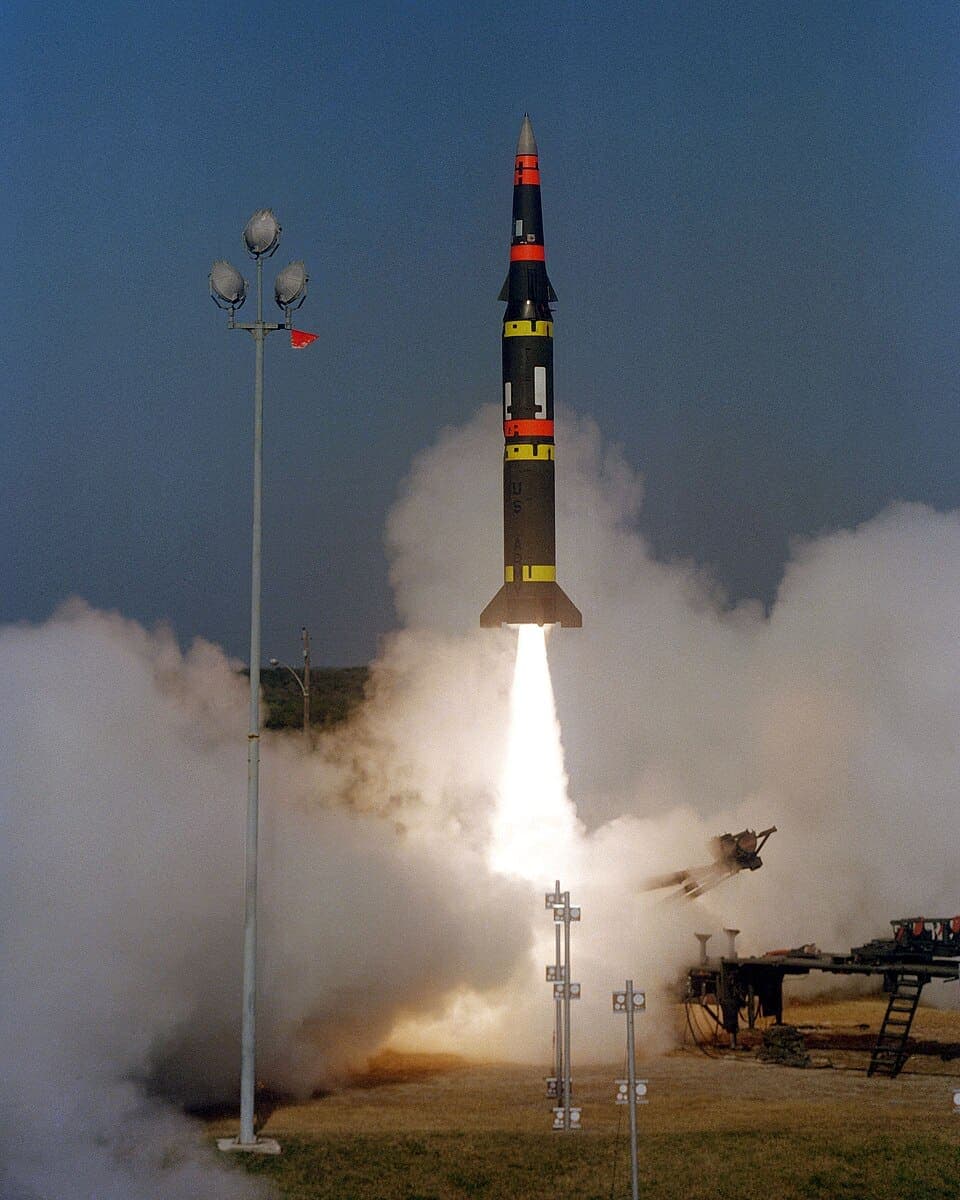
New weapons with shrinking decision windows. The Pershing II, deployed to West Germany in late 1983, had a flight time of approximately 6 minutes to Moscow. Soviet military planners calculated they would have insufficient time to confirm a US attack and authorize a retaliatory strike before their command structure was destroyed. This compressed the decision window to the point where launch-on-warning — launching before confirmation — became the only viable option.
Failed communication channels. Reagan and Andropov never met. When Reagan announced SDI, there was no mechanism for him to directly explain his rationale to Soviet leadership. The communication channels that existed were formal and slow.
Intelligence asymmetry. The US had a double agent (Gordievsky) who was providing real-time insight into Soviet thinking. Soviet intelligence was operating on pattern-matching from external observation, with no comparable source inside the US government. The US was reading Soviet thinking; the Soviets were guessing American intent.
The 2026 Parallel
The Iran crisis of 2026 shares structural features with 1983 that analysts have noted with concern.
Like Soviet leadership in 1983, Iranian leadership has constructed an interpretive framework — built from the strike on Iranian nuclear facilities, the killing of IRGC commanders, and the demonstrated willingness to use force — that interprets US military activity as evidence of preparations for a wider campaign. Like Reagan's US, the current US administration has made statements that the other side may interpret differently than intended.
The lesson of 1983 is that dangerous misperception does not require bad faith on either side. It requires only that each side's actions look, from the other's perspective, exactly like what they would look like if the worst-case interpretation were true.
The Doomsday Clock in 1983–84
The Bulletin of the Atomic Scientists moved the Doomsday Clock to 3 minutes to midnight in January 1984 — the closest it had stood since 1953. It would not move that close again until 2015. The scientists cited Able Archer 83, the KAL 007 shootdown, and the accelerating nuclear buildup as the reasons for the change.
How Close Did We Actually Come?
The honest answer is: closer than anyone knew at the time, and exactly how close we still cannot fully measure.
What we know is that Warsaw Pact forces raised their nuclear alert status during Able Archer 83. We know that Soviet doctrine called for pre-emptive launch under certain conditions. We know that the conditions the Soviets were watching for — indistinguishable from the exercise — were met.
What we don't know is how many decision points existed between the Soviet alert and a launch order, and how many of those decision points had a person at them who, like Stanislav Petrov two months earlier, might have paused to question the data.
We may have been at the brink of nuclear war and not even known it.
— Robert Gates, former CIA Director and Secretary of Defense, reflecting on Able Archer 83
The difference between 1983 and nuclear catastrophe may have been a combination of one Soviet officer's instinct, the slow cautious habits of a bureaucracy that was not quite ready to launch, and the fact that Able Archer ended before Soviet leadership felt they had to act.
None of those factors is guaranteed in future crises.