Nuclear EMP Effects on Electronics: A Practical 2026 Guide
Nuclear EMP effects on electronics can cascade into power and communications outages. Learn what fails first, what survives, and how to harden essentials.
Staff Reporting and Analysis. Produces source-backed reporting, explainers, and reference pages on nuclear risk, proliferation, and escalation dynamics.
Key Sources
Start with the strongest supporting documents and reporting behind this page.
Primary Documents
Start with the strongest official or documentary records behind this explainer.
Where This Matters Now
Recent articles where this concept is actively shaping the current crisis.
In Current Coverage
Hiroshima and Nagasaki: What Happened When the Bombs Fell
On August 6 and 9, 1945, U.S. atomic bombs devastated Hiroshima and Nagasaki. Here is what happened, who died, and what radiation did after.
2026-03-03
In Current Coverage
Tsar Bomba: The Biggest Nuclear Weapon Ever Tested
Tsar Bomba, tested by the Soviet Union on October 30, 1961, yielded about 57 megatons, becoming the most powerful man-made explosion ever recorded.
2026-03-03
In Current Coverage
What Would Happen If Nuclear War Started? A Step-by-Step Guide
What happens if nuclear war starts? From first launch to nuclear winter: blast zones, fallout, infrastructure collapse, and long-term survival risks.
2026-03-03
Related Concepts
Companion explainers that deepen the strategic logic around this topic.
Concept
Nuclear Winter Effects: Climate and Food
Nuclear winter effects explained: how soot cools climate, cuts harvests, and creates famine risk after nuclear war.
2026-05-26
Concept
Nuclear Triad Explained: Structure, Purpose, and Tradeoffs
Nuclear triad explained: how land, sea, and air nuclear forces work, why states keep all three legs, and what this means for deterrence risk in 2026.
2026-04-01
Concept
Radiation Dose Chart: Levels and Risks
Radiation dose chart guide: compare mSv, rem, Gy, symptoms, and emergency action thresholds before you act.
2026-05-27
Nuclear EMP effects on electronics depend less on cinematic "everything dies instantly" narratives and more on where pulse energy can couple into long conductors, power conversions, and poorly protected control systems. In practice, the highest-risk failures are usually bulk-power transformers, telecom backhaul, industrial control electronics, and replacement logistics, not every battery gadget in your home at once. That distinction matters for realistic planning, and it connects directly to Nuclear Fallout Explained, What to Do During Nuclear Alert: Fast Checklist, and What Would Happen If Nuclear War Started?.

What are nuclear EMP effects on electronics?
A nuclear electromagnetic pulse (EMP) is a fast burst of electromagnetic energy created when gamma radiation from a high-altitude detonation interacts with atmospheric molecules and the Earth's magnetic field. The important operational point is that EMP is not one single waveform. Analysts separate it into E1, E2, and E3 components because each component affects different systems and time scales.
E1, E2, and E3 in plain language
| Component | Time scale | Typical target | Most important consequence |
|---|---|---|---|
| E1 | Nanoseconds to microseconds | Microelectronics, digital controls, semiconductors | Immediate upset or damage in sensitive electronics |
| E2 | Similar to lightning transients | Systems with weak surge protection | Added stress, especially when E1 already degraded protection |
| E3 | Seconds to minutes | Long lines, transformers, grid infrastructure | Geomagnetically induced currents and prolonged grid instability |
This breakdown explains why debates often sound contradictory. One claim says "your handheld device might still work." Another says "the grid could face severe damage." Both can be true in the same event because the coupling pathways are different.
Why conductor length matters more than device price
Expensive electronics are not automatically the most vulnerable. Vulnerability depends on the path that pulse energy can ride into a system. A cheap controller tied into long external wiring may be at higher risk than a premium device sitting unplugged in a short, shielded pathway.
A practical heuristic:
- Longer conductive path equals greater induced current risk.
- More external interfaces equals more entry points.
- Poor grounding and weak surge coordination amplify failure.
- Complex interdependent systems fail as networks, not single boxes.
That is why utility relays, telecom trunks, and industrial control cabinets are central in EMP planning literature, including the U.S. EMP Commission report and federal facility hardening guidance on electromagnetic pulse protection.
How does high-altitude EMP differ from blast and fallout risk?
Most preparedness content blends blast, fallout, and EMP into one undifferentiated threat. That creates poor decisions. Blast and thermal effects are local and immediate; fallout depends on burst height, wind, and shelter quality; high-altitude EMP can affect very large areas without direct blast damage on the same footprint.
Different hazard, different survival priorities
If your concern is blast radius, distance from ground zero dominates. If your concern is fallout, time in shelter and contamination control dominate. If your concern is EMP, continuity planning dominates: communications, water, refrigeration for medicine, and sustained power alternatives.
That is why FEMA's nuclear explosion guidance emphasizes shelter and information discipline first, while infrastructure studies emphasize restoration sequencing and protected critical loads. You need both lenses at once: immediate life safety and longer systems continuity.
EMP is primarily a systems outage problem
Even when the initial pulse does not permanently destroy every endpoint device, widespread instability in power and communications can create secondary failures:
- Water treatment and pumping interruptions
- Fuel distribution breakdowns
- Hospital backup power strain
- Payment system disruption
- Supply-chain refrigeration loss
In other words, households experience EMP through infrastructure dependency long before they experience it as a laboratory electronics failure on a kitchen table.
Can a nuclear EMP disable modern cars?
This is one of the most searched EMP questions, and it deserves a careful answer. "All cars stop instantly" is not supported by the best technical literature. But "cars are unaffected" is also overconfident.
What vehicle risk actually looks like
Modern cars include many microcontrollers, sensors, and power electronics. Some may experience temporary upset, dashboard errors, or control anomalies depending on field strength, orientation, and protection. Fleet-level outcomes are heterogeneous.
| Claim | Reality check |
|---|---|
| Every modern car will instantly die | Overstated; vulnerability varies by vehicle and exposure |
| No cars are affected at all | Also wrong; some electronics can upset or fail |
| Transportation impact will be minor | Depends on fuel distribution, traffic control, and repair capacity |
A realistic transportation assessment includes traffic signal networks, dispatch communications, fuel pumps, and maintenance logistics. Even if most vehicles restart, congestion and fuel bottlenecks can still reduce mobility dramatically.
Why transportation still degrades without universal car failure
Transportation continuity depends on a chain:
- Grid power for fuel terminals and stations
- Telecom for payment and dispatch
- Traffic management and signals
- Maintenance supply for control modules and sensors
Break two or three links and mobility falls quickly. So the preparedness question is not "Will my one car start?" It is "How do I maintain movement, fuel, and communication for 3 to 14 days if infrastructure is unstable?"
How long could an EMP-related outage last?
Duration is the policy-critical question. Initial disturbances may last seconds to hours, but restoration timelines are governed by damaged high-value components, particularly extra-high-voltage transformers and control equipment.
Transformer replacement is a strategic bottleneck
Large transformers are not off-the-shelf retail items. They are custom-engineered, heavy, and logistics-intensive. If many fail in one region, restoration is constrained by manufacturing capacity, transport lift, and installation sequencing, a point emphasized in the DOE/ORNL analysis of high-altitude EMP and the bulk-power system.
Outage duration is a logistics problem, not only an electronics problem
For households, the practical risk from nuclear EMP is often extended infrastructure unreliability, not a one-time spark event. Plan for continuity windows measured in days to weeks, not minutes.
Restoration triage usually follows critical-load hierarchy
Utilities and emergency managers typically prioritize:
- Hospitals and emergency operations centers
- Water and wastewater systems
- Core telecom nodes
- Fuel and transport hubs
- Residential feeders
This sequencing means neighborhood-level reliability can lag critical facilities even when regional restoration progress is underway.
What electronics should be protected first?
Household preparedness improves fastest when you protect functions, not gadgets. Start with the systems that preserve health, communication, and decision quality.
Priority stack for households
| Priority | Function | Example gear |
|---|---|---|
| 1 | Information | NOAA weather radio, backup phone, charging strategy |
| 2 | Medical continuity | Refrigeration backup for temperature-sensitive meds, essential monitors |
| 3 | Water and sanitation | Small pump controls, purification capability, storage management |
| 4 | Lighting and navigation | Efficient LED lighting, battery discipline, low-draw power plans |
| 5 | Documentation and coordination | Printed contacts, maps, and local emergency protocols |
This approach aligns with the first-day discipline in Nuclear Shelter Checklist: 24-Hour Plan, but adds an electronics resilience layer focused on sustained outages.
Mistakes that reduce resilience
- Buying high-watt gear without fuel or battery sustainment math
- Protecting spare electronics while ignoring water and medication continuity
- Relying on one communication channel
- Leaving all backups permanently grid-tied without isolation options
Preparedness quality increases when every protected device has a defined role, runtime expectation, and maintenance cycle.
Does a Faraday cage protect against nuclear EMP?
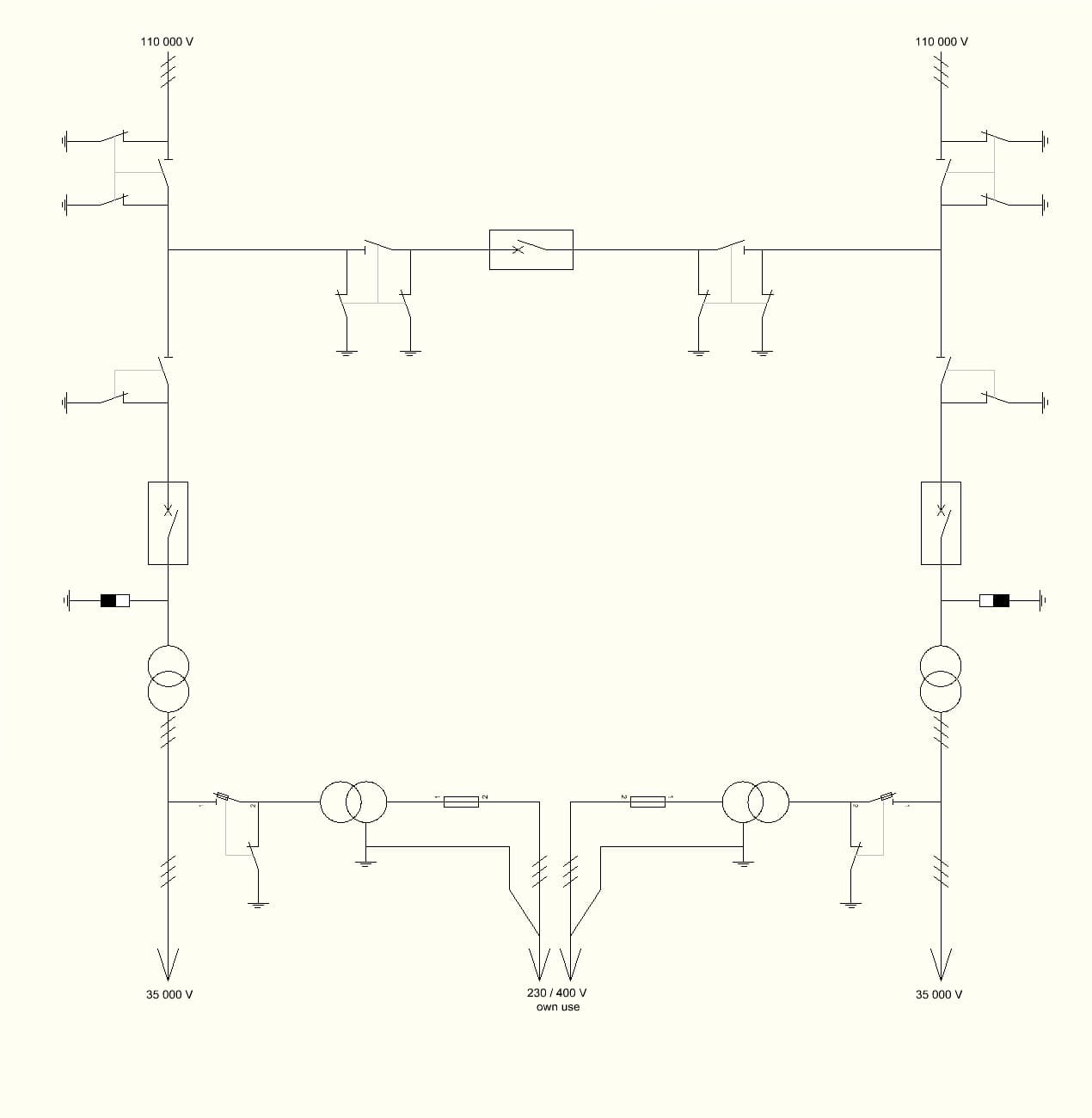
A properly built Faraday enclosure can reduce coupling into enclosed electronics. But performance depends on design details, not the label "Faraday cage" alone.
What determines shielding performance
- Continuous conductive enclosure with minimal seams
- Good electrical continuity at edges and closures
- Controlled cable penetrations and filters
- Isolation from accidental conductive bridges
Improvised containers can help, but many fail because of gaps, poor contact surfaces, or cables that bypass shielding intent.
Practical home-scale approach
For noncritical household backups, layered protection usually performs better than single-device perfection:
- Store small critical spares in tested conductive enclosures.
- Keep devices disconnected from long conductors when not needed.
- Use surge coordination and grounding best practices where possible.
- Maintain low-tech backup paths (printed docs, battery radios, analog tools).
No single enclosure solves community-scale outage risk, but good shielding plus continuity planning can materially improve household function.
Nuclear EMP vs solar storm: are they the same threat?
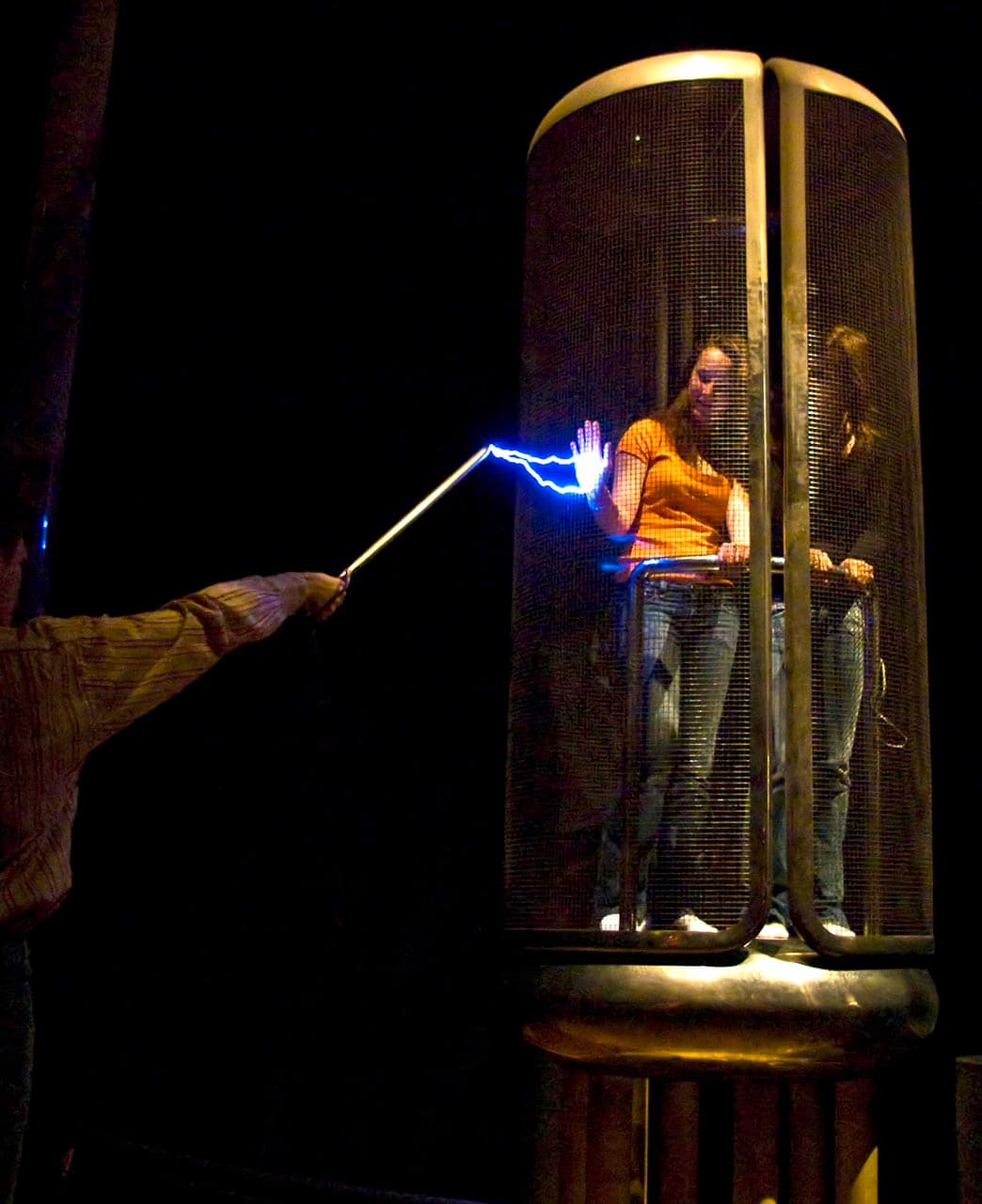
They overlap at the infrastructure layer but differ in waveform and exposure profile. A severe geomagnetic storm is slower and primarily E3-like in effect; nuclear EMP includes the fast E1 component that can stress microelectronics directly.
Why this comparison matters for planning
Grid hardening, transformer resilience, and restoration logistics benefit both scenarios. But household electronics upset risk and fast-transient protection requirements are more central in nuclear EMP planning.
| Feature | Nuclear EMP | Severe solar storm |
|---|---|---|
| Fast microelectronics stress (E1-like) | High relevance | Low relevance |
| Long-line induced currents | High relevance (E3) | High relevance |
| Event onset | Near-instant | Slower progression |
| Warning window | Potentially minimal | Typically longer via space-weather monitoring |
Treating them as identical leads to bad procurement priorities. Treating them as unrelated wastes overlap opportunities in grid resilience investment.
How should cities and utilities prioritize EMP resilience?
The most effective strategy is layered resilience with measurable restoration objectives. Absolute prevention is unrealistic; rapid service recovery is the practical goal.
High-yield utility actions
- Harden and segment critical control paths.
- Expand blackstart and islanding capability.
- Pre-stage replaceable components with regional sharing agreements.
- Protect and rehearse telecom interoperability with emergency management.
- Run recurring cross-sector exercises that include water, health, and fuel stakeholders.
These actions align with federal infrastructure guidance and have spillover value for cyber incidents, weather disasters, and geomagnetic events.
Municipal continuity actions that reduce civilian harm
- Publish neighborhood-level outage expectations and service priorities.
- Map backup power at clinics, pharmacies, and cooling/heating centers.
- Build redundant public alert channels beyond one mobile network.
- Pre-coordinate traffic and fuel emergency operating modes.
Community resilience succeeds when technical hardening and public operations planning are treated as one program.
What should a household do in the first 24 hours after an EMP event?
The first day is about stabilizing information and reducing irreversible mistakes.
0 to 2 hours
- Confirm event context using multiple channels if available.
- Shift critical electronics to low-power mode immediately.
- Preserve battery state of charge; avoid nonessential use.
- Check on household medical dependencies first.
2 to 8 hours
- Establish a communication schedule, not constant scanning.
- Secure water supply and basic sanitation continuity.
- Organize medication, temperature control, and documentation.
- Coordinate with nearby households on resource redundancy.
8 to 24 hours
- Reassess local restoration signals and official guidance.
- Rotate power sources with strict runtime accounting.
- Preserve transport fuel for essential movement only.
- Keep a written log of conditions, decisions, and needs.
This workflow is deliberately boring. Boring is good: disciplined routines beat improvisation under uncertainty.
Common myths about nuclear EMP effects on electronics
Myth 1: "EMP means every chip is destroyed forever"
Reality: outcomes vary by coupling path, shielding, grounding, and field conditions. Some devices fail, some glitch then recover, and some remain functional. Infrastructure interdependence still creates major disruption even without universal endpoint destruction.
Myth 2: "If my phone works, the crisis is over"
Reality: local endpoint function does not equal network continuity. Towers, backhaul, power feeds, and core routing can remain degraded. Assume communications may remain intermittent.
Myth 3: "Preparedness means buying expensive tactical gear"
Reality: the strongest gains usually come from routine discipline: power budgeting, backup communications, water planning, medication continuity, and local coordination.
Myth 4: "Only governments can do anything useful"
Reality: household and municipal readiness materially reduce harm. Utility hardening matters most at scale, but small preparedness actions can protect health and decision quality during prolonged outages.

FAQ: Nuclear EMP effects on electronics
Bottom line
The most useful way to understand nuclear EMP effects on electronics is to think in layers: device vulnerability, network dependency, and restoration logistics. Individuals should prioritize communication, water, medicine, and power discipline; communities should prioritize hardened critical loads and realistic restoration drills.
If you plan around systems continuity instead of all-or-nothing gadget myths, your decisions are better, your risk model is more accurate, and your first 72 hours become manageable rather than chaotic.