How Long Does Nuclear Fallout Last? A Practical Timeline
How long does nuclear fallout last: first-day danger, 48-hour priorities, and long-term contamination timelines with clear shelter decisions.
Staff Reporting and Analysis. Produces source-backed reporting, explainers, and reference pages on nuclear risk, proliferation, and escalation dynamics.
Key Sources
Start with the strongest supporting documents and reporting behind this page.
Primary Documents
Start with the strongest official or documentary records behind this explainer.
Where This Matters Now
Recent articles where this concept is actively shaping the current crisis.
In Current Coverage
Hiroshima and Nagasaki: What Happened When the Bombs Fell
On August 6 and 9, 1945, U.S. atomic bombs devastated Hiroshima and Nagasaki. Here is what happened, who died, and what radiation did after.
2026-03-03
In Current Coverage
Tsar Bomba: The Biggest Nuclear Weapon Ever Tested
Tsar Bomba, tested by the Soviet Union on October 30, 1961, yielded about 57 megatons, becoming the most powerful man-made explosion ever recorded.
2026-03-03
In Current Coverage
What Would Happen If Nuclear War Started? A Step-by-Step Guide
What happens if nuclear war starts? From first launch to nuclear winter: blast zones, fallout, infrastructure collapse, and long-term survival risks.
2026-03-03
Related Concepts
Companion explainers that deepen the strategic logic around this topic.
Concept
Radiation Dose Chart: Levels and Risks
Radiation dose chart guide: compare mSv, rem, Gy, symptoms, and emergency action thresholds before you act.
2026-05-27
Concept
Nuclear Fallout Map: How to Read One
Nuclear fallout map guidance: read wind plumes, timing, and shelter zones without false certainty. Learn the signals that matter.
2026-05-13
Concept
Nuclear Flash Blindness Distance: Safety Guide | NukeClock
Nuclear flash blindness distance explained: day vs night ranges, eye injury risk, and immediate actions that reduce harm after a nuclear detonation.
2026-05-11
How long does nuclear fallout last is really two different questions: how long fallout stays dangerous enough to cause high dose quickly, and how long lower-level contamination can remain in soil, water, and food systems. For personal survival decisions, the first timeline matters most. Federal guidance from Ready.gov, CDC, and HHS REMM converges on the same pattern: the highest dose rates are concentrated early, then drop fast, which is why shelter timing is the central life-saving move.
How long is fallout dangerous after a nuclear blast?
For most people, the most dangerous period is the first 24 hours, with still-serious risk often extending into 48 hours depending on location and fallout density. That does not mean risk vanishes at 48 hours. It means the dose rate usually drops enough that movement decisions can shift from "never go outside" to "only with official guidance and limited exposure windows."
First 48-hour fallout risk windows
| Time since detonation | Typical risk pattern | Practical action |
|---|---|---|
| 0-1 hour | Dose rates can be extreme in heavy fallout areas | Get inside immediately and move to best shielding |
| 1-6 hours | Still very high in dangerous fallout zones | No unnecessary movement |
| 6-24 hours | Rapid decay continues, but outside exposure can still be severe | Shelter in place, monitor official instructions |
| 24-48 hours | Risk often much lower than first day but still scenario-dependent | Only short, necessary movement if directed |
| 48+ hours | Transition phase; local monitoring becomes decisive | Follow route-specific and area-specific guidance |
The common mistake is treating fallout as either "deadly forever" or "safe tomorrow." Both are wrong. Fallout risk is dynamic and location-specific.
What the 7:10 rule means for fallout radiation timeline
A core operational model is the 7:10 rule: for every sevenfold increase in time after detonation, dose rate falls by roughly a factor of ten. That pattern is why early sheltering has such high payoff.
Approximate decay using hour 1 as baseline
| Time after blast | Relative dose rate vs hour 1 |
|---|---|
| 1 hour | 100% |
| 7 hours | ~10% |
| 49 hours | ~1% |
| 14 days | ~0.1% |
This is a rule of thumb, not a street-level map. Wind, rain, particle size, terrain, and burst type all change local realities. But for fast decision-making, it is highly useful: every hour you avoid outside exposure early is disproportionately valuable.
For a broader physical explanation of particle formation and deposition, review Nuclear Fallout Explained.
Is nuclear fallout dangerous after 24 hours?
Yes, it can be. "Safer than the first few hours" is not the same as "safe." A person in a dense plume corridor can still receive harmful dose after 24 hours if they travel unshielded or remain outside too long.
Why 24 hours is a checkpoint, not an all-clear
- Radiation intensity often drops sharply by 24 hours, but hotspot distribution can remain uneven.
- Local infrastructure damage can limit clean evacuation routes.
- Official decisions integrate monitoring data households do not have.
- Contamination transfer (clothes, shoes, dust) can continue indoors even when outside levels improve.
A better framing: 24 hours is when decision quality can improve if communication channels and measurement data are available.
How long to stay inside after nuclear blast: practical decision framework
The default answer is to remain sheltered through the highest-risk period and wait for official route-specific guidance. For many scenarios that means at least 24 hours, often longer if your area has heavy fallout or limited safe corridors.
Shelter duration matrix
| Situation | Initial shelter target | Reassessment trigger |
|---|---|---|
| Near likely fallout path, no official route guidance | 24-48 hours minimum | Emergency management update with route timing |
| Strong shelter quality (basement/interior concrete) | Longer shelter is feasible | Supply or medical constraints |
| Weak shelter but stronger shelter nearby | Short relocation to better nearby shelter | Movement can be done rapidly with low exposure |
| Official evacuation order issued | Follow order at instructed time | Confirm route and destination instructions |
If you need a room-by-room setup checklist, use Nuclear Shelter Checklist. If you need first-hour action steps, use What to Do During Nuclear Alert.
Ground burst vs air burst: why fallout duration changes
One reason people see conflicting advice is that fallout burden differs significantly by detonation type.
Fallout implications by burst mode
| Burst mode | Typical fallout burden | Civilian implication |
|---|---|---|
| Ground burst | Usually heavier local fallout due to sucked-up soil/debris | Longer high-risk exposure windows nearby |
| Air burst | Can produce less local fallout if fireball stays off the ground | More blast/thermal damage, sometimes less local deposition |
| Multiple strikes | Overlapping plumes and uncertain timing | Harder movement planning, longer shelter discipline |
This is why static social media maps are risky. Without validated burst and meteorological data, they can mislead both directions.
How far can fallout travel and still be dangerous?
Fallout can travel far downwind, but hazard intensity generally decreases with distance and time. The highest acute risk is usually in heavier deposition corridors downwind of the event, not uniformly in all directions.
Practical distance and hazard logic
- Distance alone does not equal safety; wind direction matters more than concentric miles.
- Rain can increase local deposition by washing particles out of the plume.
- Urban canyons and terrain can alter local settling patterns.
- A far location can still have measurable contamination while posing lower short-term acute dose risk than closer hotspots.
For this reason, household plans should focus on behavior triggers, not fixed mileage assumptions.
Does nuclear fallout radiation last for years?
Some radionuclides and contaminated media can persist for long periods, but personal acute-exposure risk is front-loaded. Think in layers:
- Acute external dose risk (hours to days): highest urgency for life safety.
- Short-term contamination management (days to weeks): movement controls, food/water advisories, cleanup priorities.
- Long-term environmental monitoring (months to years): land-use, agriculture, infrastructure, and health surveillance.
People often combine these into one fear statement like "radiation lasts forever," which is not useful for immediate decision-making.
Time-horizon table
| Horizon | Primary risk question | Typical decision owner |
|---|---|---|
| Hours | How to avoid dangerous external dose now? | Household + local emergency orders |
| Days | When/how to move and avoid contamination spread? | Emergency management + public health |
| Months/years | What areas remain restricted or remediated? | State/federal agencies |
Fallout duration in city vs suburban vs rural contexts
The same detonation can create very different operational timelines by environment.
Urban context
- Better access to dense structures for shielding.
- More congestion risk if people self-evacuate too early.
- Potentially faster official information flow but also more rumor velocity.
Suburban context
- Mixed shelter quality; basements can help if used correctly.
- Car dependence can tempt premature movement.
- Household preparedness variation is high.
Rural context
- Lower building density can reduce immediate shelter options.
- Longer travel distances to coordinated support points.
- Radio-based communication redundancy becomes more important.
This is one reason a household communication protocol is as important as supplies.
What changes the "safe to go outside" timeline most?
The following variables usually dominate:
| Variable | Why it matters | Effect on timeline |
|---|---|---|
| Local deposition intensity | Directly determines outside dose rates | Higher deposition extends shelter emphasis |
| Shelter protection factor | Controls indoor dose accrual while waiting | Better shelter buys safer decision time |
| Meteorology | Wind and precipitation move/deposit particles | Can create or reduce hotspots |
| Route quality | Determines exposure during movement | Poor routes delay safe relocation |
| Health constraints | Some cases require earlier medical movement | Can override default shelter timelines |
The takeaway is that "time alone" is insufficient. Time plus context drives safety.
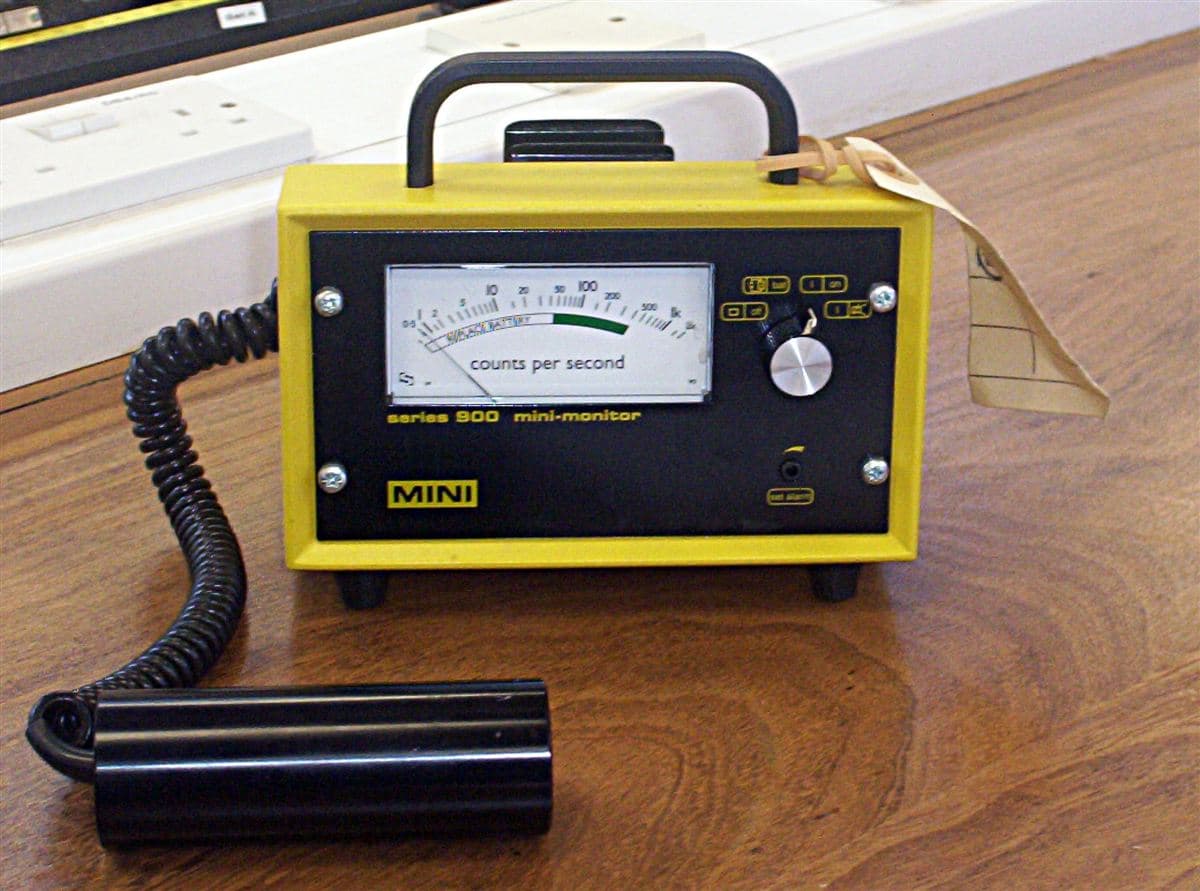
How long does nuclear fallout last if you have no detector?
Most households do not have calibrated radiation instruments. That is normal. Public guidance is designed for that reality.
No-detector protocol
- Assume early outside conditions are hazardous.
- Prioritize shielding, contamination control, and communication.
- Use official updates from emergency management/public health.
- Move only with clear route instructions or critical necessity.
- Limit outdoor duration even after initial shelter period.
A detector can help with granular decisions, but the biggest survival gains come from early behavior, not equipment ownership.
Food, water, and surface contamination timelines
Even as air-dose conditions improve, contamination can remain a logistics issue.
Household contamination priorities
| Domain | Early priority | Follow-up priority |
|---|---|---|
| Water | Use sealed/stored water first | Follow municipal advisories before normal use |
| Food | Use packaged food, protect prep surfaces | Track agriculture and supply advisories |
| Surfaces | Prevent dust transfer into clean zones | Controlled cleaning and waste handling |
If exposure likely occurred outdoors, follow How to Decontaminate After Nuclear Fallout before normal indoor routines resume.
Psychological timeline: why people leave shelter too early
A repeat pattern in disasters is behavior drift after the first fear peak:
- Hour 1 to 3: high compliance.
- Hour 4 to 12: uncertainty and information hunger.
- Day 1 to 2: social pressure to move, check property, or reunify.
Countermeasures that improve compliance
- Prewritten check-in schedule with family contacts.
- Fixed information windows (for example, every 30 to 60 minutes) instead of constant doom-scrolling.
- Clear "no-move without trigger" rule.
- Role assignment: one information lead, one logistics lead.
These process controls can reduce panic-driven exposure decisions.
Can fallout still matter weeks later?
Yes, but usually as contamination management rather than acute mass-casualty dose exposure for sheltered populations. Weeks later, focus often shifts to:
- Area-specific restrictions.
- Food and water controls.
- Occupational exposure management for responders/workers.
- Cleanup sequencing and waste handling.
That is why long-term statements about fallout persistence are true in environmental terms, but can be misunderstood for immediate survival choices.

24-hour and 7-day action checklist
First 24 hours
| Window | Priority actions |
|---|---|
| 0-30 minutes | Get inside, move to best-shielded space, begin contamination control |
| 30 minutes-6 hours | Stay sheltered, stabilize communications, track official channels |
| 6-24 hours | Maintain shelter discipline, ration energy/communications, prepare controlled reassessment |
Days 2-7
| Day range | Priority actions |
|---|---|
| Day 2-3 | Follow local guidance for movement windows, minimize outdoor time |
| Day 3-5 | Expand controlled logistics (water, medication, check-ins) |
| Day 5-7 | Transition based on area-specific advisories and contamination controls |
This checklist aligns with federal protective action logic and keeps decisions sequence-driven.