
Best Room for Nuclear Fallout: How to Choose It Fast
Best room for nuclear fallout: pick the safest interior space fast, improve shielding, and follow a 24- to 48-hour shelter timeline.
Staff Reporting and Analysis. Produces source-backed reporting, explainers, and reference pages on nuclear risk, proliferation, and escalation dynamics.
Key Sources
Start with the strongest supporting documents and reporting behind this page.
Primary Documents
Start with the strongest official or documentary records behind this explainer.
Where This Matters Now
Recent articles where this concept is actively shaping the current crisis.
In Current Coverage
Hiroshima and Nagasaki: What Happened When the Bombs Fell
On August 6 and 9, 1945, U.S. atomic bombs devastated Hiroshima and Nagasaki. Here is what happened, who died, and what radiation did after.
2026-03-03
In Current Coverage
Tsar Bomba: The Biggest Nuclear Weapon Ever Tested
Tsar Bomba, tested by the Soviet Union on October 30, 1961, yielded about 57 megatons, becoming the most powerful man-made explosion ever recorded.
2026-03-03
In Current Coverage
What Would Happen If Nuclear War Started? A Step-by-Step Guide
What happens if nuclear war starts? From first launch to nuclear winter: blast zones, fallout, infrastructure collapse, and long-term survival risks.
2026-03-03
Related Concepts
Companion explainers that deepen the strategic logic around this topic.
Concept
Radiation Dose Chart: Levels and Risks
Radiation dose chart guide: compare mSv, rem, Gy, symptoms, and emergency action thresholds before you act.
2026-05-27
Concept
Nuclear Fallout Map: How to Read One
Nuclear fallout map guidance: read wind plumes, timing, and shelter zones without false certainty. Learn the signals that matter.
2026-05-13
Concept
Nuclear Flash Blindness Distance: Safety Guide | NukeClock
Nuclear flash blindness distance explained: day vs night ranges, eye injury risk, and immediate actions that reduce harm after a nuclear detonation.
2026-05-11
Best room for nuclear fallout decisions are time-critical: you usually have minutes, not hours, to move indoors before fallout particles begin to matter. The goal is simple and practical: maximize shielding, minimize exposure time, and avoid unnecessary movement until official guidance clarifies local conditions. Federal guidance from Ready.gov, the CDC, and FEMA planning guidance aligns on that sequence.
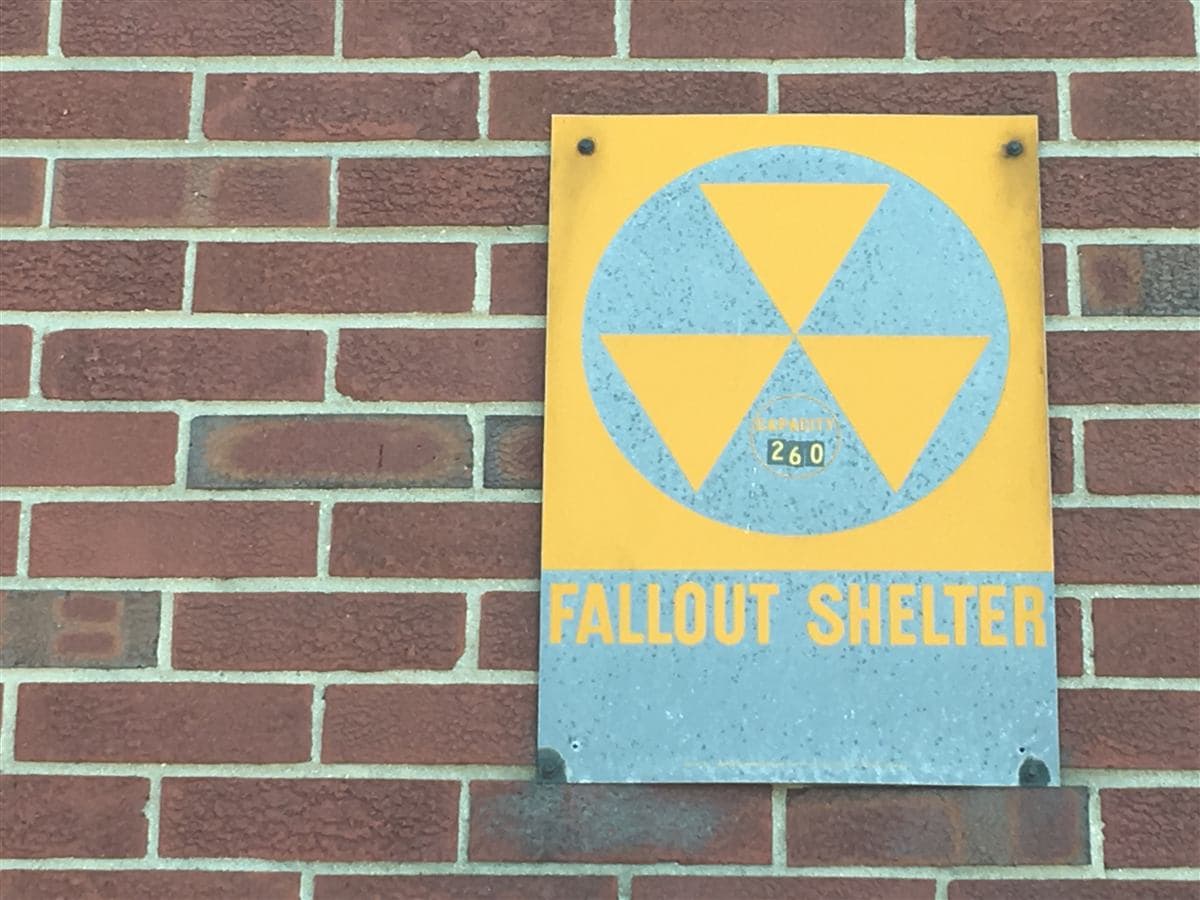
What is the best room for nuclear fallout?
The best room is the location with the most dense material between you and the outside. In many detached homes, that is the center of a basement, away from windows and exterior walls. In buildings without basements, it is usually an interior room on a lower floor with no windows and multiple walls between you and outdoors.
Fast room-selection rule
- Go below grade if available and structurally safe.
- If no basement exists, move to the lowest practical interior room.
- Prioritize distance from windows, exterior walls, and roofline.
- Pick a space you can occupy for at least 24 hours with limited movement.
This is not about finding a perfect bunker. It is about making a better-than-average choice quickly, which often cuts dose far more than late over-optimization.
Basement vs interior room for fallout: which wins?
A basement often provides the strongest shielding because soil and concrete reduce radiation better than wood-frame outer walls. But not all basements are equal, and a poor basement can be worse than a strong interior core room in a dense multi-story building.
Practical comparison table
| Shelter option | Typical shielding quality | Main weaknesses | Best use case |
|---|---|---|---|
| Basement center room | High | Flooding, fire, poor ventilation, window wells | Single-family house with usable basement |
| Interior room on lowest floor | Medium to high | Less overhead mass, possible exterior adjacency | Home without basement |
| Middle floor interior in large apartment | Medium to high | Shared ventilation, egress uncertainty | Apartment towers without basement access |
| Garage or room with large doors/windows | Low | Thin barriers and glass | Avoid unless no alternative |
If you need a deeper primer on fallout mechanics, use Nuclear Fallout Explained first, then return to this room-selection guide.
Is a basement always safest in a nuclear attack?
No. A basement is usually preferred, but only when it is structurally sound and positioned away from openings. A basement with broad windows, exposed walls, or heavy fire risk may not outperform an interior room with thick surrounding mass.
Basement red flags to check in 60 seconds
- Large above-ground windows without cover.
- Exterior walkout door facing open air.
- Combustion equipment hazards you cannot control.
- Standing water or unstable structural elements.
- Stored chemicals that can off-gas in a long shelter period.
If these red flags exist, do not panic-switch to a random room. Choose the strongest interior location with the fewest openings and keep movement short.
What if my home has no basement?
No-basement homes are common, and they can still offer meaningful protection. Focus on interior distance and added mass. Hall closets, central bathrooms, utility corridors, or a windowless pantry can outperform larger, more comfortable spaces near the building envelope.
No-basement room scoring model
Use a quick score from 0 to 10:
| Factor | Score range | How to score fast |
|---|---|---|
| Distance from exterior walls | 0-3 | 3 if room is fully interior |
| Window exposure | 0-2 | 2 if no windows |
| Overhead and side mass | 0-3 | 3 for dense walls/adjacent rooms |
| Access speed | 0-1 | 1 if reachable under 2 minutes |
| Habitability for 24h+ | 0-1 | 1 if people can remain there safely |
Pick the highest-scoring room you can reach immediately. A score of 7 or above is a strong practical target in ordinary homes.
Where to shelter in an apartment during a nuclear alert
Apartment residents face a different tradeoff: upper floors may be farther from street-level fallout accumulation, but lower/interior areas generally reduce line-of-sight exposure and are easier to maintain as a controlled shelter zone. The best answer is usually an interior corridor room away from exterior glass, not a balcony-adjacent unit area.
Apartment-specific priorities
- Move to an interior core space with no windows.
- Avoid elevators during unstable power conditions.
- Seal obvious drafts around doors if safe to do so.
- Coordinate quietly with neighbors only if it improves shielding or shared supplies.
For tactical movement timing, pair this guide with What to Do During Nuclear Alert.
How do I improve a room for fallout quickly?
Speed improvements can materially increase shielding. The objective is not airtight perfection; it is reducing particle entry and increasing mass barriers around occupied positions.
30-minute retrofit checklist
| Minute window | Actions |
|---|---|
| 0-10 | Move everyone in, close doors/windows, bring emergency water and radio |
| 10-20 | Add dense materials around perimeter (books, water containers, furniture) |
| 20-30 | Set contamination boundary, remove outerwear/shoes, start communication plan |
High-value improvised shielding materials
- Filled water containers along wall edges.
- Bookcases loaded with dense books against exterior-facing surfaces.
- Stored soil/sand bags if already available.
- Heavy furniture positioned as additional side mass.
Do not waste time on low-yield tasks like cosmetic sealing of every crack while people remain exposed in transit zones.
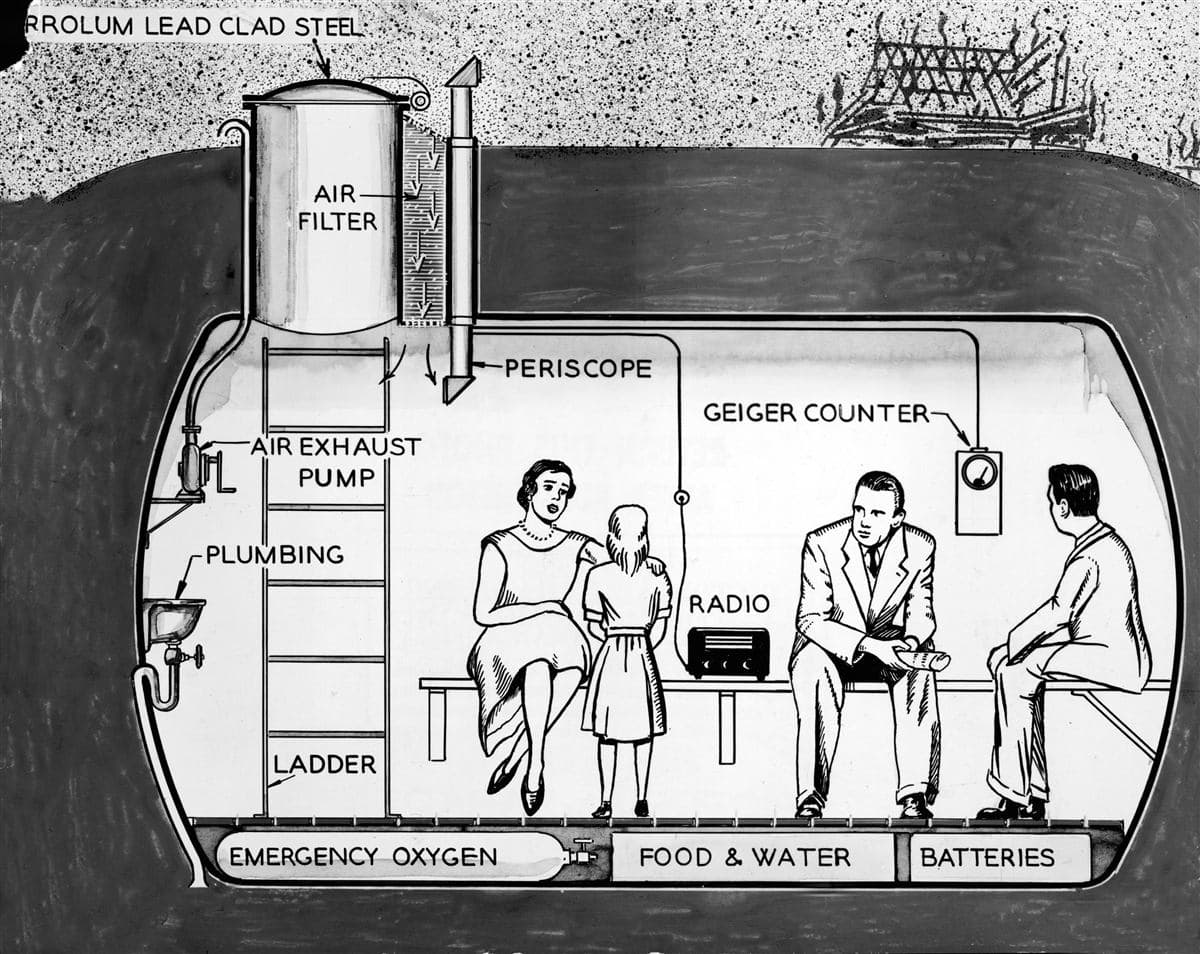
How long should you stay in the room after fallout starts?
Most life-saving benefit comes from strict sheltering during the first day, with continued caution into day two depending on local conditions. The REMM 7:10 decay rule explains why early shelter discipline is so powerful: dose rates typically drop quickly over time.
Decision timeline anchored to exposure risk
| Time since detonation | General risk pattern | Decision posture |
|---|---|---|
| 0-6 hours | Highest external dose risk in fallout areas | No movement unless life-saving |
| 6-24 hours | Still hazardous in many zones | Maintain full shelter protocol |
| 24-48 hours | Often lower but variable by location | Reassess with official guidance |
| 48+ hours | Transition to monitored movement | Follow local route-specific orders |
This is why How Long Does Nuclear Fallout Last and room selection should be treated as one combined problem.
Shelter layout inside the room: where should people sit?
Once inside the chosen room, layout affects dose and endurance. Position people toward the room center, away from exterior-facing surfaces. Keep an entry strip near the door as a contamination-control zone and a separate clean zone for resting.
Simple interior zoning plan
- Dirty edge: shoes, outer layer removal, bagged items.
- Transition strip: wipes, masks, gloves, basic cleanup items.
- Clean center: sitting/sleeping area, water, communication tools.
This setup reduces tracked-in particles and lowers repeated resuspension of dust over hours and days.
Ventilation, heat, and air quality tradeoffs
People often overfocus on sealing and underfocus on survivability. A room that becomes dangerously hot or unbreathable can force risky exits. Keep ventilation changes minimal and controlled; do not run outdoor air systems unless authorities advise it and filtration is appropriate.
Practical air and comfort controls
- Disable systems that intentionally pull unfiltered outside air.
- Keep physical activity low to reduce heat and moisture load.
- Use battery-powered fans only if they do not increase contaminated inflow.
- Rotate rest posture and hydration schedule to prevent exhaustion.
If someone develops urgent medical distress, risk calculations change. Controlled movement for lifesaving care may become necessary even before ideal timing.
Common mistakes that make a good room unsafe
Error pattern 1: repeated door openings
Each unnecessary opening can introduce additional particles. Use scheduled check-ins instead of constant in-and-out movement.
Error pattern 2: choosing convenience over shielding
Living rooms and kitchens feel functional but usually have more glass and exterior exposure. Comfort is secondary in the first 24 hours.
Error pattern 3: no contamination boundary
Without a dirty-to-clean separation, particles spread to food, bedding, and skin. That raises long-duration exposure and cleanup burden.
Error pattern 4: improvising without a timeline
People often leave too early because there is no predefined trigger. Pre-commit to objective triggers: official route guidance, medical emergency, or critical supply failure.
Family and multi-person decision protocol
Group shelters fail when roles are unclear. Assign responsibilities immediately.
| Role | Core tasks |
|---|---|
| Information lead | Monitors official updates and logs timestamps |
| Logistics lead | Manages water, food, battery, sanitation |
| Health lead | Tracks symptoms, stress, and medication timing |
| Contamination lead | Enforces entry boundary and cleanup sequence |
Short role assignments reduce conflict and stop repeated risky movement.
How this differs from blast survival advice
Blast and thermal effects are about immediate proximity and shielding from overpressure or heat. Fallout room strategy is mainly about reducing ongoing external dose and contamination after the detonation. Many people conflate these phases and choose poor rooms.
A room that is acceptable for fallout may not protect against direct blast near ground zero. Conversely, if you survive the initial effects, fallout shielding decisions become the dominant controllable factor for the next 24 to 48 hours.
Minimum supply package for your selected room
You do not need a luxury bunker inventory to make the room effective.
Core 24-hour package per person
- Water reserve aligned to household emergency guidance.
- Non-perishable calories that require minimal prep.
- Prescription medications and basic first aid.
- Radio/phone power redundancy.
- Cleaning supplies for contamination control.
For a broader list, use Nuclear Shelter Checklist and adapt it to your chosen room.
Evidence-backed shelter priorities from federal guidance
Across Ready.gov, CDC emergency FAQs, and EPA PAG planning references, three themes repeat:
- Get inside fast.
- Put mass and distance between people and fallout.
- Use official updates to time movement.
That consistency matters. Even though agencies publish for different audiences, the operational logic for households converges.
Decision matrix: best room for nuclear fallout by home type
| Home type | Primary room choice | Backup room choice | Upgrade priority |
|---|---|---|---|
| Single-family with basement | Basement center | Interior first-floor room | Cover window wells, add mass |
| Single-family slab home | Interior bathroom/closet | Central hallway room | Add water/bookcase shielding |
| Townhouse | Lowest interior level room | Interior stair-adjacent room | Draft control and zoning |
| Mid/high-rise apartment | Interior core room | Interior lower-floor common area if safer | Door sealing and comms plan |
| Older masonry building | Interior lower-level room | Interior middle floor room | Ventilation and sanitation planning |
The purpose of a matrix is pre-commitment: make this decision now, not during alert noise.