How Far From Nuclear Blast Is Safe? Distance Bands by Yield
How far from nuclear blast is safe depends on yield, shielding, and fallout. Use practical distance bands and shelter rules to make faster, safer decisions.
Staff Reporting and Analysis. Produces source-backed reporting, explainers, and reference pages on nuclear risk, proliferation, and escalation dynamics.
Key Sources
Start with the strongest supporting documents and reporting behind this page.
Primary Documents
Start with the strongest official or documentary records behind this explainer.
Where This Matters Now
Recent articles where this concept is actively shaping the current crisis.
In Current Coverage
Hiroshima and Nagasaki: What Happened When the Bombs Fell
On August 6 and 9, 1945, U.S. atomic bombs devastated Hiroshima and Nagasaki. Here is what happened, who died, and what radiation did after.
2026-03-03
In Current Coverage
Tsar Bomba: The Biggest Nuclear Weapon Ever Tested
Tsar Bomba, tested by the Soviet Union on October 30, 1961, yielded about 57 megatons, becoming the most powerful man-made explosion ever recorded.
2026-03-03
In Current Coverage
What Would Happen If Nuclear War Started? A Step-by-Step Guide
What happens if nuclear war starts? From first launch to nuclear winter: blast zones, fallout, infrastructure collapse, and long-term survival risks.
2026-03-03
Related Comparisons
Comparison pages that show how this concept plays out across rivalries, arsenals, and crisis analogies.
Related Concepts
Companion explainers that deepen the strategic logic around this topic.
Concept
Potassium Iodide Nuclear Emergency Guide
Potassium iodide nuclear emergency guide: when KI helps, correct doses, and the first shelter actions to protect your thyroid safely.
2026-03-08
Concept
Does Duck and Cover Work? What Physics Says
Does duck and cover work in a nuclear attack? It can reduce blast injuries, but only when paired with immediate indoor shelter and fallout protection.
2026-04-12
Concept
Radiation Dose Chart: Levels and Risks
Radiation dose chart guide: compare mSv, rem, Gy, symptoms, and emergency action thresholds before you act.
2026-05-27
How far from nuclear blast is safe depends on which hazard you mean: blast pressure, thermal burns, prompt radiation, or fallout exposure after the plume forms. Distance absolutely matters, but so do yield, burst height, and whether you are in open air or deep inside a dense structure. If you only memorize one rule, use this: strong shelter in the first hour can improve survival odds more than uncontrolled movement in the open, even when you start farther out. This page complements What to Do During Nuclear Alert, Nuclear Fallout Explained, and What Would Happen If Nuclear War Started?.
How far away can you survive a nuclear blast?
You can survive at many distances from a nuclear detonation, but the word "survive" hides a crucial detail: survival probability changes by injury type and post-event conditions. A person outside a severe blast-pressure zone may still face life-threatening burns, trauma from broken glass, and later fallout dose if they move incorrectly.
Why one "safe distance" number is misleading
A single number fails because at least four hazard rings overlap:
| Hazard | What drives it | Typical pattern |
|---|---|---|
| Blast overpressure | Yield, burst height, line of sight | Steep drop with distance, strongest near ground zero |
| Thermal radiation | Yield, atmospheric clarity, view to fireball | Can injure farther than severe structural blast in clear conditions |
| Prompt radiation | Yield and weapon design | Important mostly near detonation, less dominant at larger distances |
| Fallout | Wind, particle size, time outdoors | Can create dangerous dose far beyond initial blast footprint |
That is why Ready.gov and the CDC nuclear blast FAQ emphasize immediate shelter and fallout protection, not just "get X miles away." In real events, your first actions determine dose more than your exact ZIP code.
A practical survival framing
Instead of asking "what exact mile is safe," ask three operational questions:
- Am I inside a likely severe damage zone right now?
- If not, how quickly can I improve shielding against fallout?
- What verified local guidance should trigger movement later?
That framing replaces false certainty with actionable decisions.
How does yield change nuclear blast radius?
Yield is the biggest input to distance estimates. Higher yield expands severe damage and burn zones, but not in a simple linear way. Doubling yield does not simply double every radius.
Reference-scale comparison for planning
The table below is for intuition, not precision targeting. Real outcomes vary with weather, topography, and burst characteristics.
| Scenario scale | Representative yield | Planning implication |
|---|---|---|
| Very small tactical-scale detonation | 1-5 kt | Severe effects stay relatively compact, but local fallout can still be serious |
| Hiroshima-scale range | 10-20 kt | Urban severe-damage footprint expands rapidly; thermal injuries extend farther |
| Larger strategic-scale detonation | 100-300 kt | Much wider severe-damage and burn risk, plus larger disruption footprint |
In public tools such as NUKEMAP, changing yield quickly reshapes overpressure and thermal rings. Use that to stress-test emergency plans for your own city, then pair it with local shelter and communication protocols.
Overpressure bands are what break buildings
A useful simplification:
- Higher overpressure bands correlate with collapsed or heavily damaged structures.
- Mid bands correlate with major glass and facade hazards plus injury risk.
- Lower bands can still produce dangerous debris and secondary fires.
This is why distance alone is incomplete. Two people at equal range can experience very different risk depending on construction type and line-of-sight shielding.
Is 10 miles from a nuclear blast safe?
Sometimes yes, sometimes no. Ten miles can be outside the worst blast zone in many scenarios, but it is not automatically safe if you are exposed to fallout or in an area with severe infrastructure failure.
What 10 miles does and does not guarantee
| Statement | Reality check |
|---|---|
| "10 miles is always safe" | False. Yield and burst height can make this unsafe in open conditions. |
| "10 miles means no injury risk" | False. Thermal injury, glass hazards, and later fallout may still matter. |
| "10 miles with strong shelter is usually better than 10 miles in traffic" | Usually true in early fallout phase. |
If you are at that range when an alert hits, immediate priorities are straightforward:
- Get inside a substantial structure.
- Move to the most shielded interior location.
- Stay put until local officials issue route-specific guidance.
This aligns with FEMA planning guidance, which treats early sheltering and exposure control as primary life-saving measures.
The transportation trap
Many people assume distance should trigger instant evacuation. In practice, open-air travel can increase dose if fallout is arriving and traffic locks up. A common failure pattern is "drive first, verify later." The safer pattern is the reverse: shelter first, verify through official channels, then move only with a clear net benefit.
Is fallout risk worse than blast distance?
For large numbers of survivors outside the most severe blast zones, yes, fallout management is often the deciding factor. That does not make blast irrelevant; it means post-detonation decisions drive a large share of preventable harm.
Why fallout changes the map after detonation
Blast and thermal effects occur quickly and are geography-centered. Fallout evolves over time and wind, creating downwind dose patterns that can threaten people far from the detonation point. Early dose rates can be much higher than later ones, so the first hours matter disproportionately.
Distance does not cancel fallout
If you are outside the worst blast zone but exposed during early fallout, risk can still be severe. Good shelter and timing discipline are essential parts of "safe distance."
Early-hour decision table
| Time window | Best default action | Why it helps |
|---|---|---|
| 0-15 minutes | Enter nearest substantial building | Cuts immediate exposure to debris and fallout |
| 15-60 minutes | Improve position to basement/interior core | Increases shielding mass |
| 1-6 hours | Conserve movement and verify official updates | Avoids unnecessary dose during high-risk period |
| 6-24 hours | Reassess only with route-specific public guidance | Prevents rumor-driven exposure |
For dose behavior basics and the 7-10 concept, see Nuclear Fallout Explained.
How far does nuclear shockwave travel in cities vs open terrain?
Shockwave behavior is environment-dependent. Urban canyons, hills, and building density can channel, reflect, or damp pressure effects in ways that make neighborhood-level outcomes uneven.
Urban and suburban differences
| Environment | Typical consequence for the same nominal range |
|---|---|
| Dense downtown core | More glass/debris injury risk, complex reflection patterns |
| Suburban low-rise | Less canyon reflection, but weaker shelter stock in many homes |
| Hilly terrain | Local shielding benefits on reverse slopes, but not universal protection |
| Open flat areas | Cleaner line-of-sight thermal and pressure exposure patterns |
This is why planning should combine macro-radius tools with local building knowledge. If your household relies on one light-frame structure, identify stronger nearby shelter options now.
Shelter quality can outrank small distance differences
A person 8 miles away in a robust basement may fare better than someone 10 miles away in a glass-heavy top-floor apartment. "Safe distance" is always distance plus shielding.
Should you evacuate or shelter after a nuclear detonation?
Default to shelter first, then transition based on verified local direction. This is one of the most stable conclusions across official guidance documents.
Shelter-first logic
- Fallout can intensify quickly after detonation.
- Road congestion creates long exposure windows.
- Official routes often account for plume direction and infrastructure status.
The HHS REMM guidance and Ready.gov recommendations both prioritize immediate sheltering before movement.
Decision triggers for movement
Move when one of these is true:
- Authorities issue specific route and timing instructions for your location.
- Your current shelter is structurally unsafe.
- A time-critical medical condition cannot be managed in place.
If none applies, improved sheltering is usually the better risk tradeoff during early uncertainty.
What does "safe enough" mean for household planning?
It means planning for bounded risk, not zero risk. A practical plan gives your household a reproducible routine under stress.
Household readiness checklist tied to distance uncertainty
| Priority | Why it matters even if you are miles away |
|---|---|
| Shelter map (home, work, school) | You need nearest strong shelter in seconds, not minutes |
| Communication protocol | Reduces panic movement and rumor spread |
| Water and medication continuity | Infrastructure outages can outlast the initial blast period |
| Battery and radio discipline | Supports verified updates when networks degrade |
| Printed contacts and local routes | Works when digital services fail |
For a full first-day implementation workflow, use Nuclear Shelter Checklist.
Common planning errors
- Treating a single mileage number as permanent truth.
- Ignoring fallout while focusing only on fireball imagery.
- Overinvesting in gear and underinvesting in household roles.
- Assuming car travel is automatically safer than shelter.
Those errors are fixable with a short rehearsal and clear decision thresholds.
Scenario analysis: small, medium, and large detonation footprints
The goal here is not prediction but decision rehearsal. These scenario sketches help calibrate what "safe distance" usually means in practice.
Scenario A: lower-yield urban detonation
- Severe structural damage concentrated closer to ground zero.
- Substantial injury risk extends farther via debris and burns.
- Fallout risk remains serious downwind for people outdoors.
Planning implication: strong local sheltering still drives outcomes for many people outside core damage rings.
Scenario B: Hiroshima-scale event
- Severe blast and thermal zones cover larger urban footprints.
- Healthcare surge and transport disruption become immediate.
- Survivors outside severe zones still face high decision pressure from uncertainty.
Planning implication: public communication quality becomes a major survival variable.
Scenario C: higher-yield strategic detonation
- Wider severe overpressure and thermal footprints.
- Greater probability of prolonged critical-infrastructure disruption.
- Larger population exposed to fallout decision errors.
Planning implication: household continuity (water, meds, communication, power budgeting) becomes as important as initial sheltering.
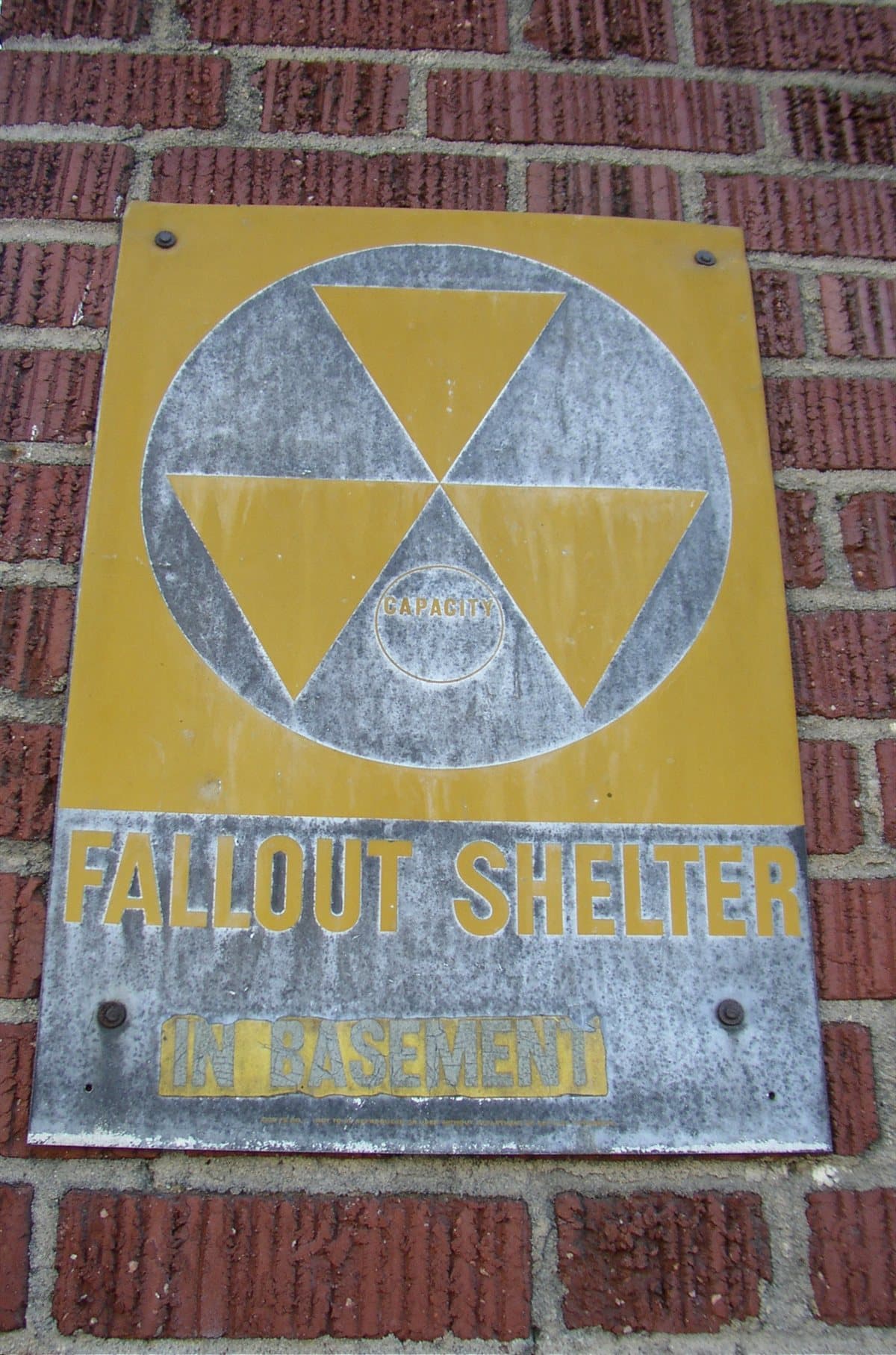
How should local planners estimate safe-distance guidance before a crisis?
City and county planners do not need classified data to improve public guidance. They need a transparent method that turns uncertainty into staged actions, then tests those actions with schools, hospitals, and utility operators.
A four-step planning model that scales
- Define reference yield scenarios relevant to your metro risk assumptions.
- Map priority facilities against likely overpressure, thermal, and fallout concerns.
- Assign shelter-first and movement-trigger protocols by district.
- Exercise the plan quarterly with communication failures injected on purpose.
This approach avoids the false precision trap. You are not predicting exact detonation characteristics; you are pre-deciding what people should do when information is incomplete. The result is faster, calmer behavior at the moment it matters.
Minimum district-level planning inputs
| Input category | Minimum dataset | Why it changes safe-distance decisions |
|---|---|---|
| Population distribution | Day/night population and commuter corridors | Identifies where shelter messaging must trigger first |
| Shelter stock | Basements, interior-core buildings, schools, transit hubs | Converts distance maps into realistic protection options |
| Critical lifelines | Water, healthcare, telecom, fuel, power nodes | Prioritizes restoration and movement guidance windows |
| Public messaging channels | Cell broadcast, siren, radio, multilingual templates | Reduces rumor-driven travel during early fallout risk |
The FEMA planning framework and OSTI-hosted technical references both point to the same practical conclusion: preparedness quality depends less on one perfect model and more on repeatable, cross-sector decision playbooks.
Public guidance language that avoids panic
Planners should publish plain-language statements in advance. For example:
- "If you are outside and see a flash, get inside immediately and move away from windows."
- "Do not self-evacuate until your area receives route-specific instructions."
- "If you are already in a strong building, staying put is often safer than driving."
These short directives work because they reduce cognitive load. During high-stress alerts, most people can execute three short commands better than one long explanation. The phrase "how far from nuclear blast is safe" should always be paired with shelter instructions so residents do not mistake mileage for immunity.
What changes if your home is outside major city centers?
People in exurban and rural areas often assume distance guarantees safety. Sometimes it helps, but infrastructure dependency still drives risk: power loss, fuel interruptions, pharmacy disruption, and delayed emergency communications can create serious secondary harm.
Rural and small-city risk profile
| Domain | Typical challenge after a major detonation event | Best pre-crisis mitigation |
|---|---|---|
| Medical access | Longer transport and fewer surge beds | Maintain medication continuity plan and local triage contacts |
| Communications | Patchy cellular coverage and single points of failure | Keep battery radio backup and printed contact tree |
| Fuel and logistics | Fewer stations and slower resupply | Preserve reserve fuel policy and trip-priority rules |
| Water systems | Small utility fragility during power loss | Build household water storage and purification routine |
For households outside urban cores, "safe distance" planning should include a 72-hour continuity template: what to run, what to defer, and when to travel. This is the same logic behind Nuclear Shelter Checklist, adapted for lower-density service environments.
FAQ: How far from nuclear blast is safe?
Bottom line
The best answer to how far from nuclear blast is safe is operational, not cinematic: farther is generally better, but shelter quality, fallout timing, and verified local instructions determine real outcomes. Build a plan around distance bands, immediate shelter moves, and disciplined reassessment windows, and you replace guesswork with decisions that measurably reduce risk.