Does Duck and Cover Work in a Nuclear Attack Today?
Does duck and cover work in a nuclear attack? It can reduce blast injuries, but only when paired with immediate indoor shelter and fallout protection.
Staff Reporting and Analysis. Produces source-backed reporting, explainers, and reference pages on nuclear risk, proliferation, and escalation dynamics.
Key Sources
Start with the strongest supporting documents and reporting behind this page.
Primary Documents
Start with the strongest official or documentary records behind this explainer.
Where This Matters Now
Recent articles where this concept is actively shaping the current crisis.
In Current Coverage
Hiroshima and Nagasaki: What Happened When the Bombs Fell
On August 6 and 9, 1945, U.S. atomic bombs devastated Hiroshima and Nagasaki. Here is what happened, who died, and what radiation did after.
2026-03-03
In Current Coverage
Tsar Bomba: The Biggest Nuclear Weapon Ever Tested
Tsar Bomba, tested by the Soviet Union on October 30, 1961, yielded about 57 megatons, becoming the most powerful man-made explosion ever recorded.
2026-03-03
In Current Coverage
What Would Happen If Nuclear War Started? A Step-by-Step Guide
What happens if nuclear war starts? From first launch to nuclear winter: blast zones, fallout, infrastructure collapse, and long-term survival risks.
2026-03-03
Related Concepts
Companion explainers that deepen the strategic logic around this topic.
Concept
How Far From Nuclear Blast Is Safe? Real Distance Guide
How far from nuclear blast is safe depends on yield, shielding, and fallout. Use practical distance bands and shelter rules to make faster, safer decisions.
2026-04-11
Concept
Radiation Dose Chart: Levels and Risks
Radiation dose chart guide: compare mSv, rem, Gy, symptoms, and emergency action thresholds before you act.
2026-05-27
Concept
Nuclear Fallout Map: How to Read One
Nuclear fallout map guidance: read wind plumes, timing, and shelter zones without false certainty. Learn the signals that matter.
2026-05-13
Does duck and cover work is a practical question, not a nostalgia question. The short answer is yes for one narrow part of the threat: duck and cover can reduce injuries from the blast wave and flying debris if you are outside the immediate high-destruction zone, but it does not protect you from sustained fallout exposure, fire spread, or infrastructure collapse. The modern sequence is more specific than Cold War slogans: duck immediately when you see the flash or receive warning, then move fast to substantial shelter as described in What to Do During Nuclear Alert, Nuclear Shelter Checklist, and Nuclear Fallout Explained.
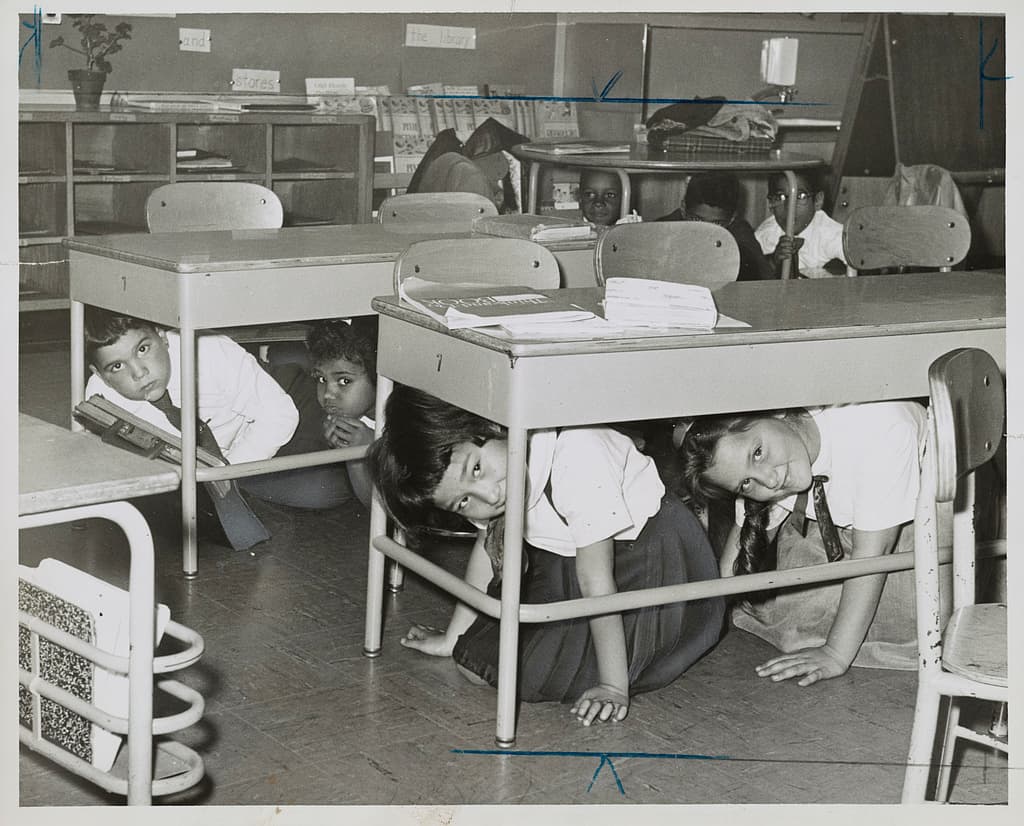
Does duck and cover actually work for a nuclear blast?
It works for the first seconds of a blast event when the main danger is overpressure and debris. It does not work as a complete response by itself. That distinction matters because public debate often swings between two extremes: one camp says duck and cover was useless propaganda, while another treats it as a complete shelter strategy. Physics supports neither extreme.
What duck and cover can reduce
| Hazard in first seconds | Why posture helps | What it cannot fully prevent |
|---|---|---|
| Flying glass and debris | Lower profile reduces exposed body area, head/neck shielding lowers laceration risk | Major structural collapse injuries |
| Blast wind knockdown | Bracing low can reduce secondary impact trauma | Close-range severe overpressure damage |
| Thermal flash line-of-sight | Turning away and covering skin can reduce direct flash burns at longer ranges | Intense close-range thermal burns |
The U.S. government's modern emergency language from Ready.gov and CDC still preserves the same logic: take immediate protective action, then get to better shelter. In other words, duck and cover is a first move, not the whole playbook.
Why the myth of "completely useless" persists
The phrase was taught during an era of high public anxiety, so many people interpret it through politics rather than injury mechanics. But injury mechanics are straightforward. If a shockwave breaks windows and throws debris, lowering your profile and shielding your head can reduce harm. The maneuver never promised to make close-in detonation zones survivable. It was always about improving outcomes for people outside maximum destruction bands.
Is duck and cover still recommended today?
Yes, but in updated form tied to the next step: immediate indoor shelter. Modern guidance is less theatrical and more operational. Instead of "duck and cover and wait," current public-health and emergency-management messaging effectively says: protect in the moment, then transition quickly to shielding and contamination control.
The modern sequence
- Flash or warning appears: drop low, turn away from windows, cover head and exposed skin.
- As soon as initial blast effects pass: move into the nearest substantial building.
- Inside: go to basement or interior core, then follow official updates.
This is why the phrase "get inside, stay inside, stay tuned" is now the dominant public instruction. It incorporates the useful part of duck and cover but adds the critical fallout and decision-timing layer.
Where people get the sequence wrong
| Error | Consequence | Better action |
|---|---|---|
| Treating duck and cover as complete response | Extended outdoor exposure | Use it as a 5-15 second transition move |
| Running outside to "see what happened" | Higher debris and fallout exposure | Move deeper indoors instead |
| Immediate long-distance driving | Traffic lock + exposure in transit | Shelter first, move only with route-specific guidance |
The corrected sequence is more effective because it matches how hazard phases unfold: first the blast and debris threat, then the fallout and logistics threat.
What should you do after the flash from a nuclear explosion?
The first flash can arrive before most people process what happened. The next 10 minutes determine whether your risk profile improves or deteriorates.
First 10-minute action table
| Time window | Primary objective | Action standard |
|---|---|---|
| 0-15 seconds | Reduce immediate injury | Duck, cover head/neck, face away from windows |
| 15-60 seconds | Avoid secondary debris | Stay low until initial pressure wave effects pass |
| 1-3 minutes | Improve shielding | Enter nearest substantial structure |
| 3-10 minutes | Reduce contamination and uncertainty | Move to interior shelter zone, start official information checks |
The FEMA planning guidance emphasizes that early protective action windows are short and consequential. The public version of that same logic is simple: do something protective immediately, then do something more protective quickly.
Why "stand and watch" is dangerous
A common human reaction is to look toward the source of the event. That instinct increases vulnerability in glass-heavy environments where secondary breakage and debris become major injury drivers. The practical mindset is to treat the flash as a trigger for muscle memory, not analysis. Analysis comes after you are in better shelter.
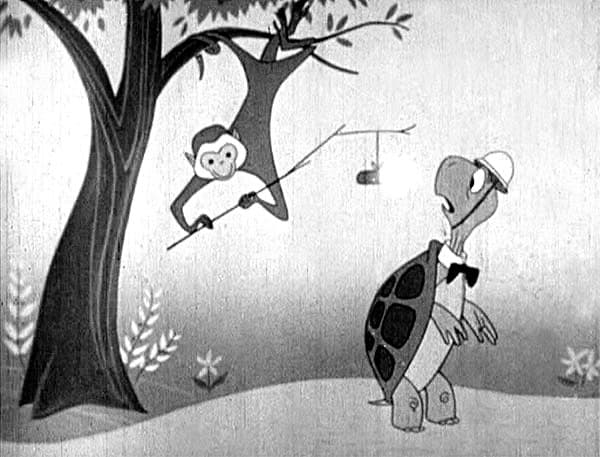
Duck and cover vs shelter in place: which matters more?
Shelter in place matters more overall because it addresses the longest and often most dangerous part of survivable scenarios: fallout exposure and infrastructure disruption. Duck and cover matters first; shelter-in-place discipline matters longer.
Hazard-phase comparison
| Response action | Best at handling | Typical duration of benefit |
|---|---|---|
| Duck and cover | Immediate blast/debris moment | Seconds to about one minute |
| Interior shelter move | Residual debris and early fallout | Minutes to hours |
| Sustained shelter in place | Fallout dose reduction and decision quality | Hours to day-scale |
This is why pages such as How Far From Nuclear Blast Is Safe and What Would Happen If Nuclear War Started repeatedly return to shielding and timing, not heroic movement. The farther you get into the timeline, the more decision quality beats reflex.
Practical threshold: when the first move is not enough
If you completed duck and cover but remain in a room with large windows, top-floor exposure, or major airflow from outdoors, your protection is still weak. The next move must be toward structural mass. In most homes that means basement or interior lowest-floor space. In offices and apartments, it means core corridors or low central rooms away from exterior glass.
Can duck and cover protect you from fallout?
No, not by itself. Fallout is a particulate contamination and dose problem that unfolds over time. A posture cannot solve that. Only shielding, time management, and contamination discipline can.
Why fallout needs different behavior
| Fallout risk driver | Why duck and cover is insufficient | Effective alternative |
|---|---|---|
| Time outdoors | Posture does not reduce time in plume | Stay indoors in shielded zone |
| Particle deposition on clothing/skin | Posture does not remove contamination | Remove outer layers, wash exposed skin/hair |
| Inhalation pathways | Posture does not control indoor air leaks | Close openings, reduce outside-air intake where possible |
| Dose accumulation over hours | Posture is momentary | Shelter discipline and controlled movement timing |
The HHS REMM clinician guidance and CDC references emphasize this multi-step framework. The popular misunderstanding is expecting one maneuver to solve multi-hour hazards.
The transition rule that actually saves lives
If you remember one sentence, use this: duck for the blast, shelter for the fallout. That rule keeps the maneuver in proper scope and prevents the two biggest errors, which are freezing outdoors or driving immediately without verified route guidance.
How much does distance change whether duck and cover helps?
Distance changes everything, but not in a simple yes-or-no way. At very close ranges with severe overpressure and structural failure, posture effects are limited. At intermediate ranges where shattered glass and debris dominate injuries, posture can make a meaningful difference. At farther ranges, the issue quickly shifts to fallout and infrastructure.
Planning bands for household decision-making
| Distance context (relative, not exact miles) | Dominant near-term risk | Duck-and-cover value |
|---|---|---|
| Severe damage zone | Collapse, intense thermal effects | Low as standalone protection |
| Moderate damage fringe | Debris, broken glass, secondary burns | Moderate to high for immediate injury reduction |
| Outer impact area | Confusion, panic movement, fallout decisions | Useful as reflex trigger before shelter move |
Because real events vary by yield, burst height, terrain, and weather, distance should be paired with behavior planning, not treated as a standalone guarantee. That is the same reason nuclear blast distance guidance focuses on action thresholds, not one magic number.
Does duck and cover work in schools and offices today?
Yes, if drills are updated to include shelter transition and communication protocol. Institutions that stop at posture rehearsal miss the larger risk window.
Updated drill design for organizations
- Trigger phase: immediate duck and cover for all occupants.
- Transition phase: controlled movement to designated interior shelter zones.
- Accountability phase: roster checks, injury triage, contamination protocol.
- Communication phase: official update cadence, parent/family messaging plan.
What a modern drill should measure
| Metric | Target |
|---|---|
| Time to initial protective posture | Under 10 seconds from alert cue |
| Time to interior shelter zone | Under 3 minutes for most occupants |
| Accountability completion | Under 7 minutes |
| Information channel stabilization | One verified source active by 10 minutes |
This type of drill converts a symbolic practice into operational readiness. It also reduces panic because people have role clarity instead of improvisation.
Common misconceptions about duck and cover
Misconception 1: "It was fake science"
The posture has a real injury-reduction mechanism for debris and blast wind effects in non-severe zones. The false part is treating it as full-spectrum protection.
Misconception 2: "If it does not solve everything, it solves nothing"
Emergency behavior is cumulative. Small improvements in early seconds plus better sheltering in early minutes can produce large differences in survivable scenarios.
Misconception 3: "Preparedness means expensive gear"
Preparedness is mostly procedure quality. A rehearsed sequence, designated shelter spaces, and communication discipline usually outperform gear-heavy but unpracticed plans.
Misconception 4: "You should always drive away immediately"
Immediate driving can be high risk if roads lock and fallout is arriving. Shelter-first guidance exists because uncontrolled movement often increases exposure.
Household decision framework: a simple if-then protocol
When stress is high, households need short branching logic.
If-then checklist
- If you see a bright flash or receive an imminent alert, then duck and cover immediately.
- If the initial shock period passes, then move indoors to your pre-identified shelter location.
- If anyone was outside, then perform decontamination steps before routine movement inside the shelter area.
- If no official route guidance is issued, then remain sheltered and monitor verified channels.
- If authorities issue specific evacuation instructions for your location, then execute with pre-packed essentials.
This framework is designed for execution, not debate. It fits on one printed card and can be practiced quarterly.
Scenario walkthrough: what good execution looks like
Seeing one realistic sequence helps households translate abstract advice into actions they can repeat. Consider a commuter who notices a sudden flash while near a downtown storefront.
Minute-by-minute execution example
| Time | Decision | Risk effect |
|---|---|---|
| 00:00 | Drops below window line, covers head/neck | Reduces immediate debris and impact exposure |
| 00:30 | Waits through initial breakage noise instead of running into street | Avoids secondary glass field and panic crowd flow |
| 01:30 | Moves into interior corridor of nearby concrete building | Improves shielding mass quickly |
| 04:00 | Sends one status text, then switches to official alert monitoring | Preserves battery and limits rumor-driven choices |
| 12:00 | Completes basic decontamination after possible outdoor dust contact | Lowers contamination carry-in to shelter space |
| 45:00 | Remains sheltered despite social-media evacuation rumors | Avoids exposure during peak uncertainty |
The same scenario can go wrong if the person runs outside to call family, attempts immediate driving, or keeps moving between buildings for better phone signal. Those behaviors feel active but often increase exposure. Good execution is less dramatic: one immediate protective posture, one rapid shelter transition, and disciplined waiting for verified guidance.
FAQ: Does duck and cover work?
Bottom line
The best modern answer to does duck and cover work is conditional but clear: it works as an immediate injury-reduction move, and it fails when treated as a complete plan. The complete plan is sequence-based: duck for seconds, shelter for hours, and make movement decisions from verified local guidance.