What Is the Nuclear Football in Practice? Chain of Command, Timing, and Safeguards
What is the nuclear football? Learn what is inside, who carries it, how launch orders move, and what legal and operational limits apply.
Staff Reporting and Analysis. Produces source-backed reporting, explainers, and reference pages on nuclear risk, proliferation, and escalation dynamics.
Key Sources
Start with the strongest supporting documents and reporting behind this page.
Where This Matters Now
Recent articles where this concept is actively shaping the current crisis.
In Current Coverage
Able Archer 83: The 1983 Nuclear War Scare Explained
Able Archer 83 was a NATO drill in November 1983 that Moscow misread as a first strike, pushing Cold War tensions to their most dangerous point.
2026-03-03
In Current Coverage
Hiroshima and Nagasaki: What Happened When the Bombs Fell
On August 6 and 9, 1945, U.S. atomic bombs devastated Hiroshima and Nagasaki. Here is what happened, who died, and what radiation did after.
2026-03-03
In Current Coverage
India vs Pakistan Nuclear Weapons: A Complete 2026 Comparison
India vs Pakistan nuclear comparison: warheads, delivery systems, doctrines, defense spending, and how Kashmir escalation could strain deterrence.
2026-03-03
Related Comparisons
Comparison pages that show how this concept plays out across rivalries, arsenals, and crisis analogies.
Related Concepts
Companion explainers that deepen the strategic logic around this topic.
Concept
Nuclear Triad Explained: Structure, Purpose, and Tradeoffs
Nuclear triad explained: how land, sea, and air nuclear forces work, why states keep all three legs, and what this means for deterrence risk in 2026.
2026-04-01
Concept
What Is Launch-on-Warning?
Launch-on-warning is a posture that allows missiles to launch before incoming warheads land. This explainer covers incentives, risks, and safeguards.
2026-03-04
Concept
Tactical vs Strategic Nuclear Weapons: Key Differences
Tactical vs strategic nuclear weapons explained with doctrine, ranges, yields, targets, and escalation risk so you can read nuclear headlines without confusion.
2026-04-27
What is the nuclear football is not a trivia question during a crisis; it is a command-and-control question about how decisions, authentication, communications, and military execution fit together under time pressure. If you follow current public guidance from the Council on Foreign Relations, NNSA, and Department of Defense, the central point is straightforward: the football is a mobile decision and communications node, not a "red button" that bypasses the rest of government.
What is the nuclear football, exactly?
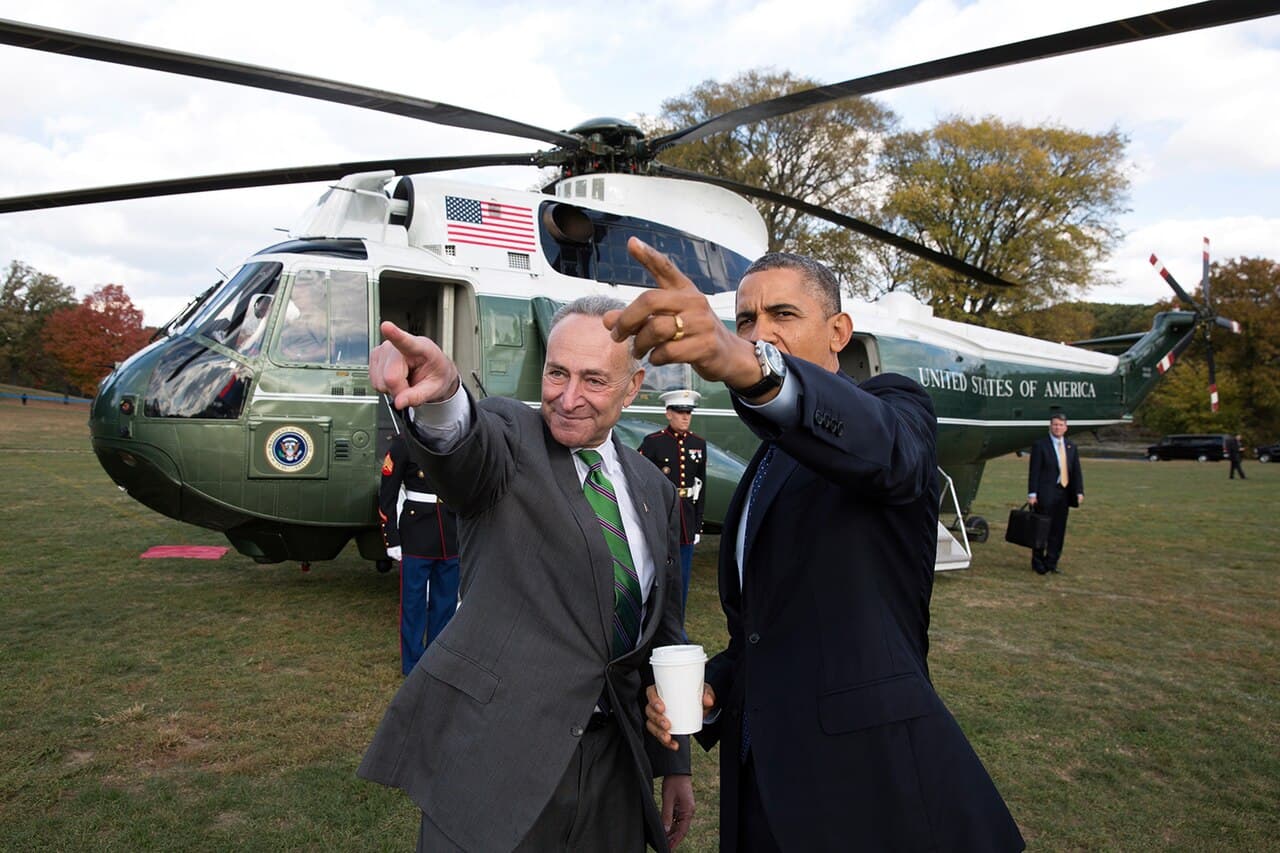
At the highest level, the nuclear football is a specially configured briefcase carried by a military aide near the president so the commander in chief can rapidly consult nuclear response options and connect to senior command authorities. It exists because nuclear command decisions cannot depend on the president being in a fixed command center.
In plain terms, the football supports mobility under worst-case conditions. Presidents travel domestically and internationally, communications environments vary, and adversary timelines can be short. The system is designed so a decision pathway remains available whether the president is in Washington, on Air Force One, at Camp David, or on an overseas trip.
A practical comparison helps avoid confusion:
| System element | What it does | What it does not do |
|---|---|---|
| Nuclear football | Brings options, procedures, and communications access with the president | It does not itself launch missiles |
| National Military Command Center (NMCC) | Coordinates execution traffic and command communications | It does not replace presidential decision authority |
| Nuclear forces (ICBMs, SSBNs, bombers) | Execute validated orders through command channels | They do not act on media reports or rumor |
The distinction matters for public understanding. In many headlines, "nuclear football" gets used as shorthand for nuclear launch itself. Operationally, it is better described as one component in a larger nuclear command, control, and communications ecosystem.
Who carries the nuclear football at all times?
A military aide, typically an officer assigned to this duty, stays physically near the president and carries the briefcase. You can think of this role as "decision continuity under movement." The aide is not a policy decision-maker, and the aide does not independently authorize military action.
Why proximity is non-negotiable
Nuclear decision timelines can compress rapidly in extreme scenarios. Because of that, procedure is built around immediate access rather than "we will retrieve the kit if needed." The aide remains close enough that the president can shift from routine activity to secure decision workflow with minimal delay.
Chain-of-custody discipline
The aide model also adds accountability. A fixed duty chain, training standards, and physical control protocols reduce ambiguity over who has custody of command support material at any moment. In command systems, ambiguity is risk; disciplined custody is a control.
For readers comparing command structures across nuclear states, Who Has the Most Nuclear Weapons? Complete 2025 Ranking and What Is Second-Strike Capability? provide useful strategic context.
What is inside the nuclear football briefcase?
Public sources describe categories rather than a precise public inventory, but a consistent picture appears across credible reporting and scholarship. The football supports three core functions: communication access, decision options, and execution procedures.
Commonly described content categories
| Category | Operational purpose | Why it matters under time pressure |
|---|---|---|
| Response option materials | Summaries of potential nuclear response choices | Keeps choices structured when seconds matter |
| Secure communications support | Connects president with military command network | Enables authenticated command dialogue |
| Procedure/checklist materials | Standardized steps for decision and order flow | Reduces execution error during stress |
Public discussion often adds references to authentication materials carried by the president personally. Regardless of exact implementation details, the broader principle is the same: identity and order legitimacy must be verified before force execution channels act.
What the football does not contain
A common myth says the briefcase contains one physical "launch button" or a simple switch that can fire weapons directly. That framing is inaccurate. Modern nuclear operations involve authenticated messages, command center coordination, force-specific execution systems, and procedural checks distributed across multiple people and systems.
If you want a physics and effects refresher separate from command workflow, How Nuclear Bombs Work: Fission, Fusion, and Weapon Physics explains the weapon side while this page focuses on command architecture.
Can the president launch nuclear weapons alone?
This question mixes two separate ideas: legal authority and physical execution. Under current U.S. structure, the president is the ultimate decision authority for nuclear employment. But execution is not a solo physical action; it is a distributed process involving military command and technical systems.
Decision authority vs execution mechanism
| Question | Short answer |
|---|---|
| Who is final decision authority? | The president, as commander in chief |
| Can one person physically execute a launch by pressing a button? | No, execution is procedural and distributed |
| Are there authentication and transmission steps? | Yes, multiple steps are required |
| Do military organizations translate order into force action? | Yes, through established command channels |
This distinction is central to better public literacy. "Sole authority" is about who decides, not about a one-person mechanical act. In other words, constitutional and operational layers are different layers.
Why this nuance matters in crisis reporting
During breaking news, simplified phrasing can imply either "instant launch at whim" or "so many checks that launch is impossible." Both are misleading. The real system is built to do two things at once: preserve civilian command authority and preserve disciplined military execution.
For legal process context in U.S. force decisions, How the War Powers Resolution Works in 2026 and What Is an AUMF (Authorization for Use of Military Force)? explain adjacent authorities.
How fast can a U.S. nuclear launch order be executed?
The true answer depends on scenario type, warning confidence, force posture, and command conditions. Publicly, experts often describe potential execution windows as short in high-urgency cases, which is exactly why command and communications continuity systems exist.
A more useful way to understand timing is by phases:
| Phase | What happens | Main bottleneck risk |
|---|---|---|
| Threat assessment and warning integration | Military and intelligence inputs are fused | False or ambiguous warning picture |
| Presidential decision conference | Options and consequences are presented | Information overload under time pressure |
| Authentication and order formatting | Decision is translated into valid command traffic | Message integrity and identity confirmation |
| Force-level execution procedures | Relevant force elements act on validated order | Communications disruption or system degradation |
The football primarily helps the second and third phases happen even while the president is mobile. Without that mobility layer, continuity gaps could appear exactly when urgency is highest.
Speed does not mean absence of process
Another persistent myth is that speed and procedure are opposites. They are not. High-reliability systems are engineered to execute quickly because procedures are pre-defined, rehearsed, and standardized. Improvisation slows response and increases error risk.
That same logic appears in civilian readiness too. Nuclear Shelter Checklist for Shelter-in-Place Emergencies emphasizes pre-built household procedures for exactly this reason: preparation turns panic time into execution time.
What role does the National Military Command Center play?
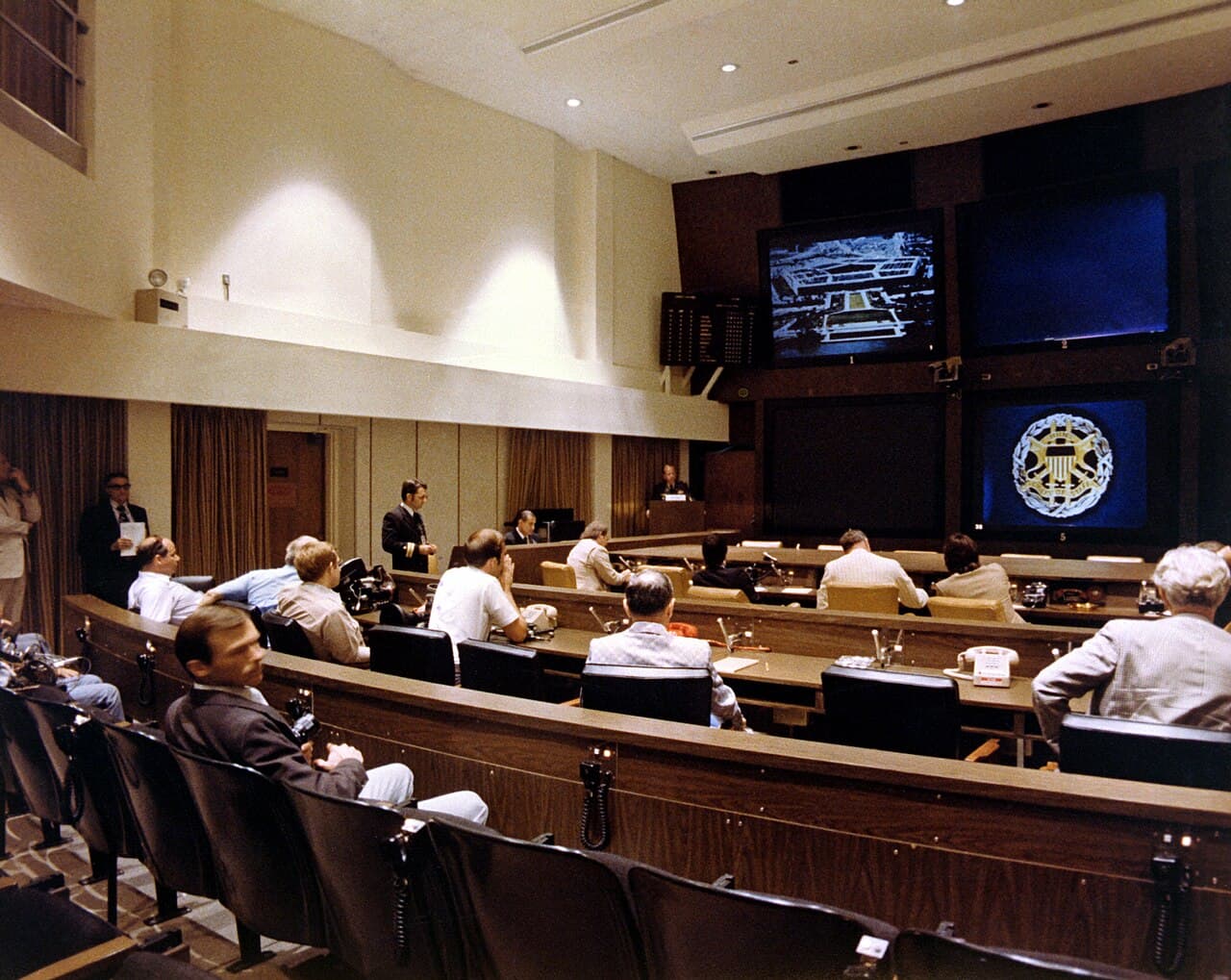
The NMCC is a command communications hub that helps route, coordinate, and monitor strategic command traffic. It is not "the football on a larger scale," but it is tightly connected to the same end-to-end chain.
Functional responsibilities in simple language
- Maintain persistent command communications pathways.
- Support conference and coordination among national command authorities.
- Format and route validated command messages to relevant force components.
- Preserve continuity if one communications path is degraded.
In a nuclear decision context, this means the football and the NMCC are complementary. The football brings mobile decision support to the president; the NMCC helps ensure that validated direction can move reliably through military channels.
Command resilience and redundancy
Serious command systems assume disruption. Cyber pressure, kinetic attack, infrastructure damage, and electromagnetic interference are all part of strategic planning assumptions. Resilient command-and-control architecture therefore relies on redundancy, alternate nodes, and continuity planning rather than a single fragile path.
That resilience principle also appears in deterrence theory. What Is Launch-on-Warning? and How Nuclear Deterrence Works show how posture and command confidence interact.
Does the nuclear football contain launch codes?
Public discussion often uses "launch codes" as a catch-all phrase, which obscures more than it clarifies. In practice, nuclear command relies on authentication methods, secure message formats, and force-specific procedures rather than one cinematic string of digits that by itself launches weapons.
Better language for readers and reporters
| Popular phrase | Better operational phrase |
|---|---|
| "Launch codes" | Authentication and command validation materials |
| "Push the button" | Issue and transmit an authenticated order through command channels |
| "The football launches missiles" | The football supports mobile presidential command decisions |
Clear language improves public behavior in crisis moments. When citizens understand that command is procedural and distributed, they are less vulnerable to panic rumors like "one suitcase was moved, so launch is automatic."
What legal and policy limits matter most?
The football is a tool inside a legal-political system. It does not override constitutional structure, military law, or broader policy doctrine. Understanding limits means understanding where authority, doctrine, and professional duty intersect.
Four practical limit categories
- Constitutional structure: The president is commander in chief, but decisions exist within constitutional governance and statutory frameworks.
- Military execution standards: Orders move through professional command channels built for lawful, authenticated execution.
- Strategic doctrine: Deterrence posture, alliance commitments, and escalation risks shape option framing before any order.
- International consequence: Any nuclear use decision carries immediate humanitarian, legal, and geopolitical consequences.
Why public debate focuses on "sole authority"
Debates about reform often focus on whether first-use decisions should require additional concurrence. Those policy debates are real, but they are debates about changing rules, not descriptions of current baseline structure. Good analysis separates "how it works now" from "how advocates want it changed."
For scenario-level consequence mapping, What Would Happen If Nuclear War Started? A Step-by-Step Guide gives a broader systems view of escalation outcomes.
How does the football fit into nuclear command and control (NC3)?
NC3 includes sensors, communications links, command centers, decision protocols, and force execution pathways. The football is one visible object in that much larger architecture.
NC3 layers and where the football sits
| NC3 layer | Purpose | Football connection |
|---|---|---|
| Detection and warning | Identify potential attacks and characterize threat | Provides inputs for option discussions |
| Decision support | Present options, consequences, and timing | Football carries mobile decision support materials |
| Command transmission | Convert decision into authenticated military message | Football supports access to command communications |
| Force execution | Deliver action through assigned force components | Happens through force systems, not the briefcase itself |
| Continuity and resilience | Keep command functioning under disruption | Football helps preserve continuity while mobile |
The practical takeaway: if you remove the football from the story, command still exists; if you remove NC3 resilience, command reliability drops. The briefcase is important, but it is not the whole system.
Why myths about the nuclear football spread so easily
The football is visually compelling, so it invites oversimplification. A single object is easy to narrate; distributed command architecture is harder to explain in a headline. But oversimplification has costs.
High-impact myths to avoid
| Myth | Why it is wrong | Better framing |
|---|---|---|
| "The football is the launch device" | It supports decision and communications, not direct launch mechanics | "Mobile command kit within NC3" |
| "One person can physically launch instantly" | Execution is distributed and authenticated through military channels | "Civilian decision authority plus procedural military execution" |
| "If the aide is absent, command collapses" | Continuity planning includes alternate pathways and nodes | "Football is one redundancy layer, not the only layer" |
| "Launch code = one secret number" | Real systems use structured authentication and message protocols | "Validated command traffic and procedural checks" |
Media literacy rule for readers
When you see nuclear-football coverage, ask three questions:
- Is the source describing decision authority or execution mechanics?
- Does it distinguish legal authority from technical process?
- Does it cite primary institutions or only secondary commentary?
If an article cannot answer those three questions, treat it as incomplete.
What should civilians do with this information?
Most readers are not policy staff or military planners, so the value of this topic is better risk literacy, not operational fascination. Knowing how command systems actually work helps people interpret crisis news with less panic and better judgment.
Practical civilian uses
- Filter misinformation during breaking alerts.
- Understand why official statements can be brief at first and detailed later.
- Separate strategic signaling rhetoric from immediate public-safety instructions.
- Focus household action on credible guidance like Ready.gov nuclear explosion guidance and local emergency management alerts.
Information hierarchy during a fast-moving event
| Priority level | Source type | Why it ranks here |
|---|---|---|
| 1 | Official emergency channels (local, state, federal) | Actionable instructions and route-level guidance |
| 2 | Primary institution statements (DoD, DOE/NNSA) | Authoritative command-context updates |
| 3 | High-quality analysis outlets | Context and interpretation after facts stabilize |
| 4 | Viral clips and unsourced posts | High rumor risk, low decision value |
Readers who pair command literacy with preparedness literacy are better positioned in both strategic and public-safety terms. If you need the civilian side in detail, Nuclear Fallout Explained and Potassium Iodide Nuclear Emergency Guide cover first-day protective decisions.
FAQ: Nuclear football questions people ask most
Bottom line
The best answer to what is the nuclear football is "a mobile presidential command support system inside a broader NC3 architecture." That answer is less dramatic than movie depictions, but it is far more useful for understanding real-world risk, policy debate, and crisis communication.
If you keep one framework in mind, keep this one: authority, authentication, communications, and execution are separate layers that must work together. The football touches all of them indirectly, but it replaces none of them.