Nuclear command and control explained for real-world crises
Nuclear command and control explained: how NC2 authority and NC3 systems verify, transmit, and execute nuclear decisions in a fast-moving crisis.
Staff Reporting and Analysis. Produces source-backed reporting, explainers, and reference pages on nuclear risk, proliferation, and escalation dynamics.
Key Sources
Start with the strongest supporting documents and reporting behind this page.
Primary Documents
Start with the strongest official or documentary records behind this explainer.
Where This Matters Now
Recent articles where this concept is actively shaping the current crisis.
In Current Coverage
Doomsday Clock History: Every Setting From 1947 to 2025
Doomsday Clock history year by year: from 7 minutes to midnight in 1947 to 89 seconds in 2025. Full timeline of every setting, what changed, and why it matters.
2026-03-03
In Current Coverage
New START Treaty Expiration 2026: What Changes Now
New START treaty expiration 2026 ended verified U.S.-Russia limits. See what changes for warheads, inspections, and escalation risk now.
2026-03-18
In Current Coverage
Able Archer 83: The 1983 Nuclear War Scare Explained
Able Archer 83 was a NATO drill in November 1983 that Moscow misread as a first strike, pushing Cold War tensions to their most dangerous point.
2026-03-03
Related Concepts
Companion explainers that deepen the strategic logic around this topic.
Concept
How Are Nuclear Tests Detected? Verification Guide
How are nuclear tests detected? Learn the sensors, data flow, and proof standards used to identify underground, underwater, and atmospheric blasts.
2026-04-17
Concept
Tactical vs Strategic Nuclear Weapons: Key Differences
Tactical vs strategic nuclear weapons explained with doctrine, ranges, yields, targets, and escalation risk so you can read nuclear headlines without confusion.
2026-04-27
Concept
What Is Launch-on-Warning?
Launch-on-warning is a posture that allows missiles to launch before incoming warheads land. This explainer covers incentives, risks, and safeguards.
2026-03-04
Nuclear command and control is the part of deterrence that most headlines flatten into movie shorthand. In practice, it is a layered system of legal authority, warning sensors, authentication codes, secure communications, and execution crews that must work together in minutes while leaders are still resolving uncertainty. If you have already read What Is the Nuclear Football, What Is Launch-on-Warning, and Nuclear Triad Explained, this page connects those concepts into one practical decision-flow model.

What is nuclear command and control?
At a technical level, nuclear command and control combines two closely related ideas:
- NC2: decision authority and command relationships (who can authorize, under what legal framework, with what advisors).
- NC3: the communications and warning architecture that carries those decisions to forces under stress.
The distinction matters because people often treat hardware as the whole story. Hardware is only one layer. The strategic outcome depends on whether the full chain remains credible: detect, assess, decide, authenticate, transmit, execute, and if needed terminate.
Core functions in plain language
| Function | What it does | Failure consequence |
|---|---|---|
| Warning | Detects possible attack through satellites, radars, and intelligence feeds | False alarms or delayed recognition compress decision time |
| Decision support | Gives leadership options, likely outcomes, and confidence levels | Leaders may act on incomplete or contradictory information |
| Authentication | Confirms that launch messages are lawful and genuine | Spoofing or confusion can trigger unauthorized action fears |
| Communications | Sends orders through survivable and redundant paths | Units may lose contact or receive degraded instructions |
| Execution control | Ensures crews follow strict two-person and procedural controls | Inconsistent execution can destabilize deterrence credibility |
| Termination/recall | Supports de-escalation signaling and post-order control | Once messages are sent, reversal options can narrow quickly |
This is why analysts avoid describing command and control as a single room or a single briefcase. The system is geographically distributed and intentionally redundant. For a technical baseline, see the Nuclear Matters Handbook, and for budget-scale modernization context, review CBO's Nuclear Command, Control, and Communications report.
Who can authorize a nuclear launch?
In U.S. doctrine, civilian control sits at the center: the President is the constitutional commander in chief, and launch authority is structured around lawful national command authority and authenticated emergency action messages. That does not mean one person acts alone in a vacuum. It means the legal decision point is centralized while inputs, consultation, and implementation involve many institutions.
Decision chain versus execution chain
| Layer | Typical actors | Main responsibility |
|---|---|---|
| Political-legal authority | President and constitutional advisors | Determine whether nuclear use is authorized under law and policy |
| National command process | Senior defense leadership and national command staff | Translate decision into executable message formats |
| Strategic operations centers | U.S. Strategic Command and supporting command nodes | Validate message integrity and route to operational units |
| Delivery crews and unit commanders | Missile, submarine, and bomber crews | Execute only authenticated, procedure-compliant orders |
This is where many public misconceptions begin. The phrase "sole authority" is often interpreted as "instant and unconstrained." In reality, legal authority is centralized, but execution requires a synchronized chain of technical and human verification. That layered design is not perfect, but it is intentional.
For readers comparing systems, the same general pattern appears across nuclear states: centralized political authority paired with highly structured transmission and authentication protocols. The mix of redundancy, delegation limits, and transparency differs significantly by state, which is one reason open-source confidence varies.
How does NC3 work during an attack warning?
NC3 is built for the worst communication environment a state can face: contested spectrum, physical damage, cyber pressure, and incomplete information. The architecture uses multiple pathways so that no single destroyed node automatically breaks command continuity.
A simplified NC3 signal path
- Sensors detect anomalies: infrared satellites, radar tracks, and other intelligence streams generate warning cues.
- Fusion and assessment: command centers compare sources, classify confidence, and identify likely trajectories.
- Leadership briefing: decision-makers receive time-critical options, expected effects, and uncertainty estimates.
- Message authentication: if an order is made, coded and procedural checks verify lawful origin and integrity.
- Multi-path transmission: orders move through resilient terrestrial, airborne, and maritime communications links.
- Crew verification and execution: receiving units confirm message validity through control procedures before action.
Why timing dominates risk
| Time window problem | Why it matters for command and control |
|---|---|
| Minutes to assess warning | Increases pressure to decide before full verification is possible |
| Simultaneous data noise | Conflicting sensor reports can reduce confidence at the worst moment |
| Communications degradation | Leaders may not know which nodes remain trustworthy |
| Adversary deception risk | False or ambiguous signals can induce overreaction |
This timing pressure links directly to What Is Launch-on-Warning: command resilience is not just about sending orders quickly, but about preserving enough confidence to avoid catastrophic misreads.
What prevents accidental or unauthorized launch?
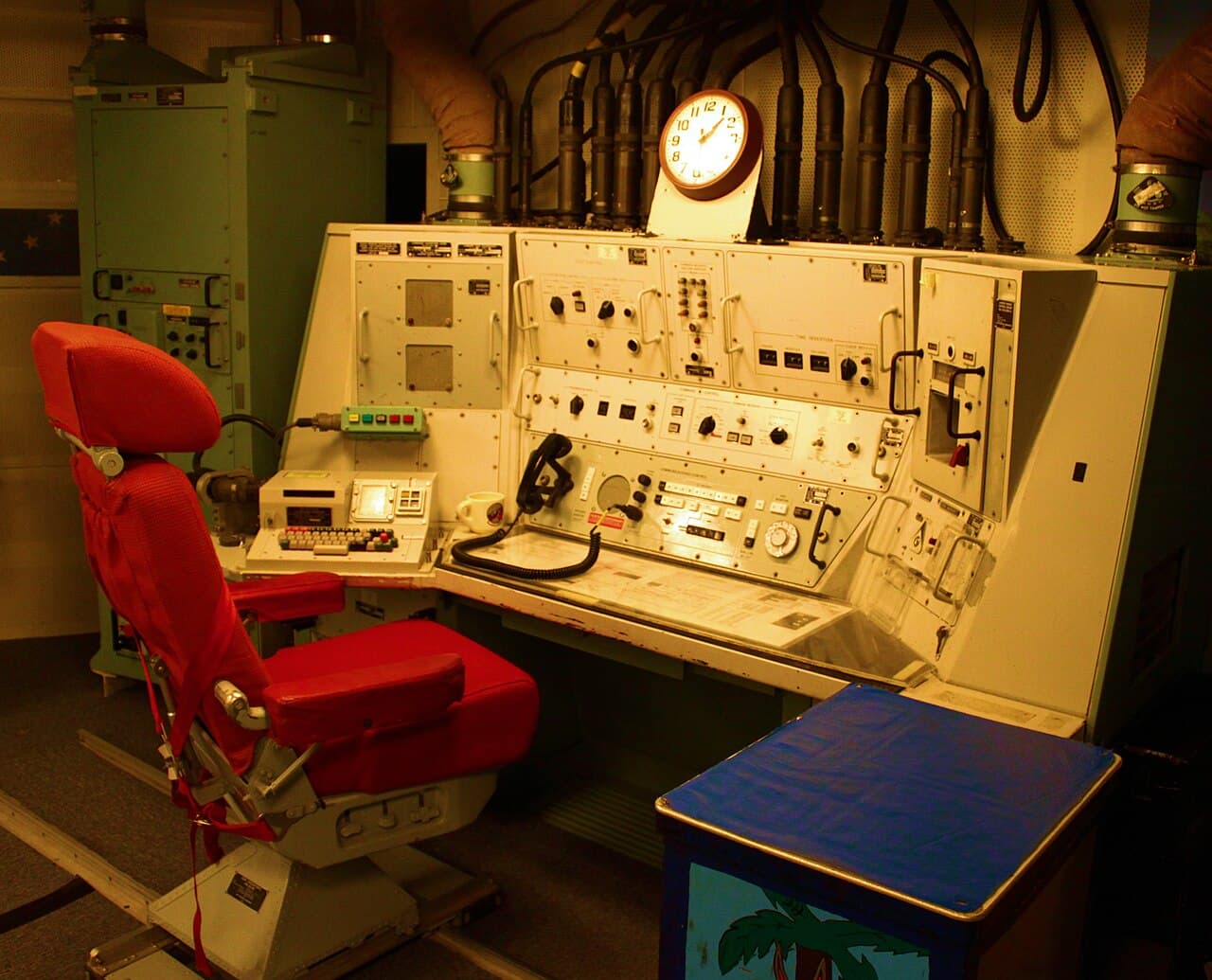
No serious system relies on goodwill alone. Nuclear command and control uses layered controls intended to reduce unauthorized use, transcription error, spoofing, and accidental execution under stress.
Major control families
| Control family | Practical purpose | Example safeguard |
|---|---|---|
| Personnel controls | Reduces unilateral action risk | Two-person integrity at critical steps |
| Technical locks | Restricts arming/use without proper codes | Permissive action link style code controls |
| Message format controls | Prevents malformed or forged order acceptance | Strict emergency action message templates |
| Authentication drills | Ensures crews recognize valid command traffic | Recurring verification and procedure training |
| Red-team testing | Identifies procedural and technical weak points | Simulated degraded-communications exercises |
These controls are not proof against every failure mode. They are risk-reduction layers. In strategic terms, command and control never becomes "safe" in the ordinary sense; it becomes less fragile than the alternatives.
Where public debate often gets the process wrong
- It over-focuses on the launch moment and under-focuses on warning assessment quality.
- It treats communications speed as inherently good when speed can also amplify error.
- It assumes classified systems are either flawless or broken, with no middle ground.
- It confuses deterrence signaling moves with irreversible launch preparation.
A better reading rule is to ask: did the report describe verification and authentication steps, or just dramatic outcomes?
Can cyberattacks disrupt nuclear command and control?
Cyber risk is real, but "cyberattack equals instant launch compromise" is an oversimplification. Modern NC3 posture treats cyber interference as one threat among many, alongside kinetic strikes, jamming, spoofing, and satellite disruption.
Cyber risk in command systems
| Risk vector | Likely effect | Strategic implication |
|---|---|---|
| Network intrusion attempts | Data integrity doubts, temporary outages | Slower confidence-building in warning cycles |
| Supply-chain compromise | Embedded vulnerabilities in support systems | Long-tail reliability and trust issues |
| Denial-of-service pressure | Loss of non-essential interfaces | Greater dependence on hardened backup pathways |
| Information operation overlays | Public confusion and rumor amplification | Political pressure that can compress leadership decisions |
The most destabilizing cyber effect is not always direct technical takeover. It is confidence erosion: if decision-makers doubt the integrity of warning or communication channels, they may default to worst-case assumptions. That can produce escalatory choices even without a successful system breach. ODNI's Annual Threat Assessment regularly highlights cyber and strategic warning pressures that make this confidence problem operational, not theoretical.
Readers who follow infrastructure risk should pair this with Nuclear EMP Effects on Electronics, because physical and cyber disruptions can interact in a crisis environment.
How do continuity systems support command survivability?
Continuity-of-government and continuity-of-operations planning exist because fixed command nodes can be targeted. Airborne and alternate command posts, mobile communications kits, and preplanned relocation concepts are designed to preserve lawful authority and communications continuity if primary facilities are degraded.
Why survivability matters for restraint
It is easy to assume survivability systems are purely about warfighting endurance. They are also about restraint. If leadership believes command can survive and communicate after initial shocks, pressure for rushed or preemptive decisions can fall.
| If survivability is weak | If survivability is credible |
|---|---|
| Leaders may fear losing decision ability imminently | Leaders can preserve time for verification and consultation |
| Incentive grows to act before systems degrade further | Incentive grows to avoid irreversible decisions on weak data |
| Adversaries may misread panic-driven signals | Adversaries may read more stable command posture |
This is one reason continuity platforms such as airborne command aircraft receive so much attention in open-source reporting. Their strategic value is partly psychological: they support confidence that command authority remains coherent.
How do command models differ across nuclear states?
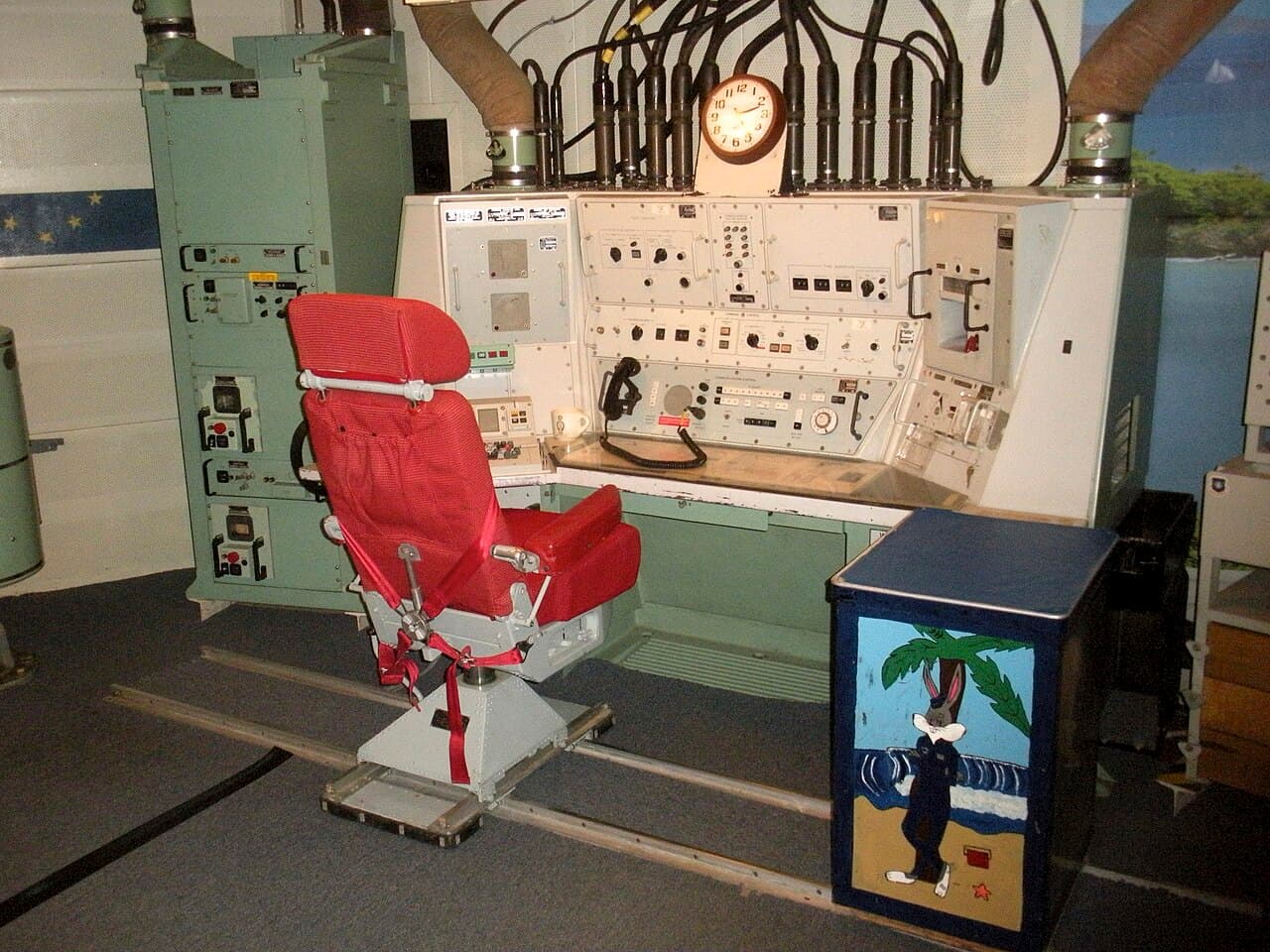
All nuclear states seek some mix of centralized authority, survivable communications, and reliable execution control. They diverge in doctrine, transparency, organizational culture, and tolerance for pre-delegation risk.
A comparative framework readers can reuse
| Dimension | Questions to ask | Why it changes risk interpretation |
|---|---|---|
| Authority centralization | Is political launch authority tightly centralized or conditionally delegated? | Affects unauthorized-use risk and response speed |
| Warning doctrine | Is posture optimized for delayed retaliation or rapid launch under warning? | Alters miscalculation exposure during ambiguous alerts |
| Communications redundancy | Are backup paths visible and tested in public doctrine/exercises? | Shapes confidence in command survival after first strike |
| Public transparency | How much detail is publicly documented versus opaque? | Limits external ability to verify claims and intent |
| Escalation signaling style | Does doctrine favor deliberate ambiguity or explicit thresholds? | Changes adversary interpretation under stress |
This is where comparisons like Russia vs US Nuclear Forces and Iran vs North Korea Nuclear Programs become useful: force size matters, but command behavior and signaling logic often drive immediate crisis risk.
How should you evaluate nuclear launch-process headlines?
Most readers do not need classified detail. They need a disciplined filter for separating credible process reporting from attention-driven simplification.
The five-question NC2/NC3 filter
- Authority clarity: Does the report identify who actually holds decision authority?
- Evidence quality: Are claims tied to named official documents or only anonymous commentary?
- System layer: Is the claim about political decision, technical transmission, or unit execution?
- Timeline realism: Does the timeline match known warning and authentication constraints?
- Reversibility: Does the report distinguish posture signaling from irreversible launch action?
Common headline traps
| Claim pattern | Better interpretation |
|---|---|
| "Leader can launch in seconds" | Legal authority can be fast, but practical execution still depends on authenticated command chains |
| "One cyber breach can seize nukes" | High-consequence systems are segmented and procedural; risk is often confidence degradation, not instant seizure |
| "Command aircraft means war is imminent" | Airborne command posture can also be continuity and reassurance signaling |
| "Exercise traffic proves launch prep" | Exercises and readiness traffic need corroboration before strategic conclusions |
Use this filter with primary-document habits from How to Verify Official Statements With Primary Documents. It materially lowers the chance of misreading crisis signals.
A practical model: reliability, restraint, and legitimacy
You can reduce nearly every NC2/NC3 debate to three tests:
- Reliability: can valid orders move end-to-end under severe stress?
- Restraint: can the system avoid irreversible action on ambiguous information?
- Legitimacy: can decisions remain lawful, attributable, and reviewable after the fact?
When those three align, deterrence credibility tends to improve while accidental escalation risk falls. When one collapses, rhetoric, fear, and worst-case assumptions can dominate the decision environment.
That is why nuclear command and control is not a niche technical topic. It is the hidden infrastructure behind every deterrence claim, every launch warning headline, and every argument about strategic stability. If you understand the chain, you can read nuclear news with less panic and more precision.