Potassium Iodide Nuclear Emergency Guide: Doses, Timing, and Limits
Potassium iodide nuclear emergency guide: when KI helps, correct doses, and the first shelter actions to protect your thyroid safely.
Staff Reporting and Analysis. Produces source-backed reporting, explainers, and reference pages on nuclear risk, proliferation, and escalation dynamics.
Key Sources
Start with the strongest supporting documents and reporting behind this page.
Where This Matters Now
Recent articles where this concept is actively shaping the current crisis.
In Current Coverage
Iran War Timeline 2026: Escalation From Talks to Open Conflict
A step-by-step Iran war timeline from late-2025 diplomatic breakdown to Operation Epic Fury, retaliatory strikes, Hormuz disruption, and ongoing escalation.
2026-03-03
In Current Coverage
Is This Like the Cuban Missile Crisis? Comparing 1962 and 2026
A 1962 vs 2026 comparison of decision windows, nuclear proximity, escalation control, and why the Iran crisis is framed as a modern Cuban Missile moment.
2026-03-03
In Current Coverage
Nuclear Threat Assessment: Where the Iran Crisis Goes From Here
A scenario-based nuclear threat assessment of the Iran crisis, including leadership instability, damaged facilities, and pathways to escalation or containment.
2026-03-03
Related Comparisons
Comparison pages that show how this concept plays out across rivalries, arsenals, and crisis analogies.
Related Concepts
Companion explainers that deepen the strategic logic around this topic.
Concept
How Far From Nuclear Blast Is Safe? Real Distance Guide
How far from nuclear blast is safe depends on yield, shielding, and fallout. Use practical distance bands and shelter rules to make faster, safer decisions.
2026-04-11
Concept
What to Do During Nuclear Alert: Fast Checklist
What to do during nuclear alert: shelter fast, cut fallout dose, and follow a practical 24-hour protocol for safer decisions at home, work, or school.
2026-03-15
Concept
Dirty Bomb vs Nuclear Bomb: Key Differences
Dirty bomb vs nuclear bomb explained: hazard size, radiation risk, survival steps, and when to shelter or evacuate based on official guidance.
2026-03-11
Potassium iodide nuclear emergency guide decisions start with one simple rule: KI protects your thyroid from radioactive iodine, not your whole body from all radiation. That narrow use is exactly why official guidance from the CDC, FDA, and NRC says to treat KI as a supplement to sheltering and evacuation, not a substitute. If you understand that boundary in advance, you can make faster and safer choices when alerts are coming in fast.
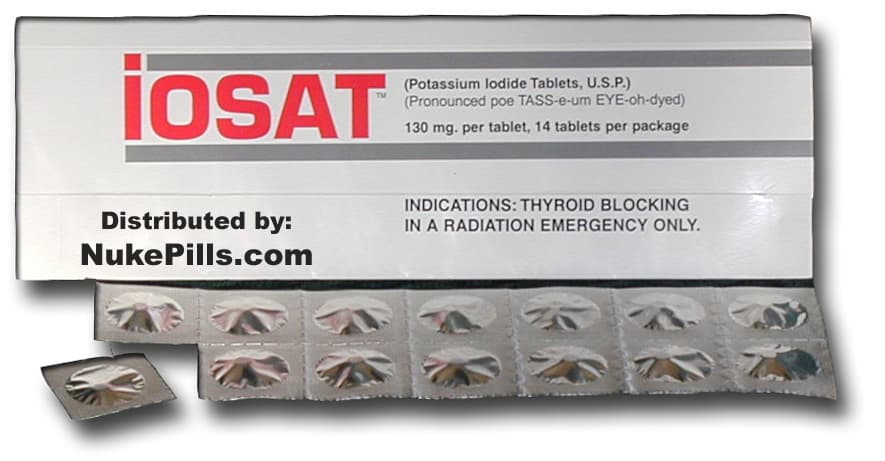
What does potassium iodide actually protect against?
Potassium iodide (KI) floods the thyroid with stable iodine. If radioactive iodine is in the air, food, or water, your thyroid takes up less of it because the gland is already "full." The result is lower thyroid dose and lower long-term thyroid cancer risk.
That mechanism creates strict limits:
- KI helps only for radioactive iodine exposure.
- KI does not remove radioactive particles already in your body.
- KI does not protect lungs, bone marrow, skin, or other organs.
- KI does not protect against external gamma radiation from fallout.
The CDC says this directly: KI is specific to thyroid protection and should be taken only when officials advise it. The NRC gives the same message for power-plant planning zones, where KI is considered as one layer in a broader emergency plan.
If you want broader context on why fallout protection still depends on shelter quality and time, see What Is Nuclear Fallout? Radiation Effects and Survival Basics.
When should you take KI in a real incident?
Timing matters almost as much as dose. KI works best before exposure or shortly after intake risk begins. Practical planning should focus on three windows used by U.S. health guidance:
| Timing window | Expected benefit | Practical decision |
|---|---|---|
| Before plume arrival | Highest | Take only if officials advise and exposure is likely |
| First few hours after exposure starts | Meaningful but declining | Take immediately if official advice arrives late |
| Long after initial window | Limited to none for most people | Prioritize shelter, contamination control, and medical advice |
For many readers, the biggest mistake is waiting for perfect certainty. You will rarely have full certainty in the first hours. You should have a pre-written household rule: "If county or state public health says take KI, we take the age-appropriate dose and continue shelter protocol."
At the same time, another common mistake is "panic-dosing" without guidance. In many scenarios, radioactive iodine is not the main hazard. In those cases, KI adds side-effect risk without real benefit.
Why officials sometimes do not recommend KI
Emergency managers may tell you to shelter and not take KI when:
- The radionuclide mix does not include meaningful radioactive iodine.
- You are outside the highest-risk plume path.
- Evacuation and shelter steps already reduce thyroid dose sufficiently.
- Medical risk in a specific population group outweighs expected benefit.
That is not indecision. It is dose-benefit triage.
Potassium iodide dose chart by age and life stage
Use FDA-labeled products and dosing instructions. Keep a printed chart with your emergency supplies so no one has to estimate under stress.
| Group | Typical FDA emergency dose | Notes |
|---|---|---|
| Adults 18+ years | 130 mg | One dose per 24 hours when directed |
| Adolescents 12-18 years | 65 mg if <=150 lb, 130 mg if >150 lb | Follow product labeling and official instructions |
| Children 3-12 years | 65 mg | Pediatric formulation helps accurate dosing |
| Toddlers 1 month-3 years | 32 mg | Use measured liquid or split tablet method only if instructed |
| Birth to 1 month | 16 mg | Neonates need close medical follow-up for thyroid function |
| Pregnant or breastfeeding | 130 mg | Usually limited duration; follow official and clinician guidance |
Do not improvise with table salt or supplements
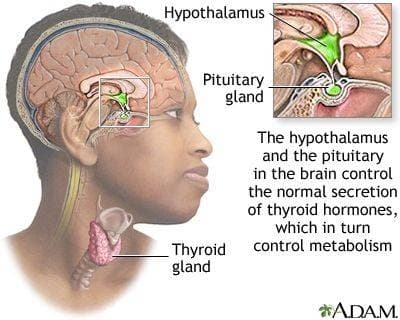
Table salt, kelp tablets, and "iodine drops" are not substitutes for FDA-approved KI products. The iodine concentration and purity are not appropriate for emergency thyroid blocking.
How long does one dose last?
A single KI dose generally provides about 24 hours of thyroid blocking. Repeated daily dosing can be recommended in continuing exposure situations, but officials may limit repeat dosing for newborns, pregnant people, and breastfeeding people because thyroid side effects matter more in those groups. Plan for official messaging updates every day during a prolonged event.
Should you keep KI at home if you live in the U.S.?
For households near nuclear power plants, the answer is usually yes, and many jurisdictions already distribute KI in the 10-mile emergency planning zone (EPZ). The NRC framework expects states and tribal governments in those zones to consider KI as part of preparedness planning.
For households far from plant EPZs, KI can still be part of a preparedness kit, but expectations should stay realistic:
- It is a niche tool for one class of radionuclide.
- It has expiration dates and replacement cost.
- It is useless without a communication plan for official instructions.
Your first preparedness dollars still go to shelter capability: water, radios, batteries, food, first aid, and a room you can seal temporarily. If you are building from zero, review What Would Happen If Nuclear War Started? and then add KI as a targeted add-on.
KI for dirty bombs vs nuclear plant accidents vs nuclear detonations
Different incident types produce different radionuclide mixes. A practical guide has to separate them.
Nuclear power plant release
This is the scenario where KI planning is most mature. If iodine isotopes are released, KI can meaningfully reduce thyroid dose, especially in children and younger adults. Local plans are built around plume modeling, siren/public alert systems, and staged recommendations.
Dirty bomb (radiological dispersal device)
A dirty bomb can create contamination and fear, but KI is not automatically useful. NRC and CDC guidance both note that radioactive iodine may not be the primary material used. If iodine is absent, KI provides no radiation protection.
Nuclear detonation
A detonation creates multiple hazards: blast, thermal injuries, structural collapse, acute radiation, and fallout. KI may help only in the subset of cases with radioactive iodine uptake risk, and only after officials confirm that risk. Immediate survival still depends on rapid sheltering and contamination control.
The same logic applies to fast-moving geopolitical scenarios. If you track escalation risk through pages like What Happens If Iran Gets Nuclear Weapons?, remember that civil protection decisions are always hazard-specific, not one-pill-fits-all.
Side effects and contraindications people forget
Most healthy adults tolerate short-course KI reasonably well, but adverse effects are real and planning should account for them.
| Risk category | What to watch for | Action |
|---|---|---|
| Common mild effects | Upset stomach, metallic taste, rash | Monitor; follow labeling |
| Thyroid dysfunction | Hyper- or hypothyroid changes | Seek medical follow-up if symptoms appear |
| Allergy-like reactions | Swelling, breathing trouble, severe rash | Emergency care immediately |
| High-risk conditions | Known iodine sensitivity or thyroid disease | Pre-plan with clinician before emergencies |
Children, pregnant people, breastfeeding people, and newborns need extra caution and follow-up. If your household includes any of these groups, put pediatric and obstetric contact numbers directly in your emergency plan document.
KI is not a permission slip to stay in danger zones
If officials order evacuation, evacuate. KI does not reduce blast injury, external dose, trauma risk, or smoke and chemical hazards that often coexist with radiological incidents.
Household KI decision workflow you can use today
Decision quality improves when you remove guesswork before the event. Use this workflow and keep it with your go-bags.
Step 1: Pre-stage products and records
- Buy FDA-approved KI products before an event.
- Store child dosing tools (oral syringe, cup) with tablets.
- Record each household member's age/weight tier and dose.
- Write expiration dates in your yearly preparedness calendar.
Step 2: Define your trusted alert stack
- County emergency alerts (WEA/SMS/app)
- State public health page
- Local emergency management social channel
- NOAA weather radio backup
Your family rule should specify who verifies instructions and who administers doses.
Step 3: Trigger actions in strict order
- Get inside and improve shielding.
- Reduce contamination entry points (shoes off, outer layer bagged, wash exposed skin if advised).
- Confirm official KI recommendation.
- Administer correct dose.
- Log time and dose on paper.
Step 4: Reassess every 12-24 hours
Officials may change guidance as plume data and environmental sampling improve. Dose repetition, evacuation, and food/water restrictions can all shift after better measurements.
What to include in a KI-ready emergency kit
A strong kit is built around continuity, not gadgets. Keep components simple and auditable.
| Kit category | Minimum items | Why it matters |
|---|---|---|
| KI-specific | KI tablets/liquid, dose chart, syringe/cup | Avoid dose errors under stress |
| Shelter support | N95/P100 masks, duct tape, plastic sheeting | Helps reduce particle ingress and inhalation risk |
| Communications | Battery radio, power bank, backup phone charger | Critical for updated KI and evacuation instructions |
| Medical | Prescription list, thyroid condition notes, allergy list | Speeds safe decisions if adverse reactions occur |
| Family logistics | Printed contact plan, local maps, school reunification plan | Keeps execution coherent when networks fail |
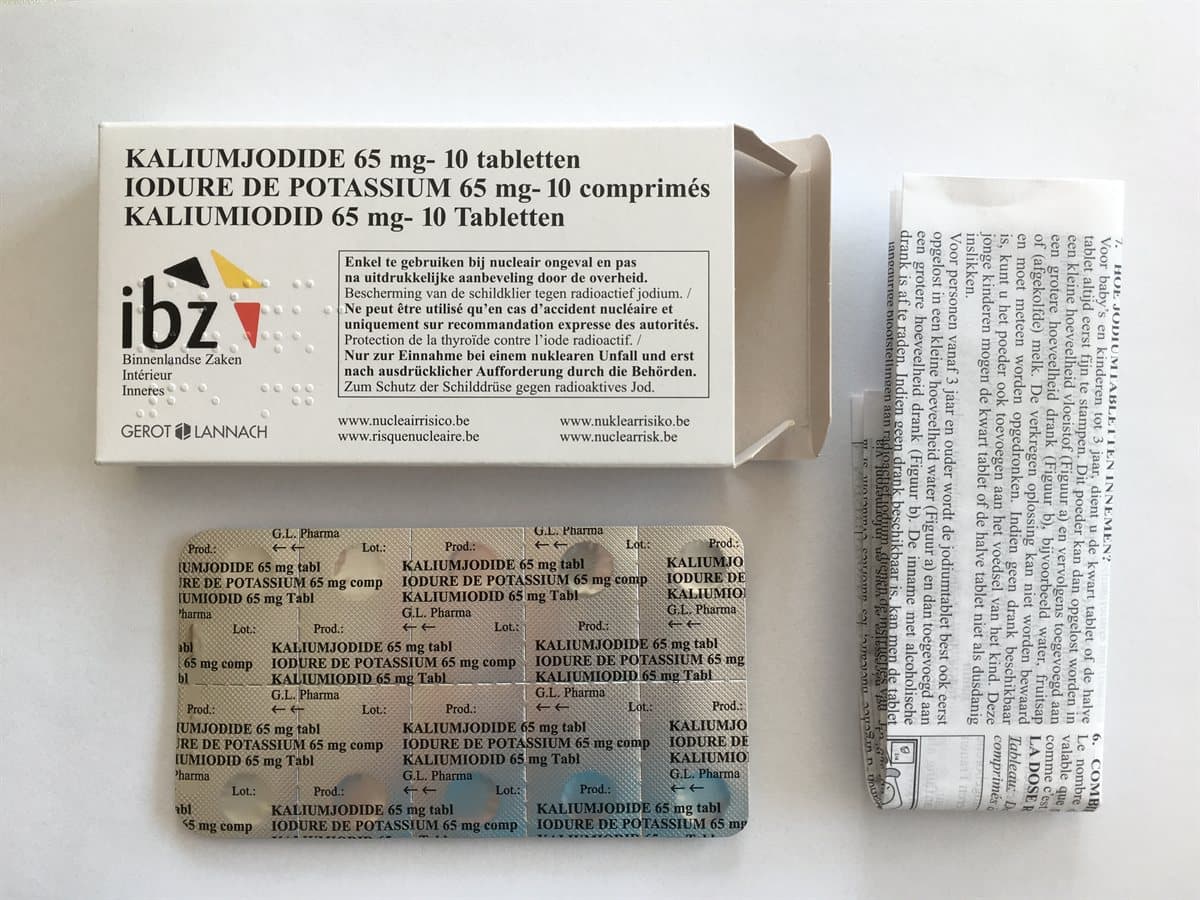
Most common KI myths and the corrected guidance
"KI protects me from nuclear radiation in general"
False. KI addresses thyroid uptake of radioactive iodine only. External radiation, fallout particles, and other radionuclides require other protective actions and, in some cases, different medical countermeasures.
"If one tablet is good, extra tablets are better"
False. Overdosing increases side-effect risk and does not proportionally increase protection. The goal is correct dose at correct time, not maximum dose.
"Any iodine product is fine"
False. Non-medical iodine supplements and table salt are not acceptable substitutes for FDA-approved KI products.
"I can wait for social media consensus"
False. You need official local instructions quickly. Build your trusted alert stack in advance.
"KI means I can ignore shelter rules"
False. In most radiation scenarios, immediate shelter quality and exposure time drive outcomes more than KI availability.
How this fits into broader nuclear-risk preparedness
KI planning is one branch of preparedness, not the whole tree. Better readiness comes from linking KI decisions to a larger protocol:
- immediate shelter behavior,
- contamination reduction steps,
- communication discipline,
- medically safe dosing,
- and post-incident follow-up.
If you want to pressure-test your broader risk assumptions, read Can the US Shoot Down a Nuclear Missile? and How Nuclear Deterrence Works. Those explain why civil protection remains necessary even when national missile defenses and deterrence systems exist.