Nuclear Winter Effects: What Happens to Climate, Crops, and Food
Nuclear winter effects explained: how soot cools climate, cuts harvests, and creates famine risk after nuclear war.
Staff Reporting and Analysis. Produces source-backed reporting, explainers, and reference pages on nuclear risk, proliferation, and escalation dynamics.
Key Sources
Start with the strongest supporting documents and reporting behind this page.
Primary Documents
Start with the strongest official or documentary records behind this explainer.
Where This Matters Now
Recent articles where this concept is actively shaping the current crisis.
In Current Coverage
What Would Happen If Nuclear War Started? A Step-by-Step Guide
What happens if nuclear war starts? From first launch to nuclear winter: blast zones, fallout, infrastructure collapse, and long-term survival risks.
2026-03-03
In Current Coverage
Hiroshima and Nagasaki: What Happened When the Bombs Fell
On August 6 and 9, 1945, U.S. atomic bombs devastated Hiroshima and Nagasaki. Here is what happened, who died, and what radiation did after.
2026-03-03
In Current Coverage
Doomsday Clock History: Every Setting From 1947 to 2025
Doomsday Clock history year by year: from 7 minutes to midnight in 1947 to 89 seconds in 2025. Full timeline of every setting, what changed, and why it matters.
2026-03-03
Related Comparisons
Comparison pages that show how this concept plays out across rivalries, arsenals, and crisis analogies.
Related Concepts
Companion explainers that deepen the strategic logic around this topic.
Concept
What Is Mutually Assured Destruction (MAD)?
What is mutually assured destruction (MAD)? We explain the doctrine, Cold War logic, modern criticisms, and why MAD still shapes nuclear strategy.
2026-03-03
Concept
Who Has the Most Nuclear Weapons? Complete 2025 Ranking
Who has the most nuclear weapons in 2025? Ranked totals for all nuclear-armed states, plus trends in modernization, expansion, and strategic balance.
2026-03-03
Concept
Tactical vs Strategic Nuclear Weapons: Key Differences
Tactical vs strategic nuclear weapons explained with doctrine, ranges, yields, targets, and escalation risk so you can read nuclear headlines without confusion.
2026-04-27
Nuclear winter effects are the indirect global consequences of large nuclear fires: smoke and soot high in the atmosphere, reduced sunlight, lower temperatures, weaker rainfall, shorter growing seasons, damaged fisheries, and severe food scarcity. These effects are different from blast, prompt radiation, and local fallout. A city can escape direct attack and still face nuclear winter through colder weather, collapsed trade, reduced grain output, and emergency food rationing.
What are nuclear winter effects?
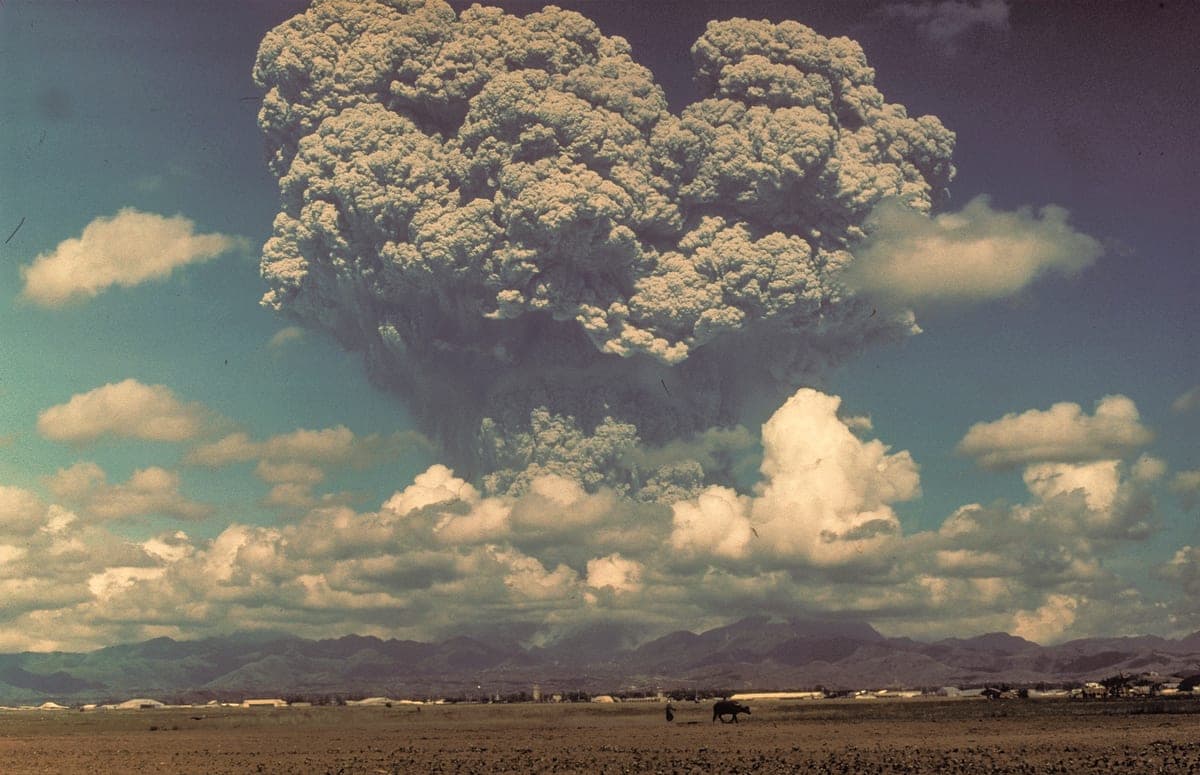
Nuclear winter effects are the climate, ecological, food, health, and social consequences that can follow the burning of cities and industrial areas after nuclear detonations. The weapon does not have to throw dust into orbit or freeze the planet by itself. The more important mechanism is fire. If enough urban fuel burns at once, black carbon smoke can rise high enough to persist, spread, absorb sunlight, and shade the surface.
That distinction matters because many readers imagine nuclear winter as "radioactive snow." Fallout is a separate hazard: radioactive particles deposited downwind after a detonation. Nuclear winter is broader. It describes a global or hemispheric climate disruption caused by smoke and soot, with the largest human consequences flowing through food.
Immediate versus delayed effects
| Effect category | Main timing | Primary harm |
|---|---|---|
| Blast and thermal pulse | Seconds to minutes | Direct deaths, burns, fires, infrastructure destruction |
| Prompt radiation | Seconds to hours | Acute radiation dose near the detonation |
| Local fallout | Hours to weeks | Downwind exposure and contamination |
| Nuclear winter | Weeks to years | Cooling, dim light, crop failure, famine, public-health collapse |
For the direct effects of one detonation, use How Far From Nuclear Blast Is Safe? Distance Bands by Yield. For the local radioactive-particle problem, start with Nuclear Fallout Explained. This page focuses on the delayed planetary effects that can reach people far from every target.
How does nuclear war create soot in the atmosphere?
The core sequence is simple but hard to model precisely: nuclear detonations ignite large fires, fires merge into firestorms or severe urban conflagrations, hot columns lift smoke, and black carbon absorbs sunlight after reaching high altitude. Once soot is high enough, rain is less able to wash it out quickly, so the sunlight reduction can persist far longer than ordinary low-level smoke.
The 2025 National Academies study frames the problem around source terms, fire behavior, soot properties, transport into the troposphere and stratosphere, and downstream socio-economic effects. That is a useful warning against overconfidence. A nuclear winter estimate is not just a count of warheads. It depends on what burns, how completely it burns, how much black carbon forms, how high it rises, and how weather systems distribute it.
Soot variables that control severity
| Variable | Why it matters |
|---|---|
| Target type | Dense cities and fuel-rich industrial zones produce more burnable material than hardened missile fields |
| Season and weather | Humidity, wind, and stability affect fire spread and smoke lift |
| Soot mass | More black carbon means stronger sunlight absorption and surface cooling |
| Injection altitude | Higher smoke lasts longer and spreads farther |
| Particle behavior | Particle size and aging affect how long soot remains suspended |
Nuclear winter is not caused by test explosions alone
Atmospheric nuclear tests did not produce nuclear winter because they did not burn hundreds of modern cities at once. The modeled danger is not the nuclear fireball by itself; it is the mass burning of urban fuel and the high-altitude soot that can follow.
What climate effects would nuclear winter cause?
The first climate effect is reduced sunlight at the surface. Less sunlight means lower surface temperatures, weaker photosynthesis, altered rainfall, and shorter growing seasons. The strongest modeled scenarios produce not just a cold spell but a multi-year shock to the Earth system.
In the Rutgers-linked 2019 Journal of Geophysical Research study, a large U.S.-Russia scenario used 150 teragrams of soot and found severe cooling in modern climate models. The precise temperature change varies by model, assumptions, latitude, and season, but the direction is consistent: soot shading reduces incoming sunlight and cools the surface.
Climate pathways
| Pathway | Practical meaning |
|---|---|
| Sunlight reduction | Plants receive less energy for photosynthesis |
| Surface cooling | Growing seasons shorten and frost risk rises |
| Reduced precipitation | Rainfall patterns shift, damaging crop and pasture zones |
| Ocean changes | Marine food chains and fisheries can be stressed by less light and temperature shifts |
| Ozone effects | Stratospheric chemistry can increase damaging ultraviolet exposure after the initial darkness |
The main human question is not whether every location becomes Arctic. It is whether staple crops can mature reliably when light, heat, rainfall, fertilizer, fuel, transport, and trade all fail at once.
Would nuclear winter cause famine?
Yes, famine is the central risk in modern nuclear winter effects research. The 2022 Nature Food study modeled crop, marine fishery, livestock, and trade constraints after nuclear-war soot injection. Its headline results are stark: more than 2 billion people could die from famine in an India-Pakistan scenario, and more than 5 billion could die after a large U.S.-Russia war.
Those estimates are not blast deaths. They are food-system deaths after the direct war. That is why nuclear winter changes the moral and strategic scale of nuclear use. A war between two nuclear states can threaten countries that are not combatants, not targets, and not even in the same hemisphere.
Food-system effects by channel
| Channel | What happens |
|---|---|
| Grain crops | Lower light, cold, and rainfall disruption reduce wheat, maize, rice, and soy output |
| Livestock | Feed shortages reduce meat and dairy production |
| Fisheries | Ocean productivity and harvest capacity decline |
| Trade | Export bans and transport disruption prevent food from moving to deficit regions |
| Public health | Malnutrition raises disease vulnerability and mortality |
The food story also explains why "limited" is a dangerous word. A regional exchange may not destroy civilization directly, but it can still reduce global calories enough to produce severe hunger far outside the combat zone.
How would crop failure unfold after nuclear winter?
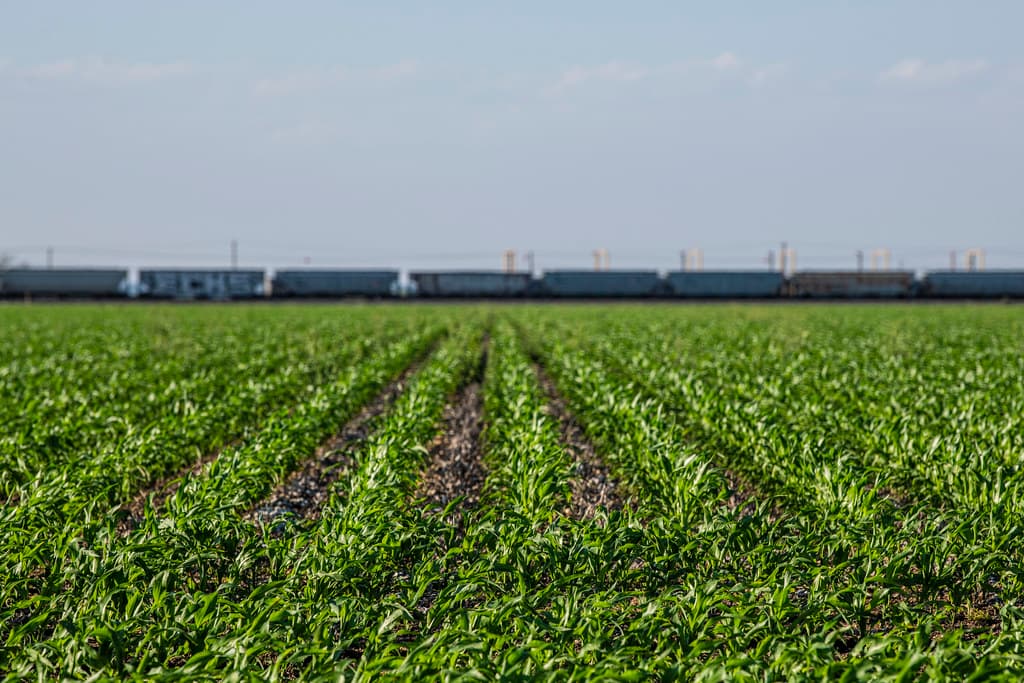
Crop failure would not be one uniform global event. It would be a sequence of missed harvests, shortened seasons, input shortages, export restrictions, rationing, and regional inequality. High-latitude grain producers are especially vulnerable to cooling and shorter growing seasons. Tropical and subtropical regions may avoid some cold extremes but still face rainfall shifts, lower sunlight, and trade collapse.
The danger compounds because the modern food system is optimized for normal flows. Fertilizer, diesel, seed, port capacity, refrigeration, financing, and container shipping all matter. If the same war that causes nuclear winter also damages ports, satellites, power grids, banking systems, and insurance markets, adaptation becomes harder.
Crop stress timeline
| Time after exchange | Food-system concern | Decision pressure |
|---|---|---|
| First weeks | Panic buying, transport disruption, price shock | Rationing and export controls |
| First growing season | Lower sunlight, frost, and input shortages | Emergency crop substitution |
| Years 1-3 | Repeated harvest failures and depleted reserves | Famine response and migration |
| Years 4-10 | Partial climate recovery but weakened systems | Reconstruction of trade and agriculture |
Could a limited nuclear war cause nuclear winter?
A limited nuclear war could cause meaningful global climate and food effects if it burns enough cities and injects enough soot. The common research benchmark is an India-Pakistan regional exchange using a fraction of global nuclear yield but targeting urban areas. NASA-linked regional-war modeling and later peer-reviewed studies modeled scenarios with about 5 teragrams of soot and found persistent climate impacts.
That does not mean every small nuclear use creates nuclear winter. A single detonation on a military target is not the same as dozens or hundreds of city fires. The threshold question is how many fires burn, how much black carbon forms, and whether it reaches the upper atmosphere.
Scale comparison
| Scenario type | Nuclear winter relevance |
|---|---|
| Single battlefield use | Severe local and escalation risk; usually not enough soot for global winter |
| Regional city exchange | Possible global food shock if many urban fires inject soot |
| Large countervalue exchange | High nuclear winter and global famine risk |
| Counterforce-only exchange | Climate effects depend on whether cities and industrial areas burn |
For the arsenal-scale question, see How Many Nukes Would It Take to Destroy the World?. For a step-by-step sequence of a wider war, see What Would Happen If Nuclear War Started?.
How long would nuclear winter last?
The most severe climate disruption is usually modeled over years, not days. Some effects appear quickly as sunlight falls and temperatures respond. Food consequences can last longer because crops fail in seasonal cycles, stored food is consumed, seed stocks are disrupted, livestock herds shrink, and governments restrict exports.
The exact duration depends heavily on soot mass and altitude. A smaller soot injection may produce a serious but less severe "nuclear autumn" style disruption. A large injection can produce decade-scale agricultural stress in models.
Timeline by effect
| Effect | Likely duration framing |
|---|---|
| Darkened skies and sunlight reduction | Weeks to years, depending on soot amount and altitude |
| Temperature and rainfall disruption | Years in severe modeled scenarios |
| Crop and fishery losses | Multiple harvest cycles |
| Food reserves | Months to a few years, unevenly distributed |
| Recovery | Slow, because agriculture, trade, and public health all must recover together |
This is different from local fallout decay. Fallout radiation often drops sharply in the first 24 to 48 hours, which is why shelter timing matters. For that narrower radiation timeline, use How Long Does Nuclear Fallout Last? A Practical Timeline.
Would nuclear winter affect the ozone layer and UV exposure?
It can. Soot in the stratosphere absorbs sunlight, heats the surrounding air, and changes chemistry. Several studies have linked nuclear-war smoke scenarios to ozone loss and higher ultraviolet exposure after the darkest phase. The practical effect would be another stressor on crops, marine ecosystems, outdoor labor, and human health.
Ozone damage is not the first survival problem for most households. Food, water, heat, medicine, and social order come first. But at the population level, extra UV exposure can complicate recovery by reducing plant growth and increasing health risks just as public-health systems are damaged.
Can humans survive nuclear winter?
Some humans could survive nuclear winter, but survival would depend less on private shelters than on food governance, logistics, regional climate impacts, and social stability. The phrase "survive nuclear winter" can be misleading if it focuses only on bunkers. The hard problem is feeding populations for repeated bad harvests.
Countries with lower cooling, strong fisheries, resilient agriculture, stored food, and political cohesion may fare better. But even relatively advantaged places would face trade breakdown, refugee pressure, disease, fuel shortages, and the indirect effects of a shattered global economy.
Survival depends on systems
| System | Why it matters |
|---|---|
| Food reserves | Buys time during the first failed harvests |
| Rationing capacity | Prevents hoarding and protects vulnerable groups |
| Local agriculture | Determines whether adaptation can replace imports |
| Energy and transport | Moves food, water, medicine, and heat |
| Public health | Keeps malnutrition from becoming epidemic mortality |
| Security and legitimacy | Keeps distribution systems functioning |
Household preparedness still matters, especially for the first days after a nuclear emergency. But nuclear winter is not mainly a 72-hour kit problem. Use Nuclear Shelter Checklist: 24-Hour Plan for immediate shelter logistics, then treat food security as a community and national planning issue.
What do scientists still disagree about?
The disagreement is mostly about magnitude, not whether nuclear war would be catastrophic. Key uncertainties include how much fuel burns, whether firestorms form in modern cities, how much soot is produced, how high it is lofted, how climate models handle the plume, and how societies respond after the initial shock.
The National Academies review is important because it does not treat the science as a slogan. It calls attention to model limitations, data gaps, and the need to improve source terms and socio-economic consequence modeling. That cuts both ways: the biggest uncertainties can reduce or increase estimates.
The most important uncertainty buckets
- Urban fire behavior in modern building materials.
- Black carbon production and combustion completeness.
- Pyroconvection and soot injection altitude.
- Climate-model response and interhemispheric transport.
- Agricultural adaptation under cold, dim, unstable conditions.
- Trade, rationing, conflict, migration, and public-health breakdown.
Uncertainty is not safety
When the plausible range includes global famine, uncertainty should not be treated as permission to ignore the risk. It means policy should reduce the chance of reaching the scenario at all.
How do nuclear winter effects change nuclear-risk strategy?
Nuclear winter effects make nuclear war a global public-health and food-security problem, not just a battlefield or deterrence problem. They also weaken the idea that a country can "win" a large nuclear exchange. If the aggressor's own food system depends on the same sunlight, trade, fertilizer, fuel, and climate stability as everyone else's, blowback becomes strategic.
That is why nuclear winter matters for arms control, crisis management, and escalation control. It strengthens the case for reducing city-targeting incentives, maintaining communications between nuclear powers, preserving treaties, and treating nuclear escalation as a global externality.
Policy implications
| Implication | Why it follows from nuclear winter effects |
|---|---|
| No city targeting is "local" | Burning cities can export harm through climate and food |
| Arsenal size matters | More weapons enable more urban fire and soot scenarios |
| Escalation control matters | A "limited" exchange can still spread global harm |
| Food security is national security | Grain reserves, trade agreements, and emergency logistics affect survival |
| Verification matters | Arms-control collapse increases the chance of worst-case planning |
For doctrine context, pair this page with How Nuclear Deterrence Works and What Is Mutually Assured Destruction (MAD)?.
What should readers remember?
The essential nuclear winter effects are reduced sunlight, cooling, rainfall disruption, shortened growing seasons, food production losses, famine risk, ozone stress, and long recovery timelines. The most dangerous misunderstanding is to treat nuclear winter as a speculative side note after blast and fallout. In many modeled scenarios, it is the largest casualty pathway.
The practical conclusion is also simple: preventing nuclear war is the best food-security policy. No household, city, or country can privately solve a multi-year global calorie collapse. Preparedness can reduce first-day chaos, but the primary defense is avoiding the soot-producing war that creates the problem.