US-Israeli Strikes Hit Fordow, Isfahan, and Natanz
US and Israeli strikes targeted Iran's key nuclear facilities at Fordow, Isfahan, and Natanz during Operation Epic Fury, with damage extent still uncertain.
Staff Reporting and Analysis. Produces source-backed reporting, explainers, and reference pages on nuclear risk, proliferation, and escalation dynamics.
Key Sources
Start with the strongest supporting documents and reporting behind this page.
Country Profiles Mentioned
Open the profile pages for the countries referenced directly in this article.
Related Rivalries
These comparison pages help place this article inside the broader balance of power and rivalry structure.
Rivalry
Iran Crisis 2026 vs 2019 Tensions: What's Different This Time
How the 2026 Iran crisis differs from 2019: leadership decapitation, larger retaliation, Hormuz closure risk, and a sharper nuclear escalation path.
2026-03-03
Rivalry
Is This Like the Cuban Missile Crisis? Comparing 1962 and 2026
A 1962 vs 2026 comparison of decision windows, nuclear proximity, escalation control, and why the Iran crisis is framed as a modern Cuban Missile moment.
2026-03-03
Rivalry
Iran vs Israel Military Power: A Complete 2026 Comparison
Iran vs Israel military comparison across manpower, airpower, missile inventories, defense spending, and the nuclear deterrence balance in 2026.
2026-03-03
Related Doctrines
These explainers provide the strategic concepts behind the escalation, deterrence, and risk logic discussed here.
Doctrine
What Is Nuclear Breakout Time?
Nuclear breakout time is the estimated time needed to produce weapon-grade fissile material; this explainer shows how it is measured and why it matters.
2026-03-03
Doctrine
What Is the IAEA and What Do They Do?
What is the IAEA? Learn how inspectors verify nuclear programs, what safeguards can and cannot confirm, and why access disruptions raise global risk.
2026-03-03
Doctrine
How Are Nuclear Tests Detected? Verification Guide
How are nuclear tests detected? Learn the sensors, data flow, and proof standards used to identify underground, underwater, and atmospheric blasts.
2026-04-17
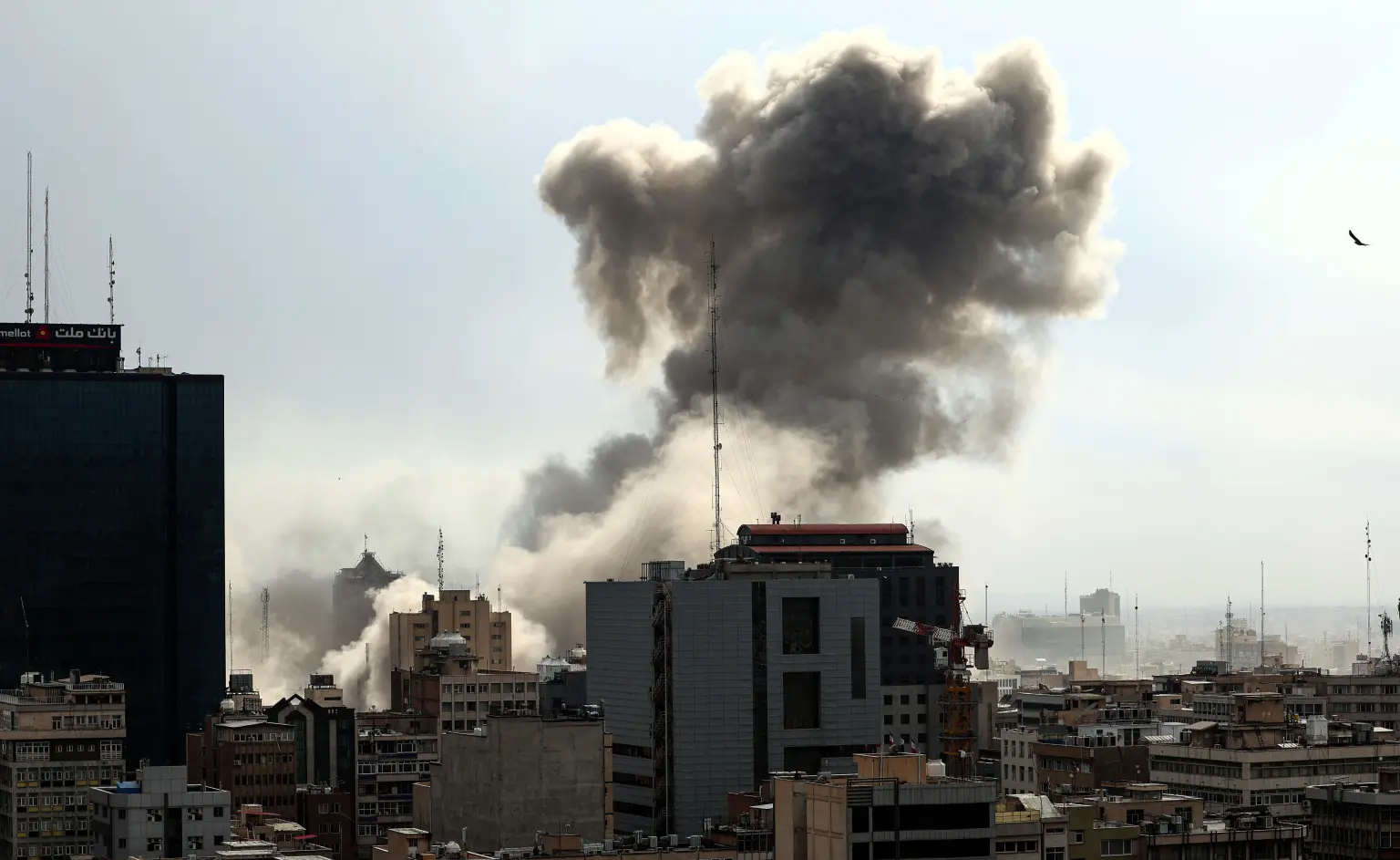
US-Israeli strikes hit nuclear facilities at Fordow, Isfahan, and Natanz during the opening hours of Operation Epic Fury on February 28, 2026, targeting the core of Iran's uranium enrichment infrastructure in what may be the most consequential nuclear counterproliferation action since Israel's destruction of Iraq's Osirak reactor in 1981. The coordinated strikes moved NukeClock 6 seconds closer to midnight. As of March 2, the full extent of damage to Iran's nuclear program remains unknown — and the inability to verify what was destroyed may prove more dangerous than the strikes themselves.
Fordow: Iran's Most Hardened Nuclear Site
The Fordow Fuel Enrichment Plant, built deep inside a mountain near the city of Qom, was the highest-priority and most difficult target of the campaign. Fordow houses advanced IR-6 centrifuges that had been enriching uranium to 60% purity — a short technical step from the approximately 90% needed for weapons-grade material. (For more on the enrichment process, see our explainer on nuclear breakout time.) The facility's location beneath an estimated 80 meters of rock and reinforced concrete made it the most challenging Iranian nuclear target for any conventional military strike.
To reach Fordow, the United States deployed B-2 Spirit stealth bombers operating from Diego Garcia in the Indian Ocean. The B-2s delivered GBU-57 Massive Ordnance Penetrators — 30,000-pound bunker-busting bombs specifically designed to destroy deeply buried and hardened targets. The GBU-57 is the largest non-nuclear weapon in the US arsenal and the only conventional munition assessed as capable of threatening facilities at Fordow's depth.
Whether the strikes penetrated to the centrifuge halls remains uncertain. The GBU-57 was designed to defeat targets buried under up to 60 meters of reinforced concrete, but Fordow's exact depth and hardening specifications are not publicly confirmed. Multiple strikes on the same penetration axis can extend effective depth — a technique believed to have been employed — but verification is impossible without ground access.
Isfahan: Nuclear Technology Complex
The Isfahan Nuclear Technology Center is the backbone of Iran's nuclear fuel cycle. The facility houses Iran's primary uranium conversion facility (UCF), which processes yellowcake uranium ore into uranium hexafluoride (UF6) — the gaseous feedstock that centrifuges enrich into higher concentrations. Without UF6 production, enrichment facilities like Fordow and Natanz cannot operate.
Isfahan also contains nuclear research reactors, fuel fabrication laboratories, and zirconium production facilities essential to Iran's broader nuclear infrastructure. Critically, the complex is co-located with ballistic missile production and storage facilities, making it a dual military-nuclear target that featured in both the counterproliferation and conventional strike packages of Operation Epic Fury.
Unlike Fordow, much of Isfahan's nuclear infrastructure is housed in above-ground or shallow-buried structures. The facility is assessed to have sustained heavier visible damage than the other two sites. A CSIS analysis published on March 2 confirmed significant destruction of above-ground buildings at the Isfahan complex, though the operational status of key underground components could not be determined from available satellite imagery.
Natanz: Primary Enrichment Facility
The Natanz enrichment facility is Iran's original and largest centrifuge plant — the site that first brought Iran's nuclear ambitions to international attention when its existence was revealed by an Iranian dissident group in 2002. Natanz houses thousands of centrifuges in both above-ground assembly halls and underground enrichment halls protected by several meters of concrete and earth.
Natanz has the longest history of international concern and covert action of any Iranian nuclear facility. It was the target of the Stuxnet cyberattack — the joint US-Israeli operation discovered in 2010 that destroyed approximately 1,000 centrifuges by causing them to spin at destructive speeds while reporting normal operations to monitoring systems. In April 2021, an explosion attributed to Israeli sabotage knocked out the facility's independent power supply, damaging additional centrifuges.
The facility is partially underground but significantly less protected than Fordow. Strikes on Natanz employed precision-guided munitions and cruise missiles targeting both the above-ground infrastructure and the access points to underground halls. Iran had been expanding Natanz's underground capacity in recent years, constructing new centrifuge halls at greater depth — the status of these newer, deeper sections is unknown.
What Was Struck and What Survived
The critical question — what was actually destroyed — cannot currently be answered with confidence. The CSIS analysis identifies three categories of uncertainty:
- Above-ground structures: Significant damage confirmed at all three sites via satellite imagery. Administration buildings, power systems, cooling infrastructure, and access roads sustained visible destruction.
- Underground components: Damage assessment inconclusive. Cloud cover during and after the strikes created gaps in satellite imagery. Underground facilities are inherently difficult to assess from overhead.
- Centrifuges and nuclear material: The most important question and the hardest to answer. Centrifuges are delicate instruments that can be destroyed by shock waves even if the halls containing them remain structurally intact. Conversely, centrifuges can be rebuilt and reinstalled relatively quickly if the underground halls survive.
The distinction between destroying buildings and destroying centrifuges is the difference between setting Iran's nuclear program back by months versus years. IAEA inspectors have been unable to access the sites since the strikes began, making independent verification impossible. Iran has denied IAEA requests for emergency access, and the ongoing military operations have made site visits impractical regardless of Iranian cooperation.
The Proliferation Paradox
The history of military strikes on nuclear facilities offers two contradictory precedents — and which one applies to Iran may determine whether these strikes made the world safer or more dangerous.
Precedent 1: Iraq's Osirak reactor (1981). Israel's destruction of Iraq's Osirak reactor is often cited as a nonproliferation success, but the historical record is more complicated. Following the strike, Saddam Hussein accelerated Iraq's covert nuclear weapons program, shifting from a reactor-based plutonium approach to a harder-to-detect centrifuge enrichment program. The strike eliminated one pathway but motivated a more determined and better-hidden effort. Iraq was only denuclearized after the 1991 Gulf War and subsequent UN inspections regime.
Precedent 2: Syria's al-Kibar reactor (2007). Israel's destruction of a covert Syrian reactor under construction with North Korean assistance ended Syria's nuclear program permanently. Syria lacked the scientific workforce, industrial base, and national commitment to rebuild.
The key variable that determines which precedent applies is whether Iran's nuclear knowledge base and scientific workforce survived — and they almost certainly did. Iran's nuclear program is supported by thousands of trained scientists and engineers, decades of institutional knowledge, and a distributed research infrastructure that extends well beyond the three facilities struck. The physical infrastructure can be rebuilt; the expertise to do so already exists.
This creates the proliferation paradox at the heart of the current crisis: by destroying Iran's conventional military deterrence capabilities alongside its nuclear facilities, the strikes may have shortened rather than extended Iran's path to a nuclear weapon — by providing precisely the motivation that was previously lacking. For a regime whose conventional forces have been devastated, whose supreme leader has been assassinated, and whose nuclear facilities have been attacked, the logic of acquiring an actual nuclear deterrent becomes not ideological but existential.
For a detailed analysis of escalation scenarios, see our nuclear threat assessment.
Impact on the Clock
This event moved NukeClock 6 seconds closer to midnight:
- Unprecedented escalation: Attacking the nuclear facilities of a sovereign state with an active enrichment program is an action without precedent among nuclear-threshold powers. The closest analogues — Osirak and al-Kibar — involved states far less capable of retaliation.
- Maximum uncertainty: The unknown extent of damage creates a worst-case analytical environment. If enrichment infrastructure partially survived, the strikes may have provided motivation without eliminating capability.
- Accelerated proliferation incentive: Combined with the Khamenei assassination, Iran's surviving leadership may now view a nuclear deterrent as the only viable regime survival strategy — transforming what was previously a bargaining chip into an existential necessity.
- Verification collapse: With IAEA access blocked and satellite imagery inconclusive, the international community has lost its primary mechanism for monitoring Iran's nuclear status at the moment it matters most.
- Deterrence logic inverted: The strikes demonstrated that Iran's conventional military cannot protect its most strategic assets. In nuclear deterrence theory, this is precisely the condition under which states pursue nuclear weapons — when no other form of deterrence is credible.