US Deploys 50,000 Troops as Operation Epic Fury Expands
The Pentagon confirmed a major Gulf buildup, including two carrier groups and 120+ aircraft, as Washington signaled continued operations against Iran.
Staff Reporting and Analysis. Produces source-backed reporting, explainers, and reference pages on nuclear risk, proliferation, and escalation dynamics.
Key Sources
Start with the strongest supporting documents and reporting behind this page.
Country Profiles Mentioned
Open the profile pages for the countries referenced directly in this article.
Related Rivalries
These comparison pages help place this article inside the broader balance of power and rivalry structure.
Rivalry
Iran Crisis 2026 vs 2019 Tensions: What's Different This Time
How the 2026 Iran crisis differs from 2019: leadership decapitation, larger retaliation, Hormuz closure risk, and a sharper nuclear escalation path.
2026-03-03
Rivalry
Iran vs Israel Military Power: A Complete 2026 Comparison
Iran vs Israel military comparison across manpower, airpower, missile inventories, defense spending, and the nuclear deterrence balance in 2026.
2026-03-03
Rivalry
Is This Like the Cuban Missile Crisis? Comparing 1962 and 2026
A 1962 vs 2026 comparison of decision windows, nuclear proximity, escalation control, and why the Iran crisis is framed as a modern Cuban Missile moment.
2026-03-03
Related Doctrines
These explainers provide the strategic concepts behind the escalation, deterrence, and risk logic discussed here.
Doctrine
What Are Proxy Wars?
What is a proxy war? Learn how major powers fight through partners, why this model persists, and how Iran's network affects today's Middle East escalation.
2026-03-03
Doctrine
What Is the Strait of Hormuz?
What is the Strait of Hormuz? A practical explainer on its geography, oil-flow importance, military vulnerability, and global economic consequences of closure.
2026-03-03
Doctrine
What Is Escalation Dominance?
Escalation dominance is the ability to control each rung of conflict and impose higher costs on an adversary. This explains why it drives crisis strategy.
2026-03-04
The Buildup
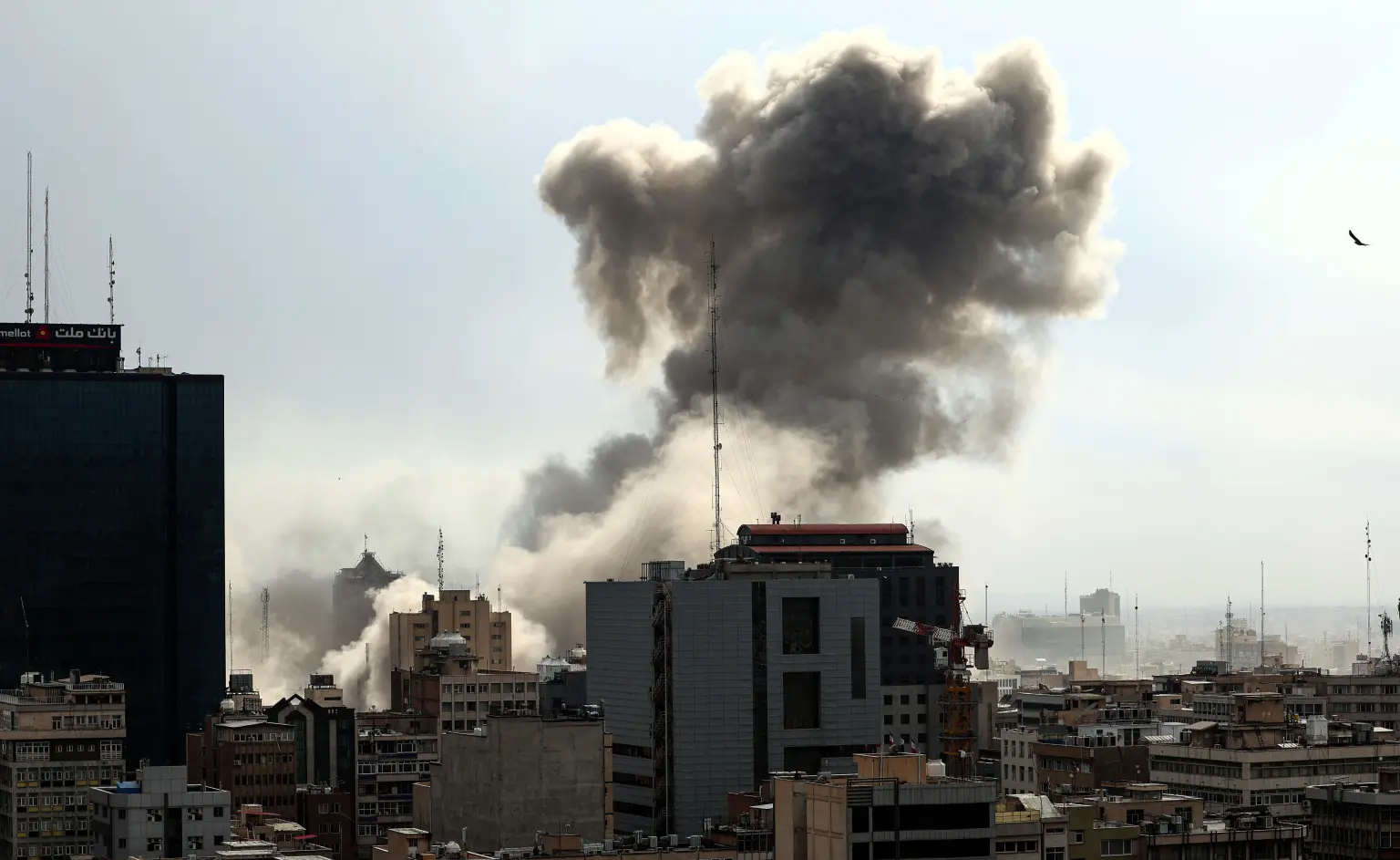
By March 2, 2026 — four days into the conflict — the United States has assembled its largest military presence in the Middle East since the 2003 Iraq War. The Pentagon confirmed the following assets in theater:
- ~50,000 US military personnel across the Gulf region
- Two aircraft carrier strike groups operating in the Persian Gulf and Arabian Sea
- 120+ combat aircraft including B-2 stealth bombers operating from Diego Garcia
- Advanced missile defense systems including THAAD and Patriot batteries deployed to allied bases
- HIMARS launchers positioned at multiple forward operating locations
The force posture signals preparation for a sustained campaign rather than a limited punitive strike.
Trump's Escalatory Rhetoric
In a series of public statements, President Trump made several declarations that further ratcheted tensions:
"We will continue these strikes until all objectives are achieved. Iran will face a force that has never been seen before if they continue to resist."
Notably, the President:
- Refused to rule out the deployment of ground troops
- Projected a 4-5 week operation timeline
- Pledged to "avenge" the three American soldiers killed in Iranian retaliation
- Described the killing of Khamenei as "the single greatest chance for the Iranian people"
The lack of defined objectives — combined with open-ended escalation language — is the element that most concerns nuclear risk analysts.
Congressional Response
The constitutional dimension of the conflict has become a secondary crisis. Multiple lawmakers from both parties have raised War Powers Resolution challenges:
- No formal Authorization for Use of Military Force (AUMF) was sought or granted
- The War Powers Resolution requires congressional notification within 48 hours and limits operations to 60 days without authorization
- Debate over whether the 2002 Iraq AUMF or 2001 Counter-Terrorism AUMF provides legal basis
- Bipartisan war powers resolutions introduced but face uncertain prospects
The Iraq Comparison
Military analysts draw concerning parallels to the 2003 Iraq invasion:
| Factor | Iraq 2003 | Iran 2026 |
|---|---|---|
| Congressional authorization | Yes (AUMF) | None sought |
| Coalition partners | 40+ nations | Israel only |
| Target country nuclear capability | None found | Active enrichment program |
| Target country missile capability | Limited (Scuds) | 174+ ballistic missiles demonstrated |
| Regional proxy network | Minimal | Hezbollah, Hamas, Houthis, Iraqi militias |
| Economic chokepoint | None | Strait of Hormuz (20% global oil) |
Every factor that made Iraq difficult is amplified in the current conflict. Iran's military capability, demonstrated proxy reach, and control over global energy infrastructure make this a fundamentally different scenario.
Impact on the Clock
This development moved NukeClock Live 5 seconds closer to midnight:
- Open-ended military commitment without defined exit criteria
- Explicit refusal to rule out ground invasion
- No congressional authorization constraining the operation
- Force structure consistent with regime-change operations rather than limited strikes
- Historical pattern recognition: similar buildups preceded the most destabilizing conflicts of the 21st century
What to Watch
- Congressional action — will War Powers Resolution challenges gain traction?
- Allied participation — will any NATO or Gulf state allies formally join the operation?
- Objective definition — will the administration articulate clear, achievable goals?
- Escalation ladder — the gap between current air operations and a ground campaign narrows with each troop deployment
For context on how nuclear deterrence theory applies to this scenario, see our explainer on how nuclear deterrence works. For the broader conflict timeline, visit the NukeClock timeline.