Iran Retaliatory Strikes Hit US Bases Across Gulf Region
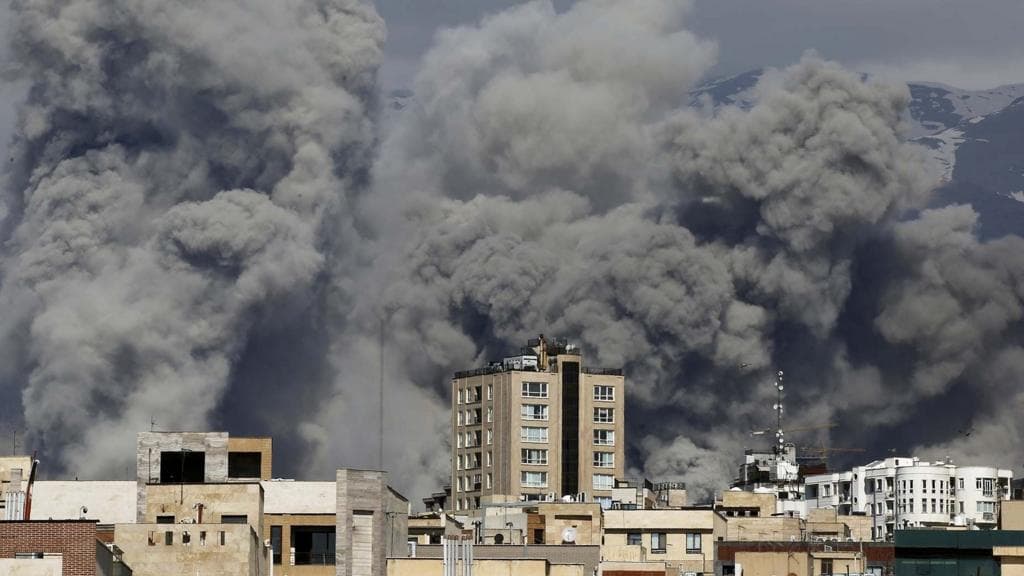
Iran launched over 170 ballistic missiles and 500+ drones at US military positions across the Gulf, marking a major direct escalation in the conflict.
Staff Reporting and Analysis. Produces source-backed reporting, explainers, and reference pages on nuclear risk, proliferation, and escalation dynamics.
Key Sources
Start with the strongest supporting documents and reporting behind this page.
Country Profiles Mentioned
Open the profile pages for the countries referenced directly in this article.
Related Rivalries
These comparison pages help place this article inside the broader balance of power and rivalry structure.
Rivalry
Is This Like the Cuban Missile Crisis? Comparing 1962 and 2026
A 1962 vs 2026 comparison of decision windows, nuclear proximity, escalation control, and why the Iran crisis is framed as a modern Cuban Missile moment.
2026-03-03
Rivalry
Iran Crisis 2026 vs 2019 Tensions: What's Different This Time
How the 2026 Iran crisis differs from 2019: leadership decapitation, larger retaliation, Hormuz closure risk, and a sharper nuclear escalation path.
2026-03-03
Rivalry
Iran vs Israel Military Power: A Complete 2026 Comparison
Iran vs Israel military comparison across manpower, airpower, missile inventories, defense spending, and the nuclear deterrence balance in 2026.
2026-03-03
Related Doctrines
These explainers provide the strategic concepts behind the escalation, deterrence, and risk logic discussed here.
Doctrine
What Is the Strait of Hormuz?
What is the Strait of Hormuz? A practical explainer on its geography, oil-flow importance, military vulnerability, and global economic consequences of closure.
2026-03-03
Doctrine
What Are Proxy Wars?
What is a proxy war? Learn how major powers fight through partners, why this model persists, and how Iran's network affects today's Middle East escalation.
2026-03-03
Doctrine
What Happens If Iran Gets Nuclear Weapons?
If Iran obtained nuclear weapons, effects could include regional arms races, Israeli strike pressure, oil-market shocks, and broader nonproliferation fallout.
2026-03-03
The Retaliation
Less than 48 hours after the assassination of Supreme Leader Khamenei, Iran's Islamic Revolutionary Guard Corps launched a coordinated retaliatory assault across the Persian Gulf region. The scale was staggering:
- 174+ ballistic missiles targeting US military installations
- 541+ armed drones launched in successive waves
- 8 countries hosting US bases came under fire simultaneously
- Strait of Hormuz formally closed to commercial shipping
The attack represented the most significant direct military engagement against US forces by a state actor since World War II.

Casualties and Damage
US Central Command confirmed American casualties within the first hours of the assault. Three service members stationed at a forward operating base in Kuwait were killed when Iranian short-range ballistic missiles penetrated base defenses. Five additional personnel sustained serious injuries.
The casualty toll — while far lower than the hundreds of Iranian deaths from the initial US strikes — carries enormous political weight. American military deaths on this scale immediately transform the conflict from a foreign policy debate into a domestic political crisis.
The Strategic Calculus
Iran's retaliation was calibrated to demonstrate capability without triggering the kind of response that would bring the full weight of American military power against remaining leadership. This is the classic deterrence dilemma — strike hard enough to establish credibility, but not so hard as to invite annihilation.
Key strategic elements of Iran's response:
- Proportionality signaling — targeting military bases rather than civilian infrastructure
- Capability demonstration — proving the ability to strike across the entire Gulf region simultaneously
- Economic leverage — the Strait of Hormuz closure affects 20% of global oil transit
- Escalation management — maintaining channels for de-escalation while showing resolve
Impact on the Clock
This event moved NukeClock Live an additional 8 seconds closer to midnight:
- Direct kinetic engagement between US and Iranian military forces
- American combat casualties in a conflict with a nuclear-threshold state
- Closure of a critical global energy chokepoint
- Risk of escalation spiral if the US responds with proportional or disproportionate force
The Hormuz Factor
The closure of the Strait of Hormuz introduces a secondary escalation pathway that many analysts had underestimated. Approximately 20% of the world's oil passes through this narrow waterway. Its closure triggers:
- Immediate oil price spikes affecting every major economy
- Pressure on Gulf states to either facilitate military operations or face economic consequences
- Potential Chinese and Indian involvement to protect energy supplies
- Risk of naval confrontation in one of the world's most congested waterways
This economic dimension means the conflict's blast radius extends far beyond the Middle East. Explore the Iran nuclear proliferation topic for the broader geopolitical context.