Who Started the Iran-Israel War? Timeline and Evidence
A source-based timeline of who initiated the Iran-Israel war sequence, from initial strikes to retaliation cycles and later US-Iran escalation.
Staff Reporting and Analysis. Produces source-backed reporting, explainers, and reference pages on nuclear risk, proliferation, and escalation dynamics.
Key Sources
Start with the strongest supporting documents and reporting behind this page.
Country Profiles Mentioned
Open the profile pages for the countries referenced directly in this article.
Related Rivalries
These comparison pages help place this article inside the broader balance of power and rivalry structure.
Rivalry
Iran Crisis 2026 vs 2019 Tensions: What's Different This Time
How the 2026 Iran crisis differs from 2019: leadership decapitation, larger retaliation, Hormuz closure risk, and a sharper nuclear escalation path.
2026-03-03
Rivalry
Iran War vs Iraq War: How the 2026 and 2003 Conflicts Compare
Iran 2026 vs Iraq 2003 compared across legal authority, coalition structure, force design, economic shock, and the central role of nuclear risk.
2026-03-03
Rivalry
US Military vs Iran Military: A Complete 2026 Comparison
US vs Iran military comparison across personnel, air and naval power, missiles, budgets, and how asymmetry shapes escalation outcomes in 2026.
2026-03-03
Related Doctrines
These explainers provide the strategic concepts behind the escalation, deterrence, and risk logic discussed here.
Doctrine
What Are Proxy Wars?
What is a proxy war? Learn how major powers fight through partners, why this model persists, and how Iran's network affects today's Middle East escalation.
2026-03-03
Doctrine
What Is Mutually Assured Destruction (MAD)?
What is mutually assured destruction (MAD)? We explain the doctrine, Cold War logic, modern criticisms, and why MAD still shapes nuclear strategy.
2026-03-03
Doctrine
How Bunker Buster Bombs Work
How bunker buster bombs work depends on casing strength, fuze timing, and delivery profile. Learn penetration limits, tradeoffs, and key constraints.
2026-04-20
who started the iran israel war has a direct answer for the June 2025 interstate war: Israel launched the opening strikes inside Iran on June 13, 2025, and Iran responded with missile and drone retaliation afterward, according to BBC reporting, Reuters coverage, and CFR tracking (BBC, Reuters via SWI, CFR). The longer answer is that this war came out of years of shadow conflict, proxy warfare, and regional escalation, so different audiences sometimes choose different "starting points" depending on whether they mean the 2025 direct war or the broader Iran-Israel confrontation (CFR, Clingendael).
For readers tracking sequence and escalation mechanics, pair this with the Iran War Timeline 2026, What Are Proxy Wars?, and What Is Escalation Dominance?.
Short Answer: Who Started the Iran-Israel War?
If you are asking about the June 2025 state-on-state war, the opening military move was Israel's large strike package against Iranian nuclear and military sites on June 13, 2025 (Reuters via SWI, BBC, CFR).
Iran then launched direct retaliation with missiles and drones, and the confrontation widened to include US strikes later in June (CFR).
Timeline Evidence (With Dates)
- October 7, 2023: Hamas attacked Israel, and regional escalation intensified across multiple theaters, including Iran-backed armed groups and maritime attacks by the Houthis (CFR).
- 2024 direct exchange phase: Iran and Israel moved from mostly covert confrontation to open exchange, creating a precedent for direct missile and drone strikes (CFR, Clingendael).
- June 13, 2025: Israel initiated large direct strikes inside Iran, framing them as preemptive action against nuclear risk; Iran signaled retaliation (Reuters via SWI, BBC).
- June 22, 2025: The United States entered the campaign directly with strikes on Iranian nuclear facilities including Fordow, Natanz, and Isfahan, according to CFR's tracker (CFR).
- June 24, 2025: A US-announced ceasefire framework was reported in this phase of fighting, though analysts warned it remained fragile (CFR, BBC).
Why People Disagree on "Who Started It"
The disagreement usually comes from scope, not just facts:
- If "war" means the June 2025 direct interstate campaign, most source timelines place Israel's June 13 strikes first.
- If "war" means the broader Iran-Israel conflict system, then people point to years of earlier covert attacks, proxy operations, assassinations, airstrikes in Syria, maritime incidents, and the Gaza-war regional spillover.
- Institutional trackers and analytic pieces also reflect this ambiguity by separating the direct June 2025 war phase from the broader Iran-Israel confrontation (CFR, Clingendael).
What Clingendael Adds: Why the Axis of Resistance Stayed Relatively Quiet
Clingendael's analysis helps explain a key puzzle: why Hezbollah, Iraqi militias, and the Houthis did not fully synchronize a region-wide response at the same intensity as Iran's direct confrontation.
The paper argues this was shaped by practical constraints, not ideological realignment:
- Some allied groups had reduced operational capacity after sustained Israeli pressure.
- Iraqi militias were balancing Tehran ties against domestic political and economic incentives.
- The coalition around Iran showed selective support but uneven appetite for direct escalation.
That matters for the "who started" question because it shows the June 2025 war was not simply a single-command bloc war; actor incentives were fragmented across multiple fronts (Clingendael).
US-Iran Track vs Israel-Iran Track
CFR's conflict tracker is useful because it distinguishes a US-Iran confrontation track from the bilateral Israel-Iran strike cycle. That distinction helps readers avoid a common SEO-content mistake: collapsing all events into one undifferentiated timeline.
A source-based interpretation is:
- Israel and Iran entered direct war dynamics in June 2025.
- The US-Iran confrontation overlapped and then intensified when the United States struck Iranian nuclear facilities.
- The result was a short, high-intensity regional war phase layered on top of a long-running strategic rivalry (CFR, Clingendael).
What Confuses Readers Most
The hardest part of this query is not the June 13 chronology. It is the scope problem:
- If readers mean the direct June 2025 war phase, the opening move was Israel's strike package.
- If readers mean the broader Iran-Israel confrontation, the answer spans years of proxy conflict, covert action, and prior direct exchange.
- If readers mean the US-Iran escalation track, that begins later and must be treated separately.
That is why this page distinguishes the bilateral war phase from the larger conflict system.
Bottom Line
For the exact query "who started the iran israel war", the best evidence-backed answer is:
- Direct June 2025 war phase: Israel started the first major interstate strikes on June 13, 2025.
- Broader conflict phase: The war emerged from a longer cycle of proxy conflict and regional escalation in which many actors contributed to the path to open war.
Both statements can be true at once if the timeframe is defined clearly.
Open-License Image Credits
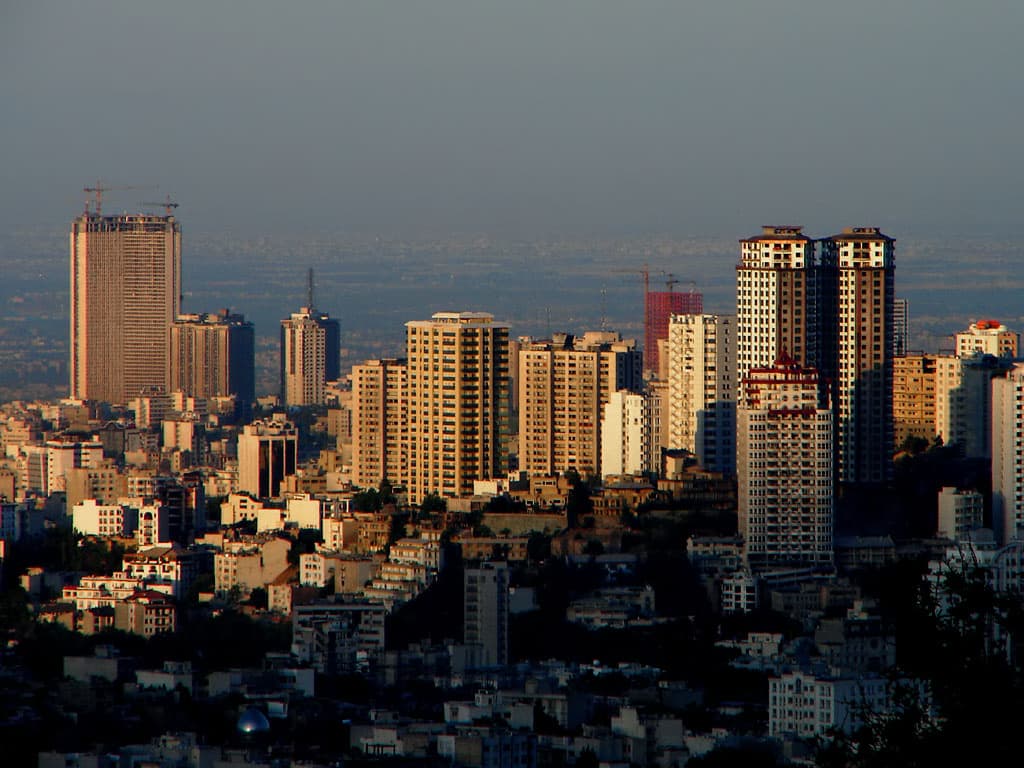
- Tehran skyline photo: Tehran Skyline, CC BY 2.0.
- Flags graphic: Israel-iran flages, public domain.
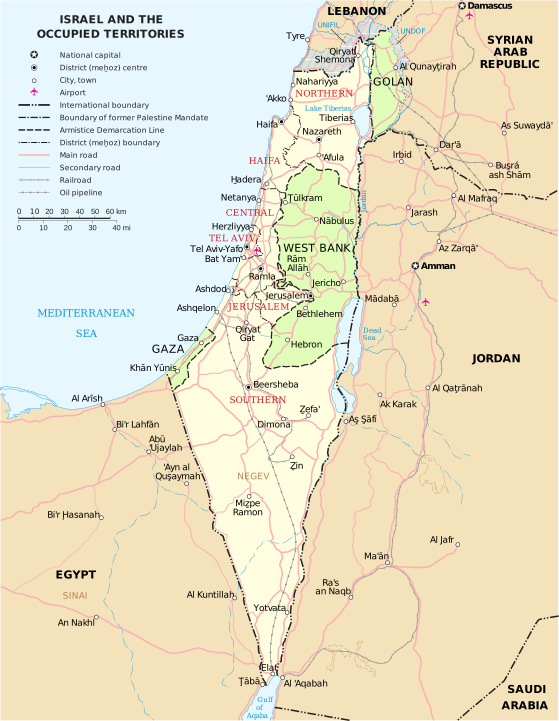
- Regional map: Map of Israel, neighbours and occupied territories, public domain.