Ali Hosseini Khamenei: Biography, Power, and Nuclear Legacy
Biography of Iran's supreme leader, his power network, financial empire, nuclear strategy, and the succession crisis after his death in 2026.
Staff Reporting and Analysis. Produces source-backed reporting, explainers, and reference pages on nuclear risk, proliferation, and escalation dynamics.
Key Sources
Start with the strongest supporting documents and reporting behind this page.
Country Profiles Mentioned
Open the profile pages for the countries referenced directly in this article.
Related Rivalries
These comparison pages help place this article inside the broader balance of power and rivalry structure.
Rivalry
Iran War vs Iraq War: How the 2026 and 2003 Conflicts Compare
Iran 2026 vs Iraq 2003 compared across legal authority, coalition structure, force design, economic shock, and the central role of nuclear risk.
2026-03-03
Rivalry
Iran Crisis 2026 vs 2019 Tensions: What's Different This Time
How the 2026 Iran crisis differs from 2019: leadership decapitation, larger retaliation, Hormuz closure risk, and a sharper nuclear escalation path.
2026-03-03
Rivalry
Iran vs Israel Military Power: A Complete 2026 Comparison
Iran vs Israel military comparison across manpower, airpower, missile inventories, defense spending, and the nuclear deterrence balance in 2026.
2026-03-03
Related Doctrines
These explainers provide the strategic concepts behind the escalation, deterrence, and risk logic discussed here.
Doctrine
What Happens If Iran Gets Nuclear Weapons?
If Iran obtained nuclear weapons, effects could include regional arms races, Israeli strike pressure, oil-market shocks, and broader nonproliferation fallout.
2026-03-03
Doctrine
Who Has the Most Nuclear Weapons? Complete 2025 Ranking
Who has the most nuclear weapons in 2025? Ranked totals for all nuclear-armed states, plus trends in modernization, expansion, and strategic balance.
2026-03-03
Doctrine
What Is Mutually Assured Destruction (MAD)?
What is mutually assured destruction (MAD)? We explain the doctrine, Cold War logic, modern criticisms, and why MAD still shapes nuclear strategy.
2026-03-03
AI Summary: Ali Hosseini Khamenei served as Iran's Supreme Leader from 1989 to 2026 — 36 years of absolute rule defined by anti-Western defiance, a hidden financial empire estimated at $95–200 billion, and a nuclear program perpetually at the edge of weapons capability. He was killed in coordinated US-Israeli airstrikes on Tehran on February 28, 2026 at age 86, ending one of the longest authoritarian reigns of the modern era and triggering a succession crisis that now shapes the future of Iran's nuclear program.
Ali Hosseini Khamenei was the second and longest-serving Supreme Leader of the Islamic Republic of Iran — the man who held ultimate authority over the country's military, judiciary, foreign policy, and nuclear decisions for more than three decades. Born into poverty in Mashhad in 1939, he rose through revolutionary politics to become a figure whose power exceeded that of every elected Iranian president, and whose secretive financial holdings rivaled or surpassed those of the monarchy he helped overthrow. His assassination in February 2026 ended an era, but the structures he built — the IRGC, Setad, the nuclear program — remain.
Early Life and Religious Education
Ali Hosseini Khamenei was born on April 19, 1939, in Mashhad — Iran's second-largest city and the holiest site in Shia Islam, home to the great shrine of Imam Reza. His upbringing was defined by religious devotion and material hardship. His father, Javad Khamenei, was a respected Islamic scholar (alim and mujtahid) originally from Najaf, Iraq; his mother was Khadijeh Mirdamadi. According to Britannica, the family frequently lacked sufficient food, and young Ali grew up in a working-class neighborhood of Mashhad where the boundary between religious and daily life was seamless.
He began clerical studies as a young child in Mashhad, mastering Quranic recitation and Islamic jurisprudence within the traditional hawza (seminary) framework. At approximately 18, he traveled to the Shiite seminary in Najaf, Iraq — Islam's oldest and most revered center of Shia learning — before relocating to Qom, Iran's theological capital, in 1958.
In Qom, Khamenei became a student of Ruhollah Khomeini, the austere, uncompromising cleric who would lead the Islamic Revolution two decades later. Biographical accounts from Britannica and the Jewish Virtual Library make clear that Khamenei absorbed Khomeini's doctrine of velayat-e faqih — guardianship of the Islamic jurist — which held that supreme political authority in a Muslim society must rest with a qualified religious scholar. This concept would later provide the constitutional foundation for Khamenei's own rule.
The Jewish Virtual Library records that Khamenei also studied under other senior clerics during this period, including Milani and Hakim in Najaf and Khorasan. His academic record was that of a talented but not exceptional theologian; his political acumen, however, was already apparent to those who observed him in the seminaries of Qom.
The Iranian Revolution and Political Rise
Khamenei did not spend his young adulthood solely in religious study. Through the 1960s and 1970s, as Shah Mohammad Reza Pahlavi's Iran grew increasingly repressive and dependent on US support, Khamenei became a political operative within Khomeini's emerging revolutionary network.
He was arrested and imprisoned multiple times by SAVAK — the Shah's feared secret police — for organizing anti-monarchy activities, distributing revolutionary literature, and encouraging clerics to resist the state. The Jewish Virtual Library documents at least six arrests during this period. He was imprisoned and reportedly tortured during some detentions. Rather than breaking him, the experience cemented his antipathy toward the Shah, toward SAVAK's American backers, and toward what he called the "arrogance of global powers."
When the Islamic Revolution swept the Shah from power in February 1979, Khamenei was well-positioned: a mid-ranking cleric with revolutionary credentials, close ties to Khomeini, and a reputation for organizational competence. He took on multiple roles simultaneously — Deputy Minister of Defense, Friday Prayer Leader of Tehran, and a founding member of the Islamic Republican Party. He helped consolidate the new government and participated in the violent elimination of political rivals — from Marxists to Mossadegh-era liberals — who had initially supported the revolution but were deemed insufficiently Islamic.
According to United Against Nuclear Iran, Khamenei's role in this consolidation phase was critical: he provided the organizational infrastructure that turned a popular uprising into a coherent theocratic state.
The Assassination Attempt That Defined Him
On June 27, 1981, a bomb exploded during a meeting of the Islamic Republican Party at the Abu Zar Mosque in Tehran. The blast — hidden in a tape recorder placed near the podium — killed 72 people, including several of Iran's most senior revolutionary officials. Khamenei, who was addressing the gathering when the device detonated, survived — but the explosion permanently destroyed the use of his right hand and arm.
The attack was attributed to the Mojahedin-e Khalq (MEK/MKO), an Islamist-Marxist opposition group that had turned violently against the Islamic Republic after being marginalized from power. The physical damage was devastating and permanent: for the remaining 45 years of his life, Khamenei's right arm would hang limp at his side or be hidden in photographs, a visible reminder of the violence at the republic's founding.
Yet politically, the attack elevated him. He emerged as a martyr figure — a revolutionary who had survived his enemies' most direct assault. United Against Nuclear Iran notes that his survival cemented his standing within Khomeini's inner circle as a man of proven loyalty and resilience. Weeks later, he would be elected president of Iran.
President of Iran (1981–1989)
Khamenei was elected President of Iran on October 2, 1981, winning over 95% of the vote in an election conducted amid ongoing revolutionary violence and mass executions of political opponents. He was re-elected in 1985.
As president, he managed the civilian face of a country locked in the devastating Iran-Iraq War (1980–1988). Saddam Hussein's invasion, initially intended to exploit the post-revolutionary chaos, instead galvanized Iranian nationalism and provided the Islamic Republic with a unifying cause. The war killed an estimated 500,000 to 1 million Iranians, including tens of thousands of child soldiers sent into mine-clearing operations. Khamenei managed the civilian bureaucracy while Khomeini held supreme authority over military and religious decisions.
The war's central institutional legacy — for Khamenei personally — was the deepening of his relationship with the Islamic Revolutionary Guard Corps (IRGC). The IRGC had been established in 1979 as a parallel military force loyal to the revolution rather than to the state; during the war, it expanded dramatically in size, weapons, and political influence. Khamenei cultivated close ties with the IRGC leadership that would serve as the foundation of his authority as Supreme Leader.
According to Britannica, Khamenei's presidency was characterized by deference to Khomeini on all matters of religious and foreign policy. He was not yet Iran's dominant figure — but he was learning the architecture of power that he would one day inherit.
Supreme Leader: 36 Years of Absolute Power
When Ayatollah Ruhollah Khomeini died on June 3, 1989, the Islamic Republic faced its first succession crisis. Khomeini's designated heir, Grand Ayatollah Montazeri, had been sidelined the previous year after criticizing the mass execution of thousands of political prisoners. The Assembly of Experts — the clerical body constitutionally tasked with selecting the Supreme Leader — urgently needed a replacement who could hold the system together.
They turned to Ali Hosseini Khamenei.
His theological credentials were, by traditional standards, modest: he held the rank of hojatoleslam (a step below Grand Ayatollah), which would ordinarily have disqualified him from the Supreme Leader role. His rank was quietly upgraded — critics called it a political promotion without religious justification — and he assumed office on June 4, 1989, the day after Khomeini's death. He would hold it for 36 years.
Under the Iranian constitution, the Supreme Leader's authority was sweeping and largely unchecked:
| Power | Scope |
|---|---|
| Commander-in-chief | All armed forces including IRGC |
| Judicial authority | Appoints head of judiciary |
| Foreign policy | Final approval on all major diplomatic decisions |
| Nuclear program | Ultimate authority over enrichment decisions |
| State media | Appoints heads of IRIB state broadcasting |
| Elections | Council of Guardians (his appointees) vets all candidates |
This structure ensured that every elected president — from reformist Mohammad Khatami (who tried to open Iran to the world) to hard-liner Mahmoud Ahmadinejad (who threatened to wipe Israel off the map) to Hassan Rouhani (who negotiated the JCPOA) — operated within boundaries Khamenei set. As The Conversation summarized: "He ruled with defiance and brutality for 36 years. For many Iranians, he will not be revered."
Over those decades, he survived internal reformist pressures, the 2009 Green Movement (which he crushed with arrests and executions), the 2019 fuel protests (which he suppressed with a reported 1,500 deaths), and the 2022 Mahsa Amini uprising. His rule outlasted every prediction of its collapse.
Ali Hosseini Khamenei's $95–200 Billion Financial Empire
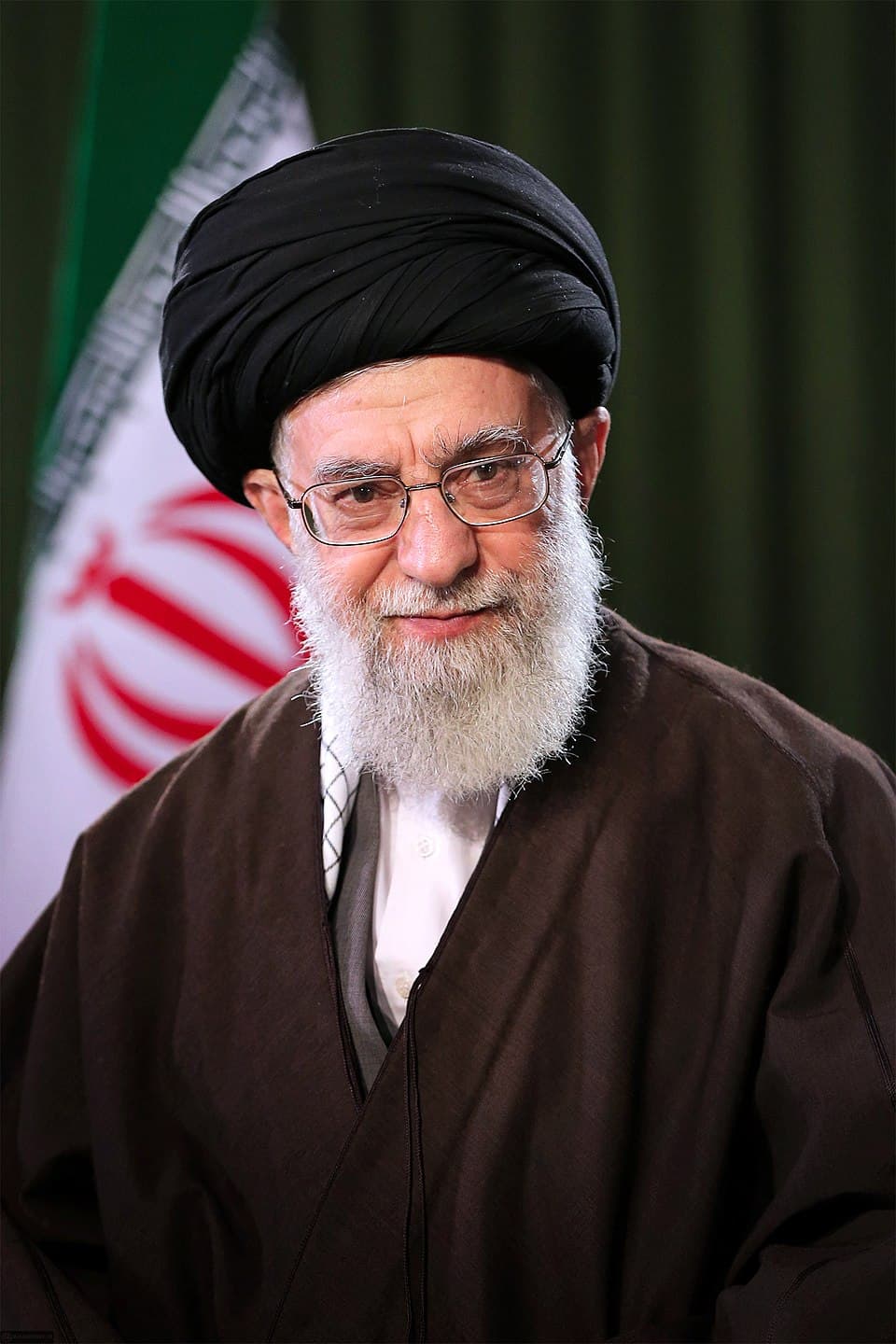
One of the most revealing — and least-publicized — aspects of Ali Hosseini Khamenei's rule was the sheer scale of his hidden financial empire. In 2013, Reuters published a landmark six-month investigative series exposing the true extent of Khamenei's economic control.
What Was Setad?
The vehicle was an organization called Setad — short for Setad Ejraiye Farmane Hazrate Emam (Headquarters for Executing the Order of the Imam), also known as EIKO (Execution of Imam Khomeini's Order). Setad began in 1989 as a small administrative office tasked with managing "abandoned" properties left by Iranians who had fled the revolution. Within a decade it had become something far more powerful.
According to reporting on Setad's holdings summarized by Iran International and widely cited in later analyses:
- Setad's assets were estimated at $95 billion in the original investigation — other credible estimates range as high as $200 billion
- It operated as an off-the-books holding company spanning real estate, oil, telecommunications, financial services, and pharmaceuticals
- Its holdings were never subject to independent audit or parliamentary oversight
- It reported directly to Khamenei — not to the government, not to elected officials, not to the legislature
- It was effectively a sovereign wealth fund that belonged personally to the Supreme Leader
This scale placed Khamenei's financial holdings above those of the Shah of Iran at the peak of the Pahlavi dynasty — the very ruler whose corruption the revolution had claimed to be overthrowing.
Built on Systematic Seizures
Setad's business model was systematic confiscation. Investigators documented thousands of cases where properties were stripped from:
- Baha'i religious minorities — a community the Islamic Republic considers heretical and has persecuted since 1979, including through imprisonment, execution, and property seizure
- Shiite Muslims who emigrated after the revolution, whose assets were reclassified as "abandoned"
- Business people and entrepreneurs whose companies were nationalized on political grounds
- Iranians living abroad who were classified as enemies of the state, apostates, or monarchist sympathizers
Open-source reporting on Setad's property seizures includes cases where emigrants and persecuted minorities lost orchards, homes, and business assets after courts or administrators declared the property effectively ownerless. One repeatedly cited example involved an Iranian Baha'i family whose orchard was taken without compensation or meaningful legal process. The pattern was replicated across thousands of cases.
Bonyads: The Charitable Facade
Alongside Setad, Khamenei wielded economic power through a network of bonyads — quasi-charitable religious foundations that are tax-exempt, unaudited, and operate entirely outside normal government channels. These foundations held major stakes in Iran's oil sector, auto manufacturing, import and export, construction, and consumer goods. Their deliberate opacity made it impossible for sanctions monitors, foreign governments, Iranian parliamentarians, or the public to determine the true scale of Khamenei's economic footprint.
Family Wealth
The wealth extended to his family. Khamenei's second-eldest son, Mojtaba Khamenei, accumulated a personal fortune estimated at over $3 billion, according to BBN Times and other outlets. Mojtaba held no formal government title — he was nominally a mid-ranking cleric at a seminary in Qom. But he wielded enormous behind-the-scenes political influence and had cultivated deep ties with IRGC leadership over decades. He would go on to become Iran's new Supreme Leader in 2026.
The contrast with Khamenei's public persona — the austere, devout cleric who preached against Western materialism — was stark. As Iran International reported, Khamenei "denied involvement in the economy" even as Setad's tentacles reached into virtually every major sector of Iranian commerce.
Nuclear Strategy: Fatwa, JCPOA, and Brinkmanship
Khamenei's approach to nuclear weapons was among the most consequential — and debated — aspects of his 36-year rule.
The 2003 Nuclear Fatwa
In 2003, as international pressure intensified over Iran's undisclosed uranium enrichment program, Khamenei issued a fatwa (binding religious ruling) declaring the manufacture, stockpiling, and use of nuclear weapons to be haram — forbidden under Islamic law. He reiterated the ruling at subsequent international forums, stating: "Our religious principles prohibit the production and use of nuclear weapons, and this is an absolute rule with no exceptions."
The ruling was welcomed in some Western diplomatic circles as a potential constraint on Iran's nuclear ambitions. But analysts were skeptical from the start. According to a Norwich University analysis, the fatwa raised immediate red flags:
- It was never published in the standard form of an Islamic legal ruling, making its binding nature questionable
- Former Iranian President Hassan Rouhani later admitted the fatwa was issued strategically to strengthen Iran's position in nuclear negotiations with European powers
- Even if treated as a genuine ruling, a fatwa can be reinterpreted or superseded as political and security conditions change — a major loophole in treating it as a hard strategic guarantee
The JCPOA (2015) and Its Collapse
In 2015, under President Hassan Rouhani, Iran and the P5+1 powers (US, UK, France, Russia, China, Germany) signed the Joint Comprehensive Plan of Action (JCPOA). The deal capped Iran's uranium enrichment at 3.67%, required Iran to ship its enriched uranium stockpile abroad, and opened its facilities to IAEA inspectors — in exchange for broad sanctions relief.
Khamenei permitted the negotiations while maintaining a posture of skepticism, repeatedly warning of American bad faith. His public reluctance proved politically useful: it signaled to hard-liners at home that the Supreme Leader was not "capitulating," while allowing Rouhani's team to negotiate.
His skepticism proved prescient. In May 2018, President Donald Trump unilaterally withdrew the United States from the JCPOA and reimposed sweeping "maximum pressure" sanctions. With the economic rationale for the deal destroyed, Khamenei ordered Iran to resume enrichment in measured steps. By 2025, the progression had become alarming:
| Year | Enrichment Level | Significance |
|---|---|---|
| 2015 | 3.67% | JCPOA cap |
| 2019 | 4.5% | First breach |
| 2021 | 20% | Research-grade |
| 2023 | 60% | Near weapons-grade |
| 2025 | 60%+ | Weapons capability within weeks if decision taken |
In March 2025, Khamenei's senior advisor Ali Larijani issued the bluntest warning yet: Iran would have "no choice but to develop nuclear weapons" if attacked by the United States or Israel. United Against Nuclear Iran assessed this as a significant shift from ambiguity toward open acknowledgment of the weapons option — one of the triggers that accelerated US and Israeli military planning.
The IRGC: Khamenei's Military Power Base
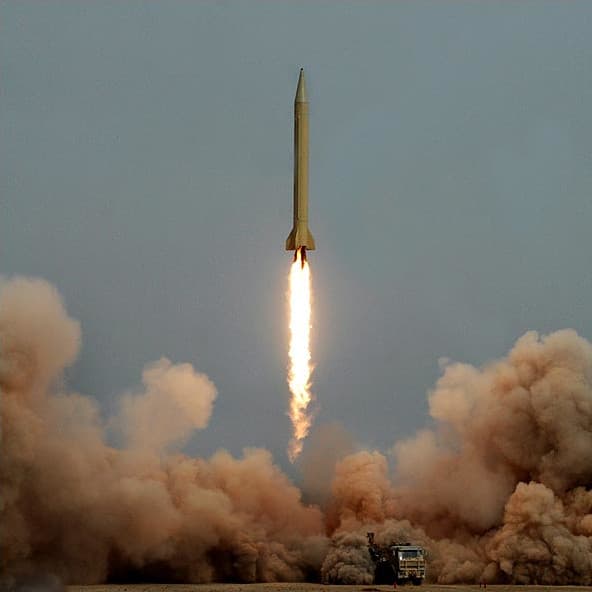
No institution was more central to Khamenei's power than the Islamic Revolutionary Guard Corps (IRGC). Founded in 1979 to protect the Islamic Revolution from internal and external enemies, the IRGC grew into a state within a state under his leadership — arguably the most consequential legacy of his 36-year rule.
Under Khamenei's direction:
- The IRGC reported directly to him rather than to the elected government or regular military
- IRGC-linked companies controlled an estimated 30–40% of Iran's economy, including oil, gas, construction, and telecommunications — much of it captured through no-bid contracts and state preferencing
- The IRGC's elite Quds Force — commanded for two decades by General Qasem Soleimani until his assassination by US drone strike in January 2020 — managed Iran's Axis of Resistance: Hezbollah in Lebanon, Hamas in Gaza, Palestinian Islamic Jihad, the Houthis in Yemen, and Shia militias across Iraq and Syria
- Khamenei appointed former IRGC commanders to top civilian administrative, intelligence, and political posts, creating a revolving door between military and governance that concentrated power in trusted hands
According to Britannica, the IRGC-Khamenei relationship was "symbiotic" — each dependent on the other for survival. The IRGC provided Khamenei with a loyal coercive apparatus that could crush domestic dissent (as in 2009, 2019, and 2022) and project force abroad (through proxies and missile programs). Khamenei provided the IRGC with political cover, economic privileges, and institutional protection from reform.
The IRGC's expansion created significant tensions with Iran's regular military (Artesh), with elected presidents who resented its economic dominance, and with clerics who feared its growing independence. But as long as Khamenei lived, the IRGC's institutional interests were his institutional interests. The organization answered to no one else.
"Death to America": Foreign Policy and Rhetoric
Ali Hosseini Khamenei's foreign policy for 36 years was organized around a single axis: permanent, ideological hostility toward the United States and Israel, expressed in religious and civilizational terms.
His most famous formula — "Death to America" — became a mandatory chant at official gatherings throughout his rule. In a 2015 Nowruz address (cited by Iran International and Times of Israel), he offered a clarification evidently intended for international audiences: "Death to America means death to US policies, death to arrogance." Critics noted the distinction made little practical difference to US forces stationed across the Middle East, or to the regional partners of the United States who absorbed Iranian proxy attacks.
On Israel, Khamenei was unambiguously maximalist:
- "Israel is a hideous entity in the Middle East which will undoubtedly be annihilated"
- "Israel won't exist in 25 years" — September 2015, one of the most internationally controversial statements of Khamenei's rule and a line that hardened his image as a long-horizon ideological antagonist of Israel
- "Israel's dependence on the United States exposed its weakness" — said in February 2026 as Iranian cities were under bombardment
On the United States, his rhetoric remained consistent from 1989 to 2026:
- "Americans should know that any military involvement by the US will undoubtedly result in irreparable damage to them"
- "The Islamic Republic of Iran will not give up support of its friends in the region"
These were not empty words. Khamenei backed the Axis of Resistance with weapons, financing, and intelligence — keeping US forces engaged in asymmetric conflict across Lebanon, Syria, Iraq, Yemen, and Gaza without requiring Iran to fight directly. The strategy persisted until February 2026, when the United States and Israel decided that decapitating the command structure was the only remaining option.
Death and Succession: February 28, 2026
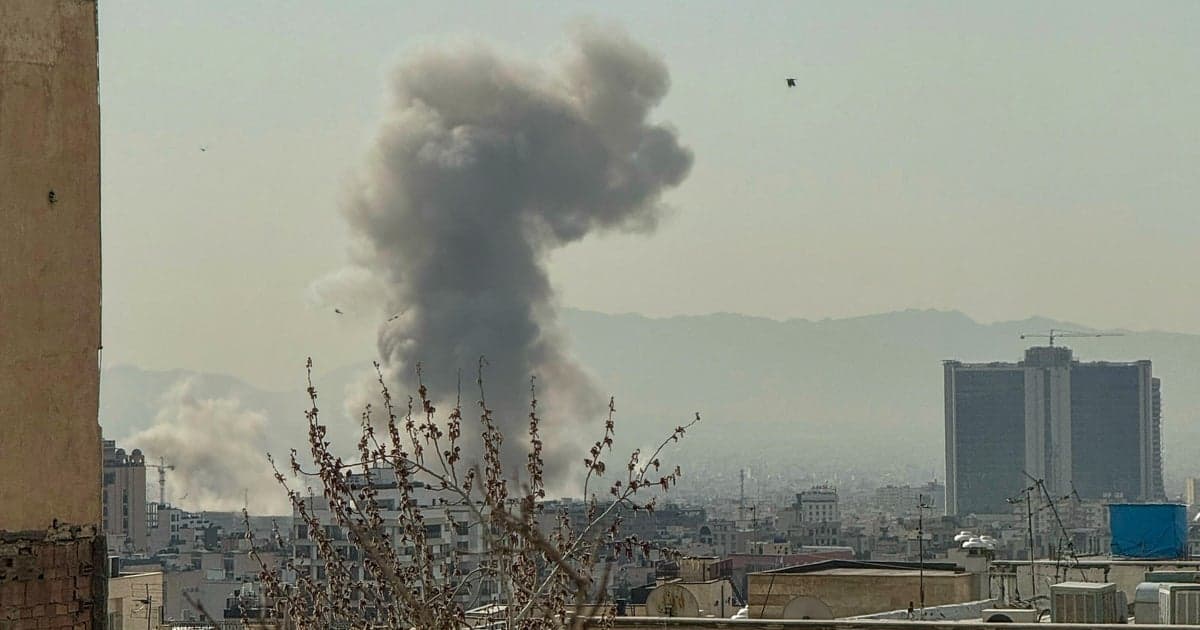
The end came with striking speed. On February 28, 2026, US and Israeli forces launched coordinated strikes on Tehran as part of Operation Epic Fury — a campaign targeting Iran's nuclear facilities, IRGC leadership, and the senior political structure of the Islamic Republic. Using CIA intelligence to pinpoint Khamenei's location, Israeli jets delivered 30 bunker-busting bombs to his compound in Tehran.
Iran's state media initially reported only that the Supreme Leader had been injured. On March 1, 2026, state television confirmed what foreign intelligence agencies and global news outlets had already reported: Ali Hosseini Khamenei was dead at age 86 — killed in the strike, along with dozens of guards and aides.
The toll on his immediate family was catastrophic:
- His daughter, son-in-law, grandchild, and daughter-in-law were killed in the same strikes
- His wife, Mansoureh Khojasteh Bagherzadeh, died from injuries sustained in the attack on March 2, 2026
The Iranian government announced 40 days of national mourning and seven days of public holiday. On the streets of Iran, the response was deeply divided. Thousands gathered in mourning in Qom and Mashhad — the holy cities. But in Tehran, Isfahan, and other urban centers, where younger generations had lived through the brutal suppression of the 2019 protests, the 2022 Mahsa Amini uprising, and decades of economic mismanagement, reports indicated that some Iranians — particularly women — were seen celebrating in private. International observers noted that the public grief appeared organized and state-directed in many cases; the private relief was harder to document but impossible to ignore.
Succession: Dynasty in a Republic
On March 3–4, 2026, the Assembly of Experts convened in an emergency session and appointed Mojtaba Khamenei — Ali's second-eldest son — as Iran's new Supreme Leader. The appointment immediately drew scrutiny from analysts, clerics, and Iranians who noted the irony: the Islamic Republic, founded to overthrow the Pahlavi dynasty for its hereditary rule, had produced what looked like its own hereditary succession.
According to Fortune magazine, Mojtaba had long been described as "the power behind the robes" — a figure who cultivated IRGC relationships for decades while holding no formal title, accumulated an estimated $3 billion in personal wealth, and positioned himself as the continuity candidate for Iran's deep state. Several senior clerics expressed reservations about the appointment, fearing Mojtaba would be targeted by US and Israeli forces as a high-value successor strike within weeks.
Whether the IRGC — with its own institutional interests, financial empire, and nuclear ambitions — would consolidate behind Mojtaba or move toward its own power center remained the defining strategic question of the post-Khamenei Middle East.
What His Death Changed Strategically
Khamenei's death mattered not only because a long-ruling autocrat was removed, but because it disrupted the one office in Iran that could sit above competing factions and still impose strategic coherence.
- The succession process immediately became a national-security problem, not just a clerical one.
- The IRGC gained leverage because it controlled force, logistics, and continuity while formal institutions were reeling.
- The nuclear question sharpened because the man associated with the anti-weapons fatwa and final strategic arbitration was gone.
The core strategic question after his death was simple: would the post-Khamenei state become more cautious because it was damaged, or more dangerous because its surviving power centers were narrower, harder-line, and less politically constrained?