Trump Says 'Too Late' for Iran Talks as Israel Hits Tehran
On Day 4 of Operation Epic Fury, Trump rejected renewed talks as Israeli strikes hit Tehran, oil rose, and global markets reacted to widening conflict risk.
Staff Reporting and Analysis. Produces source-backed reporting, explainers, and reference pages on nuclear risk, proliferation, and escalation dynamics.
Key Sources
Start with the strongest supporting documents and reporting behind this page.
Country Profiles Mentioned
Open the profile pages for the countries referenced directly in this article.
Related Rivalries
These comparison pages help place this article inside the broader balance of power and rivalry structure.
Rivalry
Iran War vs Iraq War: How the 2026 and 2003 Conflicts Compare
Iran 2026 vs Iraq 2003 compared across legal authority, coalition structure, force design, economic shock, and the central role of nuclear risk.
2026-03-03
Rivalry
Iran Crisis 2026 vs 2019 Tensions: What's Different This Time
How the 2026 Iran crisis differs from 2019: leadership decapitation, larger retaliation, Hormuz closure risk, and a sharper nuclear escalation path.
2026-03-03
Rivalry
US Military vs Iran Military: A Complete 2026 Comparison
US vs Iran military comparison across personnel, air and naval power, missiles, budgets, and how asymmetry shapes escalation outcomes in 2026.
2026-03-03
Related Doctrines
These explainers provide the strategic concepts behind the escalation, deterrence, and risk logic discussed here.
Doctrine
What Is the Strait of Hormuz?
What is the Strait of Hormuz? A practical explainer on its geography, oil-flow importance, military vulnerability, and global economic consequences of closure.
2026-03-03
Doctrine
What Happens If Iran Gets Nuclear Weapons?
If Iran obtained nuclear weapons, effects could include regional arms races, Israeli strike pressure, oil-market shocks, and broader nonproliferation fallout.
2026-03-03
Doctrine
What Is Mutually Assured Destruction (MAD)?
What is mutually assured destruction (MAD)? We explain the doctrine, Cold War logic, modern criticisms, and why MAD still shapes nuclear strategy.
2026-03-03
Trump says it's 'too late' for talks with Iran as Israel strikes Tehran — the president posted on Truth Social on March 3, 2026, declaring Iran's military capabilities "gone" and rejecting Iranian diplomatic overtures on the fourth day of the joint US-Israeli military campaign known as Operation Epic Fury. With explosions continuing to tear through Tehran and Beirut, global financial markets tumbling, and the Strait of Hormuz effectively closed to commercial shipping, the conflict has escalated into the most consequential military confrontation in the Middle East since the 2003 Iraq War.
On Day 4 of Operation Epic Fury, President Trump rejected Iran's bid for negotiations by declaring "Too Late!" on Truth Social after Iranian officials signaled willingness to talk. The conflict has killed at least 787 people in Iran, closed the Strait of Hormuz, sent oil prices surging past $84 per barrel, and triggered the Dow's worst single-day drop since April 2025.
Trump's 'Too Late' Declaration
The diplomatic door slammed shut on Monday, March 3, when President Trump posted a defiant message on Truth Social rejecting any return to the negotiating table with Iran. His exact words, as reported by RFE/RL and the Times of Israel:
"Their air defense, Air Force, Navy, and Leadership is gone. They want to talk. I said 'Too Late!'"
The statement is striking for what it reveals about the administration's mindset. Just two days earlier — on Saturday, February 28, the same day Operation Epic Fury launched — Trump had publicly stated that the United States had accepted an Iranian proposal for further negotiations, according to RTE. The pivot from "we accepted talks" to "too late" in 48 hours marks one of the most dramatic reversals in modern American wartime diplomacy.
Trump did not specify when Iranian officials proposed the talks he rejected. He also warned that US munitions stockpiles "have never been higher or better" and doubled down on his earlier prediction that the conflict could last four to five weeks, while adding he was prepared "to go far longer than that," as reported by Euronews. Trump described the campaign as "substantially ahead of time projections."
Iran's UN ambassador in Geneva responded with equal intransigence, expressing skepticism about "the usefulness of negotiation" at this point — a statement that suggests both sides have abandoned the diplomatic track entirely, per RFE/RL.
Day 4 of Operation Epic Fury: What's Happening on the Ground
The joint US-Israeli campaign — codenamed Operation Epic Fury by the Pentagon and Operation Roaring Lion by Israel — has struck with devastating scope across Iran. By Day 4, strikes had hit 153 Iranian cities across more than 500 locations in over 1,000 individual attacks, according to Euronews citing Iranian government tallies.
Key Targets Hit on Day 4
The most politically significant strike on March 3 targeted the Assembly of Experts building in Qom — the body constitutionally tasked with electing a new supreme leader following the assassination of Ayatollah Ali Khamenei on Day 1. Local media reported the building was "severely damaged" and effectively "flattened," according to Euronews. The strike appears designed to prevent Iran's clerical establishment from reconstituting its leadership structure.
Additional confirmed targets on Day 4 include:
- Tehran's presidential compound — Israeli forces struck the heavily fortified leadership complex, including the presidential office and Supreme National Security Council building, per Euronews
- IRIB headquarters — Iran's state broadcaster was hit by Israeli strikes, as reported by Al Jazeera
- IRGC intelligence HQ in Urmia — struck along with the Revolutionary Court in the same city
- IRGC "Unity" base in Paveh — Kurdish border region military installation targeted
- Najafabad missile base, Isfahan Province — a major ballistic missile storage and production facility, per RFE/RL
- Natanz nuclear facility — satellite imagery confirmed damage to entrance buildings; the UN nuclear watchdog (IAEA) reported "some recent damage" but "no radiological consequence expected," according to Euronews
Casualty Toll
The Iranian Red Crescent reported 787 deaths from US-Israeli strikes as of March 3, according to Al Jazeera and Euronews. The independent Kurdish human rights organization Hengaw estimated a significantly higher number — approximately 1,300 Iranian military personnel killed — suggesting the Red Crescent figure may undercount military deaths. Civilian casualties include at least 201 killed and 747 wounded inside Iran, per Al Jazeera.
On the US side, six service members have been killed and 18 seriously wounded since the operation began, according to NBC News and USNI News.
Israel Escalates Across Multiple Fronts
While the US focuses on Iran proper, Israel has opened simultaneous operations across multiple theaters. Prime Minister Benjamin Netanyahu declared that Israel would step up its attacks on both Hezbollah and Iran, asserting: "Hezbollah made a very big mistake when it attacked us. We will respond with even greater and additional force," according to CNN.
Netanyahu justified the preemptive strike campaign by claiming Iran was "building new sites...that would make their atomic bomb programme immune within months," as reported by RTE.
Israel's multi-front offensive includes:
- Intensified air attacks on Lebanon, with new ground incursions into southern Lebanon
- Simultaneous strikes on Tehran and Beirut for the fourth consecutive day
- Hezbollah targets across the Lebanese-Israeli border, prompting more than 30,000 people to flee their homes in Lebanon, per the UN, as cited by Euronews
An Israeli source revealed to RTE that the campaign was designed with a planned two-week duration and aimed at overthrowing Iran's clerical rulers. The source indicated operations are proceeding faster than expected, with Israel accelerating its timeline amid concerns the White House might negotiate a cessation before military objectives were fully achieved.
Iran Fights Back: Strait of Hormuz Closure and Regional Retaliation
Iran has responded to the US-Israeli campaign with a multi-vector retaliation strategy stretching across the entire Persian Gulf region and beyond.
Strait of Hormuz Closure
The most economically devastating move came when the Islamic Revolutionary Guard Corps announced the closure of the Strait of Hormuz — the narrow waterway through which approximately one-fifth of the world's oil consumption flows daily. Iran warned that any vessels attempting passage would be attacked, with IRGC officials threatening to "burn any ship" that defied the closure, as reported by Al Jazeera and Euronews.
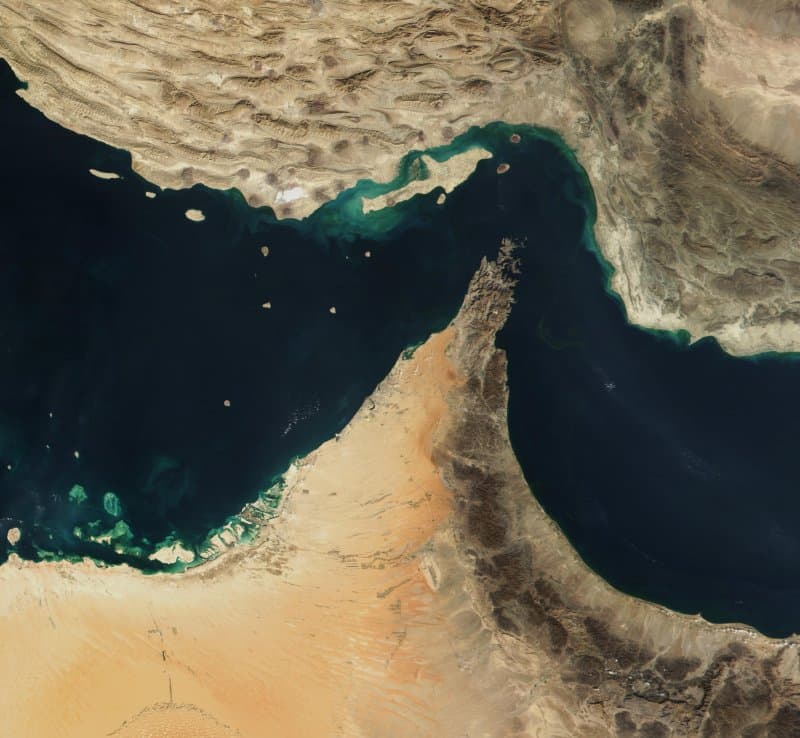
Danish shipping giant Maersk immediately suspended all vessel crossings through the Strait until further notice, with multiple other container shipping companies following suit and rerouting around the southern tip of Africa, per CNBC.
Attacks on US Installations and Gulf Energy Infrastructure
Iran's retaliatory strikes have targeted American diplomatic and military facilities across the region:
- US Embassy in Riyadh, Saudi Arabia — struck by two suspected Iranian drones, causing a partial roof collapse and limited fire; minor damage, no confirmed American casualties. The embassy subsequently closed, according to Al Jazeera and NBC News
- US Embassy in Kuwait — closed indefinitely following threats
- US Embassy in Beirut — closed "until further notice," the third US diplomatic facility to shutter
- Dhahran, Saudi Arabia — the US embassy issued an imminent attack warning citing threats of "missile and UAV attacks," per RTE
Iran also struck energy infrastructure across the Gulf:
- Qatar's state-owned petroleum company suspended all LNG production after two facilities were hit, per Al Jazeera
- UAE intercepted 152 ballistic missiles and 506 drones; 3 deaths and 58 injuries reported, according to Euronews
- Continued missile and drone barrages targeting Israel, with interceptions reported over West Jerusalem, Tel Aviv, and Eilat; at least 12 people wounded in central Israel from fragments, per Al Jazeera and RFE/RL
Iran's Revolutionary Guards vowed "continuous punitive attacks" and demanded the UN Security Council intervene to halt hostilities, as reported by RTE.
Markets in Freefall: Oil Surges, Stocks Plunge
The economic fallout has been swift and severe. As Trump says it's 'too late' for talks with Iran as Israel strikes Tehran, global markets are pricing in a prolonged disruption to the world's energy supply.
Oil Prices
- Brent crude surged 8% to $84.13 per barrel, the highest since July 2024, per CNBC
- WTI crude gained 7% to $76.67, hitting its highest level since June
- US gasoline prices jumped 11 cents in a single day to $3.11 per gallon — the largest one-day increase since Hurricane Katrina in 2005, according to CNN
- European natural gas prices soared more than 33% following the Qatar LNG production halt, per Euronews
- Analysts warn oil could cross $100 per barrel if the Strait of Hormuz closure is prolonged
Stock Market Impact
- Dow Jones Industrial Average plunged over 1,000 points (2.1%), heading for its worst trading day since April 2025, per CNBC
- S&P 500 fell 1.5%
- Nasdaq Composite dropped 1.8%
- 10-year Treasury yield rose more than 5 basis points to 4.107% as surging oil raised inflation concerns, according to CNBC
Aviation Disruption
Nearly 1,900 of 5,450 scheduled Middle East flights were cancelled on Day 4, with multiple countries closing their airspace to commercial traffic, per Euronews.
The Logistics Strain: Can the U.S. Sustain This Campaign?
While the opening days of Operation Epic Fury have demonstrated overwhelming American firepower, defense analysts are raising serious questions about whether the US military's logistics backbone can sustain a multi-week campaign at this intensity. A detailed analysis by Breaking Defense highlights the critical vulnerabilities.
Aerial Refueling: The "Most Likely Limiting Factor"
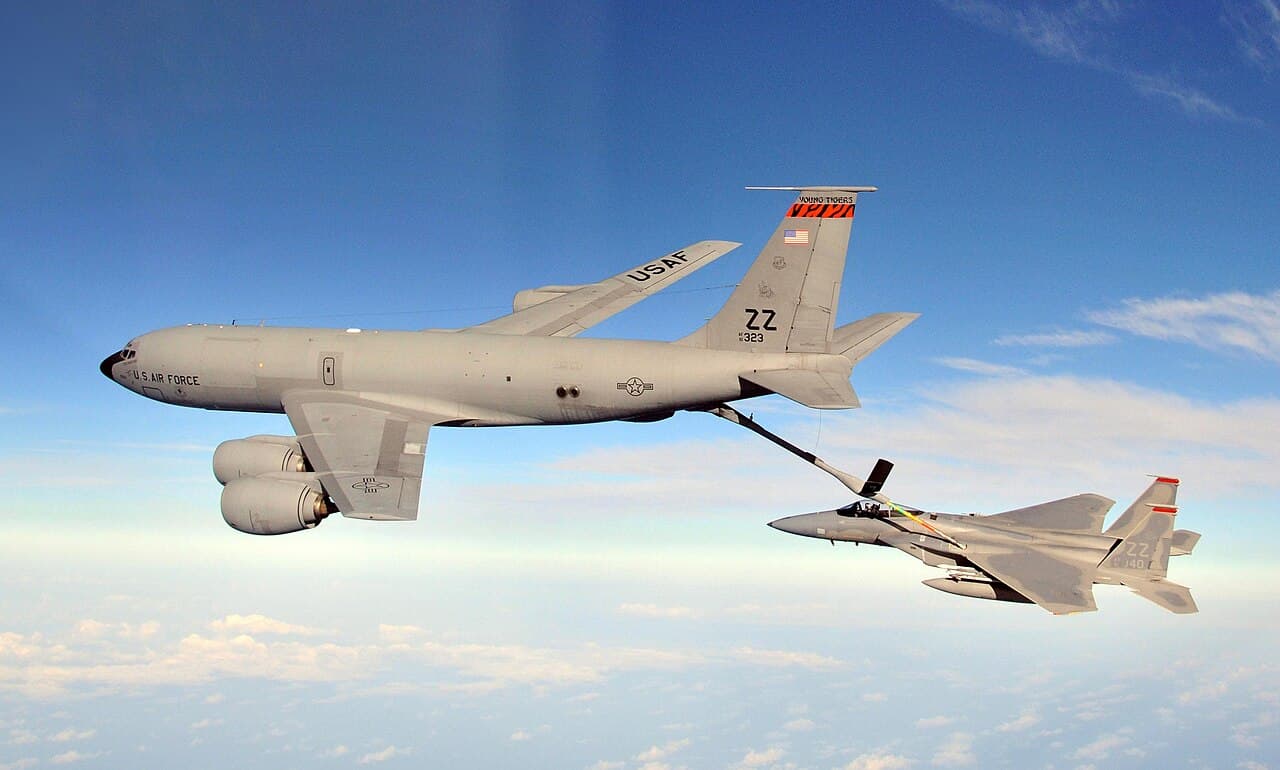
The US has deployed over 100 aerial refueling aircraft for Iran operations, relying on two main platforms: the Eisenhower-era KC-135 Stratotanker and the newer KC-46A Pegasus. But the numbers mask serious constraints.
According to a 2021 Hudson Institute study cited by Breaking Defense:
| Readiness Level | Available Crews | Available Aircraft |
|---|---|---|
| Daily operations | 119 | 119 |
| Surge (limited period) | 169 | 169 |
| Full wartime mobilization | 865 | 368 |
Approximately 56% of tanker units belong to the reserves or Air National Guard — meaning a sustained campaign requires activating civilian pilots and aircrew who must be pulled from their regular jobs. Gen. Dan Caine praised Guard/Reserve mobility forces as "unsung heroes" who "stepped right out of their civilian jobs," but the activation underscores how thin the active-duty tanker force is.
Stacie Pettyjohn of the Center for New American Security warned that tankers are "the most likely limiting factor" for the campaign, noting that extended sorties from Jordan, Israel, or southern Europe "consume substantially more fuel." She added that supporting Israeli Air Force operations — which has a "relatively small air refueling fleet" — "could be the straw that breaks the tanker fleet's back."
Airlift Challenges
The cargo airlift fleet faces its own problems:
- C-17 Globemaster mission-capable rate: approximately 75%
- C-5 Galaxy mission-capable rate: below 50% — a problem Air Force leadership has acknowledged as chronic
- C-130 tactical airlift aircraft are handling shorter-range resupply
Heather Penney of the Mitchell Institute emphasized to Breaking Defense that aircraft can deliver cargo "within a day" versus ships taking weeks, making airlift irreplaceable for "urgent needs and time-critical supplies to feed the fight."
Tim Walton of the Hudson Institute concluded: "Aerial refueling capacity has historically been a major constraint on the tempo of operations, and it's likely the case today." The longer the campaign runs, the more these constraints will bind — a dynamic that directly undermines Trump's stated willingness to fight "far longer" than four to five weeks.
Diplomacy in Ruins: From Geneva Talks to Total War
The speed at which diplomacy collapsed into open warfare has stunned international observers. The timeline, reconstructed from RTE, Euronews, and RFE/RL:
- Thursday, February 26 — The most recent round of US-Iran nuclear negotiations concluded in Geneva. Mediators from Oman reported the talks were "showing progress"
- Saturday, February 28 — Trump publicly stated the US had accepted an Iranian proposal for further negotiations. Hours later, Operation Epic Fury launched with simultaneous strikes across nine Iranian cities
- Monday, March 3 — Trump posted "Too Late!" on Truth Social, rejecting Iranian overtures for dialogue
Oman, which had been acting as mediator, issued a statement expressing dismay. Oman's Foreign Minister wrote that "Active and serious negotiations have yet again been undermined" — directly contradicting the administration's implicit framing that diplomacy had failed, per RFE/RL.
Iran's Foreign Minister stated bluntly that the "US entered a war of choice on behalf of Israel," according to Euronews. Secretary of State Marco Rubio justified the preemptive strikes by claiming the US anticipated higher casualties if Israel had acted first, per RTE.
Foreign Minister Gideon Saar went further, urging 60 nations to sever diplomatic ties with Iran entirely, as reported by RTE.
International Response
The global reaction has been sharply divided, with Western allies offering measured responses and non-aligned nations expressing outright condemnation, as tracked by Euronews:
- Germany — Summoned the Iranian ambassador and condemned what it called "disproportionate" retaliatory attacks on Gulf states
- France — Deployed Rafale fighter jets to the UAE and is sending air defense systems to Cyprus
- NATO — Secretary General Rutte stated the alliance is "not involved" in the conflict but will "defend every inch of NATO territory" if attacked
- China — Foreign Minister Wang Yi warned of "great repercussions" and advocated for a political settlement. He separately condemned the "blatant killing of a sovereign leader and the incitement of regime change"
- European Parliament — Considering an invitation for Reza Pahlavi, the exiled Iranian opposition leader, signaling potential European interest in post-regime alternatives
- Iran's warning to Europe — Tehran threatened that European countries considering "defensive action" would face expanded retaliation
The Strategic Questions Behind "Too Late"
Trump's statement matters less as a social-media moment than as a signal about the administration's escalation model. Four questions now matter most:
- Has Washington abandoned bargaining entirely, or is this coercive rhetoric before a harder negotiating position?
- Are the strikes still tied to a limited military objective, or drifting toward leadership decapitation and regime-fracture logic?
- How long can the US sustain the tempo without visible logistics strain? Breaking Defense raised that issue directly.
- Does closing the diplomatic channel increase nuclear risk? CSIS has already warned that destroying conventional deterrents can make breakout incentives sharper.
Nuclear Risk Assessment
For nuclear risk analysts — and for the readers of this site — the most dangerous dimension of Trump's "too late" declaration is what it implies about escalation dynamics.
The joint campaign has systematically destroyed Iran's conventional military deterrents: its air defense network, air force, navy, and leadership command structure. When a nuclear-threshold state loses its conventional deterrents, the strategic calculus shifts dangerously toward nuclear breakout as the only remaining guarantee of regime survival.
CSIS noted in their March 2 analysis that while strikes at Parchin and Isfahan represent significant blows to Iran's nuclear weapons research infrastructure, the full extent of damage to Iran's enrichment capability — particularly at the deeply buried Fordow facility — remains uncertain. If Fordow's centrifuge cascades survived intact, Iran retains the technical capability for a nuclear sprint.
The strike on the Assembly of Experts in Qom adds another destabilizing variable: by preventing the constitutional process for selecting Khamenei's successor, the US-Israeli campaign risks creating a power vacuum that could empower the most hardline IRGC elements — precisely the faction most likely to view a nuclear weapon as existentially necessary.
What Comes Next
As the conflict enters its fifth day with diplomacy declared dead by the American president, several critical developments will determine whether this campaign achieves its stated objectives or spirals into a broader regional conflagration:
- Phase 2 targeting — Secretary Rubio's warning that "the hardest hits are yet to come" suggests Phase 1 focused on air defenses and military infrastructure while Phase 2 may target remaining leadership, regime support structures, or deeply buried nuclear sites including Fordow
- Congressional war powers challenges — Bipartisan resolutions from Sen. Rand Paul and Rep. Thomas Massie demanding Congressional authorization could constrain the operation if they gain enough support
- Ground troops decision — Defense Secretary Hegseth has refused to rule out boots on the ground, the single variable most capable of transforming this from an air campaign into a sustained occupation
- Strait of Hormuz timeline — every additional day of closure increases the probability of a global recession-level oil price shock, with some analysts projecting $100+ per barrel
- Iran's nuclear sprint calculation — whether surviving Iranian leadership concludes that a nuclear weapon is now the only path to regime survival
- Allied participation — whether any NATO member or Gulf state beyond Israel formally joins the coalition
For ongoing analysis of how this conflict affects the Doomsday Clock and global nuclear risk, see our Nuclear Threat Assessment: Iran Crisis — What Happens Next.