Did Iran Attack the U.S. Today?
Yes. Iran launched six waves of missiles and drones at U.S. bases in the Gulf after Operation Epic Fury on February 28, 2026.
Staff Reporting and Analysis. Produces source-backed reporting, explainers, and reference pages on nuclear risk, proliferation, and escalation dynamics.
Key Sources
Start with the strongest supporting documents and reporting behind this page.
Country Profiles Mentioned
Open the profile pages for the countries referenced directly in this article.
Related Rivalries
These comparison pages help place this article inside the broader balance of power and rivalry structure.
Rivalry
Is This Like the Cuban Missile Crisis? Comparing 1962 and 2026
A 1962 vs 2026 comparison of decision windows, nuclear proximity, escalation control, and why the Iran crisis is framed as a modern Cuban Missile moment.
2026-03-03
Rivalry
Iran War vs Iraq War: How the 2026 and 2003 Conflicts Compare
Iran 2026 vs Iraq 2003 compared across legal authority, coalition structure, force design, economic shock, and the central role of nuclear risk.
2026-03-03
Rivalry
US Military vs Iran Military: A Complete 2026 Comparison
US vs Iran military comparison across personnel, air and naval power, missiles, budgets, and how asymmetry shapes escalation outcomes in 2026.
2026-03-03
Related Doctrines
These explainers provide the strategic concepts behind the escalation, deterrence, and risk logic discussed here.
Doctrine
What Is the Strait of Hormuz?
What is the Strait of Hormuz? A practical explainer on its geography, oil-flow importance, military vulnerability, and global economic consequences of closure.
2026-03-03
Doctrine
What Are Proxy Wars?
What is a proxy war? Learn how major powers fight through partners, why this model persists, and how Iran's network affects today's Middle East escalation.
2026-03-03
Doctrine
What Is Mutually Assured Destruction (MAD)?
What is mutually assured destruction (MAD)? We explain the doctrine, Cold War logic, modern criticisms, and why MAD still shapes nuclear strategy.
2026-03-03
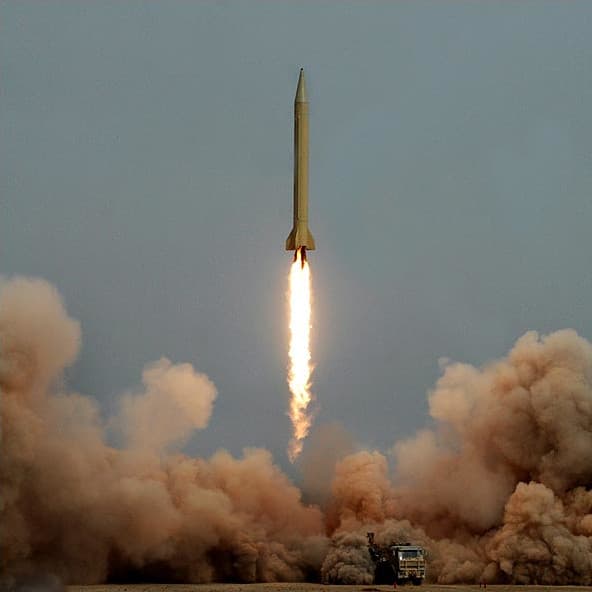
Did Iran attack the U.S. today? Yes — beginning on the evening of February 28, 2026, Iran's Islamic Revolutionary Guard Corps launched the most extensive direct assault on American military forces since the 1983 Beirut barracks bombing, unleashing six waves of ballistic missiles, cruise missiles, and drones against US bases and diplomatic facilities across the Middle East. The attacks came hours after the United States and Israel launched Operation Epic Fury, a joint strike campaign that killed Supreme Leader Ayatollah Ali Khamenei and dozens of top Iranian officials.
Iran has directly attacked US military forces in response to Operation Epic Fury, the joint US-Israeli strike campaign launched on February 28, 2026 that killed Iran's Supreme Leader Khamenei. As of March 3, Iranian missiles and drones have struck the US Navy's 5th Fleet headquarters in Bahrain, Al Udeid Air Base in Qatar, multiple US facilities in Kuwait, and US embassies across the Gulf — killing 6 American service members and wounding 18 more.
Did Iran Attack the U.S. Today? Yes — Here's What We Know
Did Iran attack the U.S. today is the question driving millions of searches as the most serious direct military confrontation between Iran and America in decades unfolds across the Persian Gulf. The answer is unambiguous: yes.
Beginning on the night of February 28, 2026 — within hours of the first US-Israeli strikes landing in Tehran — Iran's Islamic Revolutionary Guard Corps launched a sustained, multi-wave campaign of ballistic missiles, cruise missiles, and drone attacks against US military bases and diplomatic facilities in Bahrain, Qatar, Kuwait, Saudi Arabia, and beyond, according to NBC News, CBS News, and Al Jazeera.
By March 3, Iran had launched six waves of retaliatory strikes targeting at least 27 US military locations and Israeli sites. Six American service members have been killed and 18 seriously wounded. The United States has closed embassies across the region. The Strait of Hormuz — through which one-fifth of the world's oil passes — has been declared closed by the IRGC.
This is not a proxy attack. Iran is directly and openly attacking the United States military.
Which U.S. Military Bases Has Iran Struck?
Iran's retaliatory strikes have targeted the full range of US military infrastructure in the Gulf region. The following table summarizes confirmed attacks reported by NBC News and CBS News:
| US Target | Country | Weapons Used | Status |
|---|---|---|---|
| NSA Bahrain (US Navy 5th Fleet HQ) | Bahrain | Ballistic missiles | Confirmed struck |
| Al Udeid Air Base | Qatar | Ballistic missiles (2 confirmed strikes) | Confirmed struck |
| Al Asad Air Base | Iraq | Missiles and drones | Targeted |
| Ali Al Salem Air Base | Kuwait | Missiles | Targeted; 12 injured |
| US Embassy, Riyadh | Saudi Arabia | Drones (2 hits) | Partial damage; closed |
| US Embassy, Kuwait | Kuwait | Threats + strikes in area | Closed indefinitely |
| US Embassy, Beirut | Lebanon | Threats | Closed indefinitely |
| US Consulate, Karachi | Pakistan | Protests/attack | 9 killed (civilians) |
Iran has also warned that "all American and Israeli assets in the region have become a legitimate target" — a blanket threat that US military commanders are treating as credible across all 30+ US installations in the Middle East, per Al Jazeera.
Iran Strikes the US Navy 5th Fleet in Bahrain
The most strategically significant Iranian attack on US forces struck Naval Support Activity (NSA) Bahrain — the headquarters of the US Navy's 5th Fleet, which commands all American naval operations in the Persian Gulf, Red Sea, Gulf of Oman, and Arabian Sea.
NSA Bahrain hosts the US 5th Fleet, which in turn oversees two aircraft carrier strike groups currently deployed in the region as part of Operation Epic Fury. Striking 5th Fleet HQ is the equivalent of attacking the command nerve center for America's entire naval presence in the Gulf.
According to CBS News, Iranian missiles struck the Bahrain naval center directly. The precise extent of structural damage was not immediately confirmed, but the base was placed on high alert status and operations were temporarily disrupted. At least 12 personnel were injured across Kuwait-area installations in the same wave of attacks, according to NBC News.
The Bahrain strike represents a major escalation threshold: prior Iranian proxy attacks on US facilities (such as the January 2024 Tower 22 attack in Jordan) were carried out by Iranian-backed militias to preserve plausible deniability. These are direct IRGC strikes on an American naval command facility — a fundamentally different category of conflict.
Iran Hits Al Udeid Air Base: 10,000 US Troops Under Fire
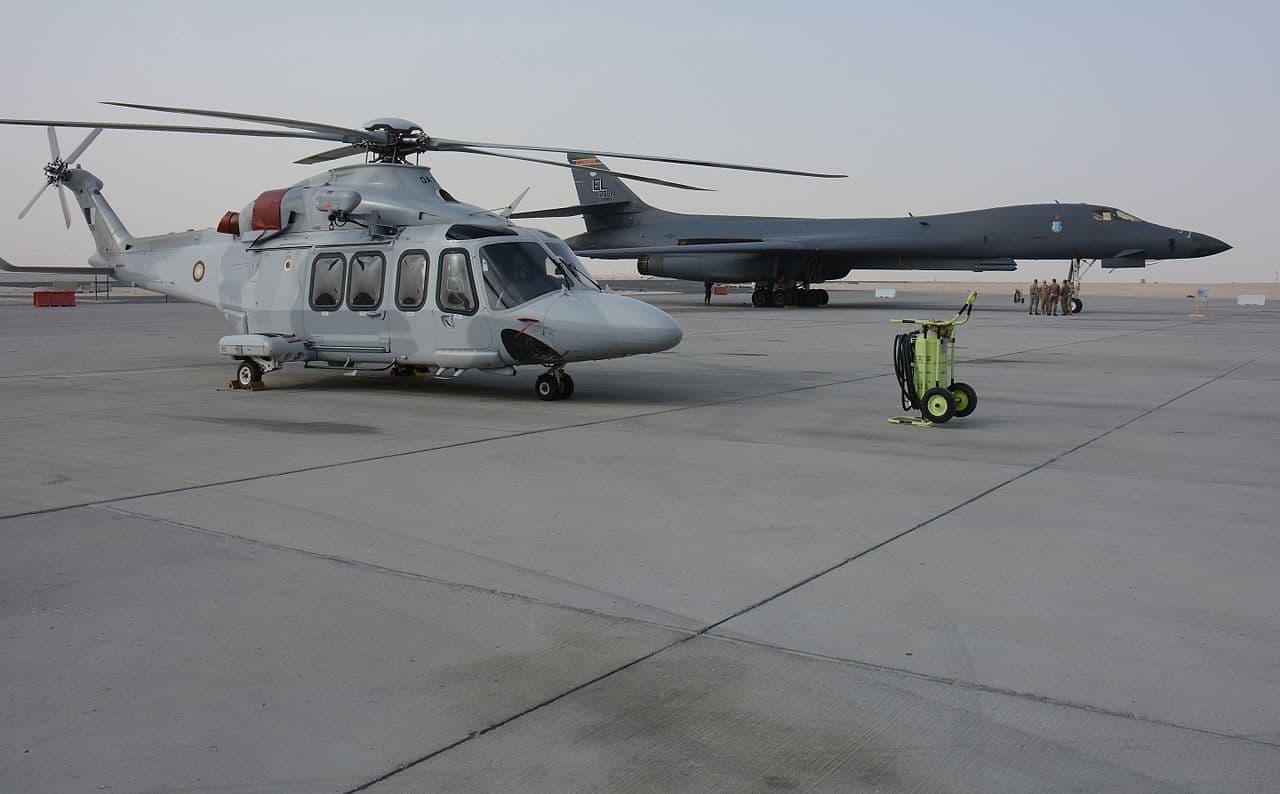
Al Udeid Air Base in Qatar is the largest US military installation in the Middle East and the forward headquarters of US Air Forces Central Command (AFCENT). Approximately 10,000 US military personnel are based there. It is the hub from which US air operations across the entire Central Command theater are coordinated — including the strike sorties being flown against Iran in Operation Epic Fury.
NBC News and Al Jazeera confirmed that two Iranian ballistic missiles struck Al Udeid, with the base registering direct impacts. The strikes killed and wounded US personnel, though the precise casualty breakdown by individual base has not been released by the Pentagon.
The attacks on Al Udeid carried an additional economic dimension: Iran simultaneously struck Qatari energy infrastructure, and QatarEnergy — Qatar's state-owned petroleum company and one of the world's largest LNG exporters — announced it was suspending all liquefied natural gas production following Iranian attacks on its facilities. European natural gas prices surged more than 33% on the news, per Al Jazeera.
Other US Facilities Targeted by Iran Across the Region
Iran's retaliatory campaign extended beyond the two primary military bases into a sweeping campaign against American diplomatic and logistical infrastructure:
US Embassy in Riyadh, Saudi Arabia
Two suspected Iranian drones struck the US Embassy compound in Riyadh, causing a partial roof collapse and a limited fire, according to NBC News. No American casualties were confirmed, but the State Department subsequently closed the embassy and issued a "do not travel" advisory for US citizens in Saudi Arabia. The US Embassy in Dhahran issued a separate warning about imminent "missile and UAV attacks."
US Embassies in Kuwait and Beirut
Both the US Embassy in Kuwait City and the US Embassy in Beirut closed indefinitely following Iranian threats and attacks in the area. The Kuwait closure came after Iranian missile attacks on Kuwait-area US military bases injured at least 12 personnel, per NBC News.
UAE Intercepts Mass Drone/Missile Attack
The United Arab Emirates intercepted 152 ballistic missiles and 506 drones in a single day of Iranian strikes, according to Al Jazeera. Three UAE civilians were killed and 58 injured despite the interceptions. Abu Dhabi temporarily closed its international airport after one person was killed by debris from an intercepted missile.
Why Did Iran Attack US Forces?
Iran's decision to directly strike American military forces was a direct response to Operation Epic Fury — the joint US-Israeli military campaign that launched on February 28, 2026, with simultaneous strikes across nine Iranian cities, per Al Jazeera.
The specific trigger was the killing of Supreme Leader Ayatollah Ali Khamenei, who died in the opening salvo of strikes on February 28. Israeli Defense Minister Israel Katz confirmed Khamenei was killed in Israel's opening strike, which Israel codenamed "Operation Roar of the Lion." Iranian state media confirmed his death on March 1, 2026.
Iranian officials immediately framed the US strikes as an act of war against Islam itself. Iranian President Masoud Pezeshkian declared the operations "a declaration of war against Muslims" and vowed Khamenei would be remembered as a martyr, per CBS News. Parliament Speaker Mohammad Bagher Qalibaf promised Iran would "get even" and strike with "painful blows."
An unnamed senior Iranian official stated bluntly: "All American and Israeli assets in the region have become a legitimate target."
Beyond the killing of Khamenei, Iran also cited the deaths of approximately 40 additional senior Iranian officials in the opening phase of Operation Epic Fury, including:
- Defense Minister Gen. Aziz Nasirzadeh
- Army Chief of Staff Gen. Abdol Rahim Mousavi
- Revolutionary Guard Head Maj. Gen. Mohammad Pakpour
- Security Adviser Ali Shamkhani
How Many Americans Have Been Killed or Wounded?
As of March 3, 2026:
- 6 US service members killed in Iran's retaliatory strikes
- 18 US service members seriously wounded
- At least 12 additional US and coalition personnel injured in Kuwait airstrikes
The death toll was confirmed by NBC News, CBS News, and USNI News.
Three of the six killed reportedly died in a friendly fire incident in Kuwait during a confused coalition air-defense engagement. All six pilots from the downed aircraft were reported to have ejected, but three service members later died in connection with the incident, while three others were killed in separate direct Iranian strike events.
Additionally, 9 civilians were killed at the US Consulate in Karachi, Pakistan during violent protests against the US-Israeli strikes, per CBS News. Pakistani authorities confirmed the Karachi deaths were protest-related, not direct Iranian military action.
The White House has confirmed all US deaths but has not released the names or assigned units of the fallen service members, citing notification of families still in progress.
Chronology: Iran's Six Waves of Attacks on US Forces
Iran's campaign against American military targets did not begin and end with a single strike — it escalated across multiple coordinated waves over six days:
| Wave | Date | Primary Targets | Weapons |
|---|---|---|---|
| Wave 1 | Feb 28, evening | NSA Bahrain, Kuwait bases | Ballistic missiles, cruise missiles |
| Wave 2 | Mar 1, overnight | Al Udeid Air Base (Qatar), Bahrain | Ballistic missiles |
| Wave 3 | Mar 1, daytime | UAE, Saudi Arabia, Iraq bases | Drones and cruise missiles |
| Wave 4 | Mar 2 | US Embassy Riyadh, Dhahran | Drones (2 hits on embassy) |
| Wave 5 | Mar 2–3 | 27 US military locations + Israeli sites | Mixed ballistic/drone |
| Wave 6 | Mar 3 | Gulf-wide; QatarEnergy infrastructure | Ballistic missiles, drones |
By Wave 6, the IRGC had fired hundreds of ballistic missiles and drones across the theater, according to NBC News. US, Israeli, and Gulf state air defense systems — including the Iron Dome, Patriot batteries, and the UAE's THAAD-equivalent systems — intercepted a significant portion, but enough got through to cause confirmed damage and casualties.
Strait of Hormuz Closure: Iran's Most Powerful Economic Weapon
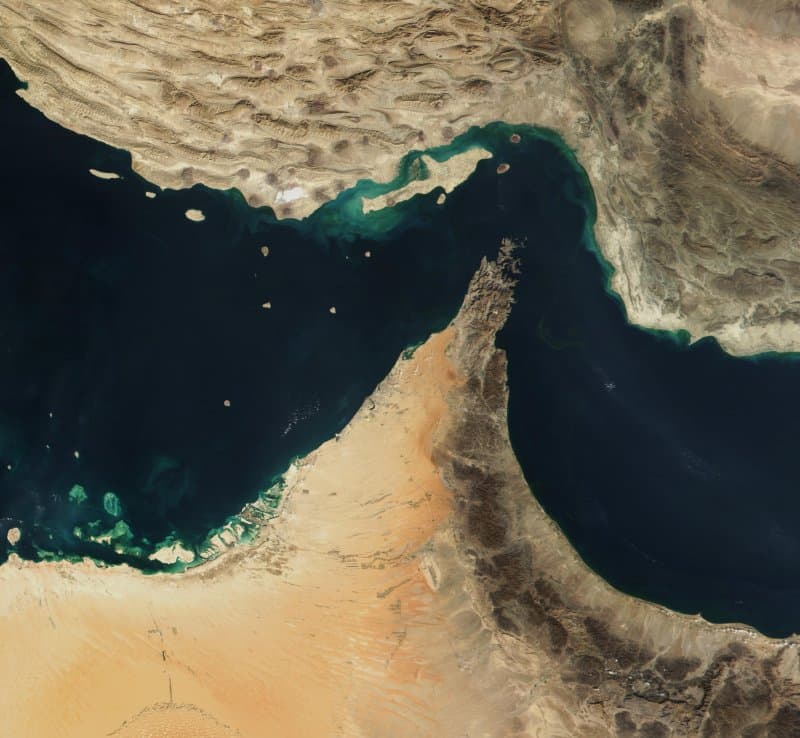
On March 3, Iran escalated its retaliation to a new level, announcing the official closure of the Strait of Hormuz — the narrow waterway between Iran and Oman through which approximately one-fifth of all global oil consumption flows daily.
The IRGC warned it would "burn any ship" attempting passage, per Al Jazeera. Danish shipping giant Maersk immediately suspended all Strait crossings and rerouted vessels around the Cape of Good Hope. More than 150 oil tankers and cargo ships are now stranded at anchor in the Persian Gulf and Arabian Sea, unable to move.
The economic consequences have been immediate:
- Brent crude surged to $84.13/barrel — up 8% since the conflict began
- WTI crude hit $76.67 — highest since June 2025
- US gasoline prices jumped 11 cents in a single day — the largest one-day increase since Hurricane Katrina (2005)
- European natural gas prices surged 33% following Qatar's LNG halt
- The Dow Jones fell over 1,000 points (2.1%) on the worst trading day since April 2025
Analysts warn oil could cross $100 per barrel if the closure extends beyond one week.
What Analysts Are Watching Beyond The Headline
The simple yes-or-no answer hides several harder follow-up questions that matter more for risk assessment:
- Was the strike campaign centrally directed or opportunistic? The scale and sequencing suggest a coordinated IRGC response rather than isolated militia activity.
- Can Gulf air-defense networks handle repeated salvos without coordination failures? The reported Kuwait friendly-fire losses raise questions about coalition deconfliction under high operational tempo.
- Will direct attacks on US bases stay limited or widen to more embassies, ports, and logistics sites? That distinction matters for whether the conflict remains a punitive cycle or becomes a broader regional war.
- Does conventional retaliation change Iran's nuclear calculus? As CSIS argued, the destruction of conventional deterrents can make nuclear breakout logic more attractive, not less.
Is Iran Planning More Attacks on US Forces?
All available indicators suggest Iran is not finished. Iranian military officials have explicitly warned that they have not yet deployed their most advanced capabilities.
On March 3, an IRGC military spokesman stated: "We haven't deployed advanced weapons yet" — a statement widely interpreted as a reference to Iran's longer-range ballistic missiles, including the Fattah-2 hypersonic missile and the Kheibar Shekan, which have ranges exceeding 1,500 kilometers and could reach targets as far as southeastern Europe, according to HSToday.
The IRGC has vowed "continuous punitive attacks" and explicitly rejected any ceasefire negotiations while Operation Epic Fury continues. Iran's Revolutionary Guards have demanded the UN Security Council intervene to halt hostilities — while simultaneously promising more strikes if it does not.
President Trump responded to Iranian threats on March 3 by warning Iran "better not" retaliate at a level that would force a US response "never been seen before" — implying the US is prepared to dramatically escalate beyond current strike packages if Iranian attacks on US forces intensify.
Secretary of State Marco Rubio reinforced the message: "The hardest hits are yet to come." This bidirectional escalation posture — both sides threatening greater force while already fighting — represents the most dangerous aspect of the current trajectory.
Nuclear Risk: What Iran's Attacks on the US Mean for Escalation
For readers of this site tracking nuclear risk, the most alarming dimension of Iran's attacks on US forces is not the immediate casualties — it is what they signal about the underlying strategic logic of the conflict.
CSIS analysts noted on March 2 that Operation Epic Fury has systematically dismantled Iran's conventional military deterrents: its air defense network, its air force, its navy, and now its top leadership command structure. When a nuclear-threshold state loses its conventional deterrents entirely, the incentive calculus for nuclear breakout shifts dramatically.
Iran was estimated to be capable of producing enough fissile material for a nuclear device in 12 days prior to Operation Epic Fury, having enriched uranium to 60% purity at its Fordow and Natanz facilities. While US-Israeli strikes have damaged Natanz's surface infrastructure, the Fordow enrichment facility — buried under approximately 80 meters of mountain rock near Qom — may have survived the initial bombing campaign. If Fordow's centrifuge cascades remain intact, Iran retains a viable path to a nuclear device.
The Doomsday Clock, already at 89 seconds to midnight before the conflict, has been widely expected to move in emergency sessions of its scientific committee. The combination of:
- Direct US-Iranian military combat
- Attacks on nuclear facilities with uncertain damage assessments
- Iran's stated resolve to continue fighting
- Removal of leadership with institutional knowledge of Iran's nuclear program
...represents a nuclear risk scenario with few historical precedents outside of the Cuban Missile Crisis.