why is iran attacking israel: causes, strategy, and timeline
why is iran attacking israel explained with sources: retaliation, nuclear fears, deterrence signaling, and domestic pressure shaping the conflict.
Staff Reporting and Analysis. Produces source-backed reporting, explainers, and reference pages on nuclear risk, proliferation, and escalation dynamics.
Key Sources
Start with the strongest supporting documents and reporting behind this page.
Country Profiles Mentioned
Open the profile pages for the countries referenced directly in this article.
Related Rivalries
These comparison pages help place this article inside the broader balance of power and rivalry structure.
Rivalry
Iran Crisis 2026 vs 2019 Tensions: What's Different This Time
How the 2026 Iran crisis differs from 2019: leadership decapitation, larger retaliation, Hormuz closure risk, and a sharper nuclear escalation path.
2026-03-03
Rivalry
Is This Like the Cuban Missile Crisis? Comparing 1962 and 2026
A 1962 vs 2026 comparison of decision windows, nuclear proximity, escalation control, and why the Iran crisis is framed as a modern Cuban Missile moment.
2026-03-03
Rivalry
US Military vs Iran Military: A Complete 2026 Comparison
US vs Iran military comparison across personnel, air and naval power, missiles, budgets, and how asymmetry shapes escalation outcomes in 2026.
2026-03-03
Related Doctrines
These explainers provide the strategic concepts behind the escalation, deterrence, and risk logic discussed here.
Doctrine
What Are Proxy Wars?
What is a proxy war? Learn how major powers fight through partners, why this model persists, and how Iran's network affects today's Middle East escalation.
2026-03-03
Doctrine
What Is the Strait of Hormuz?
What is the Strait of Hormuz? A practical explainer on its geography, oil-flow importance, military vulnerability, and global economic consequences of closure.
2026-03-03
Doctrine
What Is Escalation Dominance?
Escalation dominance is the ability to control each rung of conflict and impose higher costs on an adversary. This explains why it drives crisis strategy.
2026-03-04
why is iran attacking israel is fundamentally about retaliation, deterrence signaling, and regime survival under high military and political pressure. In the current cycle, Iran's strikes have been framed as a response to Israeli attacks, while Israel has framed its own operations as preemptive action against long-term strategic threats, especially the nuclear and missile file (RUSI, RAND).
Two-sentence summary: why is iran attacking israel is best understood as a retaliatory strategy after Israeli strikes, combined with an effort to restore deterrence and avoid appearing weak domestically or regionally. RAND and RUSI both describe the ceasefire period as a tactical pause rather than a final settlement, while BBC live coverage shows how quickly escalation spilled into wider regional and U.S.-linked confrontation (RAND, RUSI, BBC).
Short Answer
If you are asking about the direct state-to-state war phase, the timeline in the sources points to this sequence:
- Israel launched large strikes inside Iran on 13 June 2025.
- Iran retaliated with large missile and drone barrages against Israel.
- The United States struck Iranian nuclear sites on 22 June 2025.
- Iran then struck a U.S. base in Qatar on 23 June 2025.
- A ceasefire took hold on 24 June 2025, but it remained fragile and violence risk stayed high.
That means Iran's attacks in this period are best explained as retaliation plus deterrence messaging in an active war environment, not as a one-off isolated decision (RUSI, BBC).
Why Iran Is Attacking Israel: Five Drivers
1) Retaliation and Deterrence
Iran's attacks are presented as a direct response to Israeli attacks on military and nuclear-linked targets and leadership structures. In strategic terms, this is meant to show that attacks on Iran will trigger costly responses, preserving deterrence credibility in front of Israel, Gulf actors, and Iran's own domestic audience (RUSI).
2) Nuclear and Missile Pressure
A core reason this conflict keeps reigniting is the unresolved nuclear question. RAND describes a cycle where Israeli leadership sees Iran's nuclear and missile reconstitution as unacceptable risk, while Tehran sees continued strikes as proof that it must preserve and rebuild strategic capabilities, creating repeated incentives for renewed confrontation (RAND).
3) Regime Survival Logic
RUSI's analysis emphasizes that Iran had strong reasons to avoid a prolonged war, but still needed to strike enough to avoid looking defeated. The article points to fears of deeper U.S. entry, economic damage, and internal instability, all of which push Tehran toward calibrated retaliation rather than passivity (RUSI).
4) Regional Signaling to Allies and Adversaries
Attacks on Israel also communicate resolve to Iran-linked networks and to regional rivals. Even when some proxy fronts are quieter than in earlier phases, the message Tehran tries to send is that it remains willing to absorb costs and respond directly when pressured (RUSI, BBC).
5) Bargaining Through Force
Both RAND and RUSI frame de-escalation periods as tactical pauses. Under that logic, limited attacks are not only military acts; they are bargaining tools to shape ceasefire terms, future red lines, and outside intervention thresholds (RAND, RUSI).
What Your Source Set Adds (Compared Side by Side)
RAND: Why the Pause Is Unstable
RAND argues that the détente was tactical, and that both capability recovery and political incentives make a future round likely. The piece highlights operational variables (interceptor stocks, air-defense windows, rearmament, and preemption logic) as reasons neither side sees the conflict as finished (RAND).
RUSI: Why Neither Side Wanted a Long War
RUSI focuses on constraints: Israeli economic and operational burdens, plus Iranian fears of broader U.S. escalation, economic collapse, and domestic unrest. That helps explain why both sides could attack hard yet still accept a short war and ceasefire window (RUSI).
BBC Live Coverage: Escalation Effects in Real Time
The BBC live page shows how quickly the war widened into broader regional stress: U.S. casualties, Hezbollah-Israel exchanges, threats to Gulf infrastructure, oil-price shocks, and flight disruption. Those developments reinforce that Iran's attacks were tied to an active escalation ladder, not a standalone event (BBC).
Timeline Baseline: What The Main Reporting Agrees On
Across the BBC live page and the RAND/RUSI analytical frame, the basic sequence is stable: Israeli strikes came first in the direct war phase, Iran retaliated, the United States entered the campaign later, and the ceasefire remained fragile rather than final. That is enough to answer the user query without leaning on crowd-edited chronologies (BBC, RAND, RUSI).
Common Reader Confusion
Most confusion around this query comes from mixing three different claims:
- who fired the opening strikes in the direct war phase,
- who bears responsibility for the longer conflict cycle,
- and whether retaliation itself changes who "started" the confrontation.
Those are different questions. The cleanest answer for search intent is that Iran's current attacks are retaliatory and deterrence-driven inside an already active war cycle.
Bottom Line for the Keyword
For the exact question why is iran attacking israel, the most defensible source-based answer is:
- Iran is attacking Israel as retaliation for Israeli strikes.
- Iran is also trying to restore deterrence and avoid strategic humiliation.
- The war logic is cyclical: both sides may accept temporary pauses while preparing for future rounds.
That is why the conflict repeatedly moves between high-intensity exchange and short-lived de-escalation windows (RAND, RUSI, BBC).
Open-License Image Credits
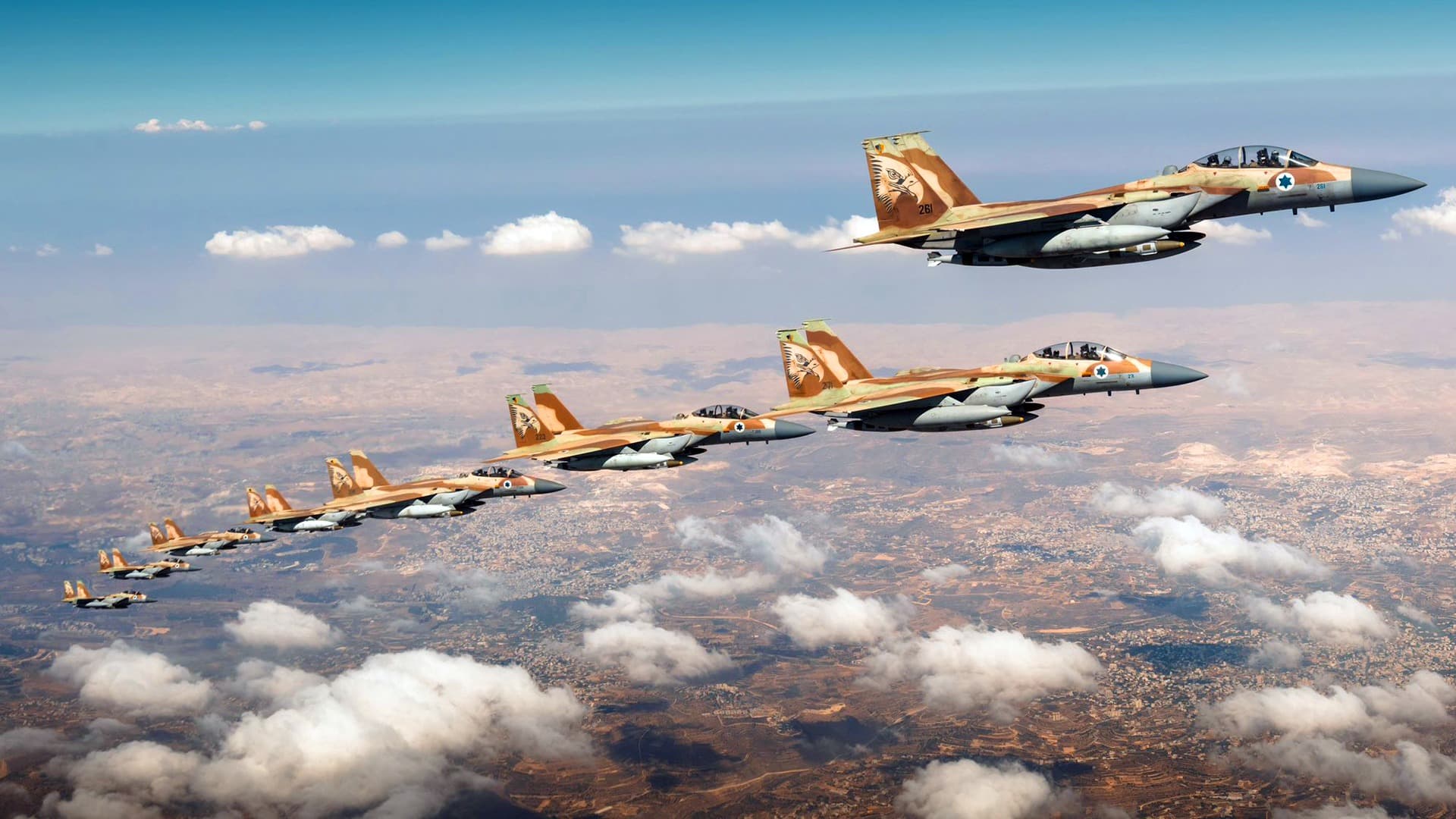
- Hero image: Israeli Air Force fighter jets on their way to attack Iran, June 2025. II, Wikimedia Commons.
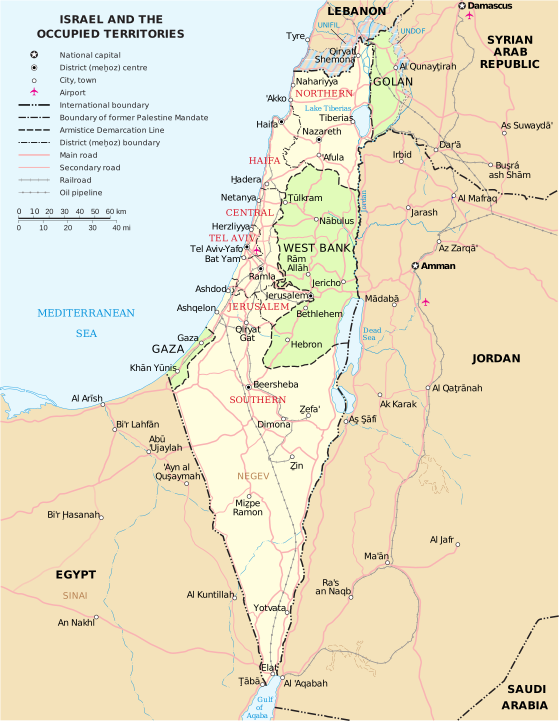
- Map image: Map of Israel, neighbours and occupied territories (English), Wikimedia Commons (public domain).