Trump Says New Strikes Target Iranian Leadership
Trump said new strikes hit Iranian leadership as Israel bombed the Assembly of Experts in Qom on Day 4 of Operation Epic Fury.
Staff Reporting and Analysis. Produces source-backed reporting, explainers, and reference pages on nuclear risk, proliferation, and escalation dynamics.
Key Sources
Start with the strongest supporting documents and reporting behind this page.
Country Profiles Mentioned
Open the profile pages for the countries referenced directly in this article.
Related Rivalries
These comparison pages help place this article inside the broader balance of power and rivalry structure.
Rivalry
Iran Crisis 2026 vs 2019 Tensions: What's Different This Time
How the 2026 Iran crisis differs from 2019: leadership decapitation, larger retaliation, Hormuz closure risk, and a sharper nuclear escalation path.
2026-03-03
Rivalry
US Military vs Iran Military: A Complete 2026 Comparison
US vs Iran military comparison across personnel, air and naval power, missiles, budgets, and how asymmetry shapes escalation outcomes in 2026.
2026-03-03
Rivalry
Iran War vs Iraq War: How the 2026 and 2003 Conflicts Compare
Iran 2026 vs Iraq 2003 compared across legal authority, coalition structure, force design, economic shock, and the central role of nuclear risk.
2026-03-03
Related Doctrines
These explainers provide the strategic concepts behind the escalation, deterrence, and risk logic discussed here.
Doctrine
What Is the Strait of Hormuz?
What is the Strait of Hormuz? A practical explainer on its geography, oil-flow importance, military vulnerability, and global economic consequences of closure.
2026-03-03
Doctrine
What Are Proxy Wars?
What is a proxy war? Learn how major powers fight through partners, why this model persists, and how Iran's network affects today's Middle East escalation.
2026-03-03
Doctrine
What Happens If Iran Gets Nuclear Weapons?
If Iran obtained nuclear weapons, effects could include regional arms races, Israeli strike pressure, oil-market shocks, and broader nonproliferation fallout.
2026-03-03
Trump says new strikes target Iranian leadership on Day 4 of Operation Epic Fury — March 3, 2026 — declaring that Iran's entire succession bench has been "wiped out" and that the U.S. and Israel are now attacking the clerical hierarchy that would select a new supreme leader. In a simultaneous and dramatic escalation, Israeli forces bombed the Assembly of Experts building in Qom, the 88-member clerical body constitutionally required to choose Khamenei's replacement, triggering the deepest institutional crisis in the Islamic Republic's 47-year history.
Trump says new strikes target Iranian leadership as the joint US-Israeli campaign against Tehran entered its fourth consecutive day, with Washington and Jerusalem making clear the goal is not simply to destroy Iran's military — but to eliminate anyone who might inherit power. Standing before reporters on Tuesday, March 3, President Trump confirmed that strikes were continuing against Iran's leadership tier, offering blunt assessments about how far down the succession ladder those strikes had reached.
Trump Says New Strikes Target Iranian Leadership — "The Succession Bench Is Wiped Out"
Speaking to reporters on Day 4, President Trump delivered a stark assessment of what U.S. and Israeli strikes had accomplished against Iran's leadership hierarchy since Operation Epic Fury launched on February 28.
"Most of the people we had in mind are dead," Trump told reporters, according to Fox News. He continued: "So, you know, we had some in mind from that group that is, is dead. And now we have another group. They may be dead also based on reports."
Trump indicated the strikes had not merely killed Khamenei's generation of leadership — they had cascaded down multiple succession tiers. His phrasing was explicit: "second or third place is dead." And then, in a remark that captured the depth of the targeting campaign: "Pretty soon we're not going to know anybody."
The White House had earlier confirmed that 49 top Iranian leaders were eliminated in the opening phase of Operation Epic Fury alone — a figure the administration said put the operation "ahead of schedule." Among those reportedly killed was Ali Asghar Hejazi, Khamenei's chief of staff and one of his most trusted aides, though Iranian authorities have not publicly confirmed his death.
Trump also posted on Truth Social on March 3: "Their air defense, Air Force, Navy, and Leadership is gone. They want to talk. I said, 'Too Late!'" — simultaneously rejecting renewed diplomatic overtures while confirming the leadership targeting was intentional and ongoing.
What Were Trump's Five War Objectives?
The White House outlined five formal objectives for Operation Epic Fury when it launched on March 1, 2026:
- Destroy Iran's ballistic missile and drone capabilities
- Eliminate the Iranian Navy as a functional fighting force
- End Iran's nuclear weapons program permanently
- Sever Iran's relationships with armed proxy groups (Hezbollah, Hamas, Houthis)
- Degrade the Islamic Revolutionary Guard Corps (IRGC) command structure
Notably absent from the official list: explicit regime change. But the scope of the leadership targeting campaign — described by Trump himself on Day 4 — has raised serious questions about whether the objectives as stated align with operations on the ground.
Israel Bombs the Assembly of Experts in Qom
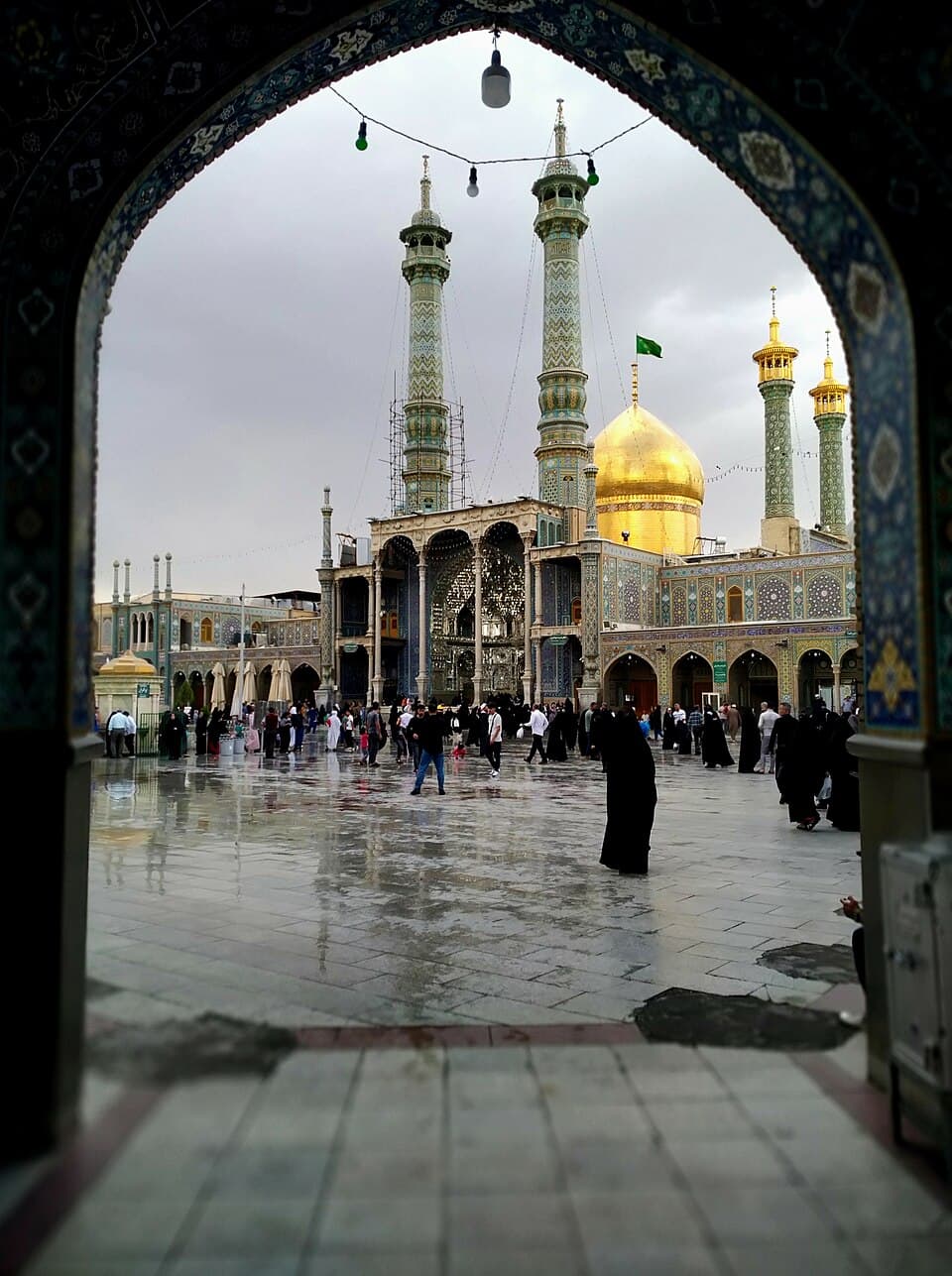
The most dramatic development on Day 4 was an Israeli airstrike on the Assembly of Experts building in Qom, Iran's holiest city and the spiritual nerve center of the Islamic Republic.
What Is the Assembly of Experts?
The Assembly of Experts is an 88-member clerical body established under Iran's 1979 constitution. Its sole constitutional function — defined under Article 111 of the Islamic Republic's constitution — is to select Iran's supreme leader. It also has the theoretical power to dismiss a sitting leader, though it has never done so.
The Assembly's sixth session was elected in 2024 and was scheduled to run until 2032. When Ayatollah Ali Khamenei was killed on February 28, 2026, the Assembly was immediately thrust into the most consequential decision in its history: choosing a supreme leader for only the third time in the Republic's existence.
The Qom Strike
According to Israeli state broadcaster Kan and reporting by Bloomberg, Israel struck the Assembly of Experts building while its members were meeting to deliberate on Khamenei's successor. An Israeli defense official confirmed to Israeli media that the strike targeted the building during an active succession vote.
The Jerusalem Post described the IDF as having "flattened" the building. Iranian semi-official media outlet Tasnim News Agency disputed the timing, stating that no formal meeting was underway at the time of the strike. Iranian authorities confirmed the building was "severely damaged."
Ynet News reported that the IDF strike occurred during a vote count for Iran's next supreme leader, with 12 people wounded in a separate Tel Aviv area attack simultaneously. Middle East Eye confirmed that US-Israeli strikes struck the building, calling it an attack on "the symbolic heart of Iran's Islamic regime."
The Three Nominated Successors
Before the strikes, the New York Times had reported that Khamenei himself had privately nominated three candidates to the Assembly:
| Candidate | Role |
|---|---|
| Gholam-Hossein Mohseni-Ejei | Iran's judiciary chief |
| Ali Asghar Hejazi | Khamenei's chief of staff (reportedly killed) |
| Hassan Khomeini | Grandson of the Islamic Republic's founder |
The strike on the Assembly building — combined with the reported death of Hejazi — means two of Khamenei's three personally chosen successors may now be dead or structurally unable to be selected under normal constitutional process.
Iran's Succession Crisis: Who Leads the Islamic Republic Now?
With Khamenei dead and the Assembly of Experts building struck, Iran's constitutional succession machinery has been severely disrupted. An interim three-person leadership council has been formed under Article 111 of Iran's constitution to manage affairs until a permanent supreme leader is chosen.
The interim council consists of:
- Masoud Pezeshkian — President of Iran
- Gholam-Hossein Mohseni-Ejei — Iran's judiciary chief (also a Khamenei-nominated successor)
- Alireza Arafi — Senior cleric and religious scholar
Iranian President Pezeshkian confirmed: "A new leadership council has begun its work." Foreign Minister Abbas Araghchi told Al Jazeera the succession process "should be complete within days" — though this timeline is now deeply uncertain given the physical destruction of the Assembly's meeting place and the deaths of key succession figures.
Despite the chaos, Iran's surviving leaders have publicly closed ranks and projected defiance. Al Jazeera reported that Iranian officials have continued vowing revenge while maintaining the appearance of institutional continuity.
The Soufan Center noted in an intelligence brief that the succession crisis represents "the most severe test of the Islamic Republic's institutional resilience since 1989" — the last time a supreme leader transition occurred (when Khomeini died and Khamenei took power).
Is This Regime Change? The Question Trump Won't Answer
One of the most contested questions of Day 4 is whether the United States and Israel are conducting de facto regime change — regardless of what the official stated objectives say.
War Secretary Pete Hegseth attempted to draw a line: "This is not a so-called regime change war," he told reporters. But then, in the same breath, he acknowledged: "But the regime sure did change, and the world is better off for it today."
President Trump himself has expressed a contradictory concern: he does not want a successor to Khamenei who is just as extreme. Bloomberg reported that Trump privately worries Iranian leaders could be "just as bad" after the conflict ends, suggesting the White House has not resolved what kind of Iranian government it actually wants to emerge from the wreckage.
This internal tension — between destroying Iran's leadership capacity and avoiding a vacuum that produces a more radical replacement — is the defining strategic paradox of Operation Epic Fury.
Iran's UN Ambassador Ali Bahreini called the entire operation "totally stupid," stating: "War was not our option. War was imposed on Iran." He specifically condemned the decision to launch military operations while nuclear negotiations were ongoing in Geneva, calling it a fundamental betrayal of diplomatic process.
Day 4 Military Operations: 1,000+ Targets Struck
As of March 3, US and Israeli forces have struck more than 1,000 targets across Iran since the campaign began on February 28, with Day 4 bringing hundreds more strikes according to Al Jazeera.
Key Targets Struck Across the Campaign
| Target | Significance |
|---|---|
| Khamenei's leadership compound | Supreme leader killed Day 1 |
| Nuclear facilities (Fordow, Isfahan, Natanz) | Core of Iran's enrichment program |
| IRGC command and control centers | Degraded Iranian military coordination |
| Assembly of Experts building, Qom | Constitutional succession body |
| IRIB broadcasting complex, Tehran | State media infrastructure |
| Golestan Palace, Tehran | UNESCO World Heritage Site — reported damaged |
| Iranian Navy assets, Persian Gulf | Destroyer and frigate assets targeted |
| Air defense systems nationwide | S-300 and radar installations |
Notable cultural and civilian damage: the Golestan Palace — a UNESCO World Heritage Site in Tehran dating to the Safavid dynasty — sustained damage from nearby strike operations. The Islamic Republic of Iran Broadcasting (IRIB) complex, Iran's state broadcaster, was hit in a separate Israeli operation.
Casualties as of Day 4
| Group | Killed | Wounded |
|---|---|---|
| Iran (total) | ~787 | Thousands |
| Iran civilians (Red Crescent) | 600+ | — |
| Iran civilians (HRANA) | 742 | — |
| Girls' school, southern Iran | 165 | — |
| United States | 6 | 18 |
| Israel | 11 | — |
| Gulf states | 8 | — |
The casualty figure of 165 at a girls' school in southern Iran, reported by Al Jazeera, has drawn international condemnation and calls for accountability from human rights organizations.
The US death toll of six service members — confirmed by CBS News — includes three killed in Kuwait when US fighter jets were reportedly "mistakenly" shot down during a defensive operation.
Iran's Retaliation and Regional Spillover
Iran has not accepted its losses passively. The IRGC has maintained an ongoing campaign of ballistic missiles, cruise missiles, and drones targeting US military assets and Gulf partner states throughout Day 4.
Key Iranian retaliation actions as of March 3:
- Strait of Hormuz declared closed — Tehran announced the strategic waterway is closed and threatened to attack any vessel attempting passage
- 150+ ships stalled — Hundreds of oil tankers and cargo vessels are now at anchor in the Persian Gulf and Arabian Sea, unable to transit
- QatarEnergy LNG halted — Qatar's state energy company suspended liquefied natural gas production following Iranian attacks on its facilities
- Al Udeid Air Base, Qatar — Two Iranian missiles struck the base that houses approximately 10,000 US personnel
- US Embassy in Riyadh — Hit by at least two Iranian drone attacks; no US casualties reported
- Saudi Arabia / UAE — Multiple drones and missiles intercepted over Riyadh and Al-Kharj air base; Dubai resumed limited flight operations after temporary suspension
- Lebanon / Hezbollah — Israel simultaneously escalating strikes on Hezbollah positions in southern Lebanon with a new ground incursion
The Strait of Hormuz closure — through which approximately one-fifth of global oil consumption passes — has sent Brent crude surging more than 8% since the conflict began, with oil touching $84 per barrel.
The Strategic Problem With Targeting The Succession Process
The most important question raised by the Qom strike is not how people reacted online. It is whether the campaign has moved from military coercion into deliberate disruption of Iran's governing continuity.
Three issues matter most:
Legality and legitimacy: Striking a constitutional succession body is different from striking missile sites, IRGC facilities, or nuclear infrastructure. Even if the target had strategic value, the move blurs the line between warfighting and governance disruption.
Succession vacuum: With Khamenei dead, one nominated successor reportedly killed, and the Assembly building itself struck, Iran's system is now trying to perform constitutional continuity under active bombardment.
Escalation logic: Trump's own "succession bench wiped out" comment suggests the campaign is not just degrading command capability. It is also attacking the next layer of political authority, which can make the surviving system narrower, harder-line, and less predictable.
That combination is why this strike matters beyond its immediate tactical effect. It changes the institutional shape of the Iranian state at the same time the military campaign is intensifying.
What Comes Next: Trump's Four-to-Five Week Timeline
President Trump told reporters on Day 4 that Operation Epic Fury is projected to last four to five weeks, but noted the US has the capability to "go far longer than that" if required.
Secretary of State Marco Rubio reinforced the escalatory posture: "The hardest hits are yet to come," he told reporters — a warning that Day 4, despite its dramatic strikes on the succession body, represents the campaign's early phase rather than its climax.
Iran, for its part, has signaled it may be holding back its most advanced capabilities. Iranian military officials warned publicly on March 3 that "we haven't deployed advanced weapons yet" — a statement interpreted by analysts as a reference to Iran's longer-range ballistic missiles and potentially its most sophisticated drone systems.
The diplomatic window appears entirely closed. Oman — which had served as a neutral mediator in prior rounds of US-Iran negotiations — publicly called the strikes "a blow to ongoing diplomatic efforts" and expressed dismay that the military campaign was launched while nuclear talks were proceeding in Geneva.
The House of Commons Library research briefing published on the conflict notes that Operation Epic Fury represents the largest direct US military engagement with Iran in the history of the two countries' relationship, surpassing even the 1988 Operation Praying Mantis by several orders of magnitude.